
DLF Ltd., one of India’s largest listed real estate developers, reported a 10.28% year-on-year increase in consolidated net profit to ₹1,301.35 crore for the second quarter of financial year 2026–27. However, the company’s revenue from operations declined 23.28% to ₹1,260.58 crore, highlighting a gap between its core operating performance and its reported bottom line. The results for the quarter ended September 30, 2026, were approved by the company’s board on October 16.
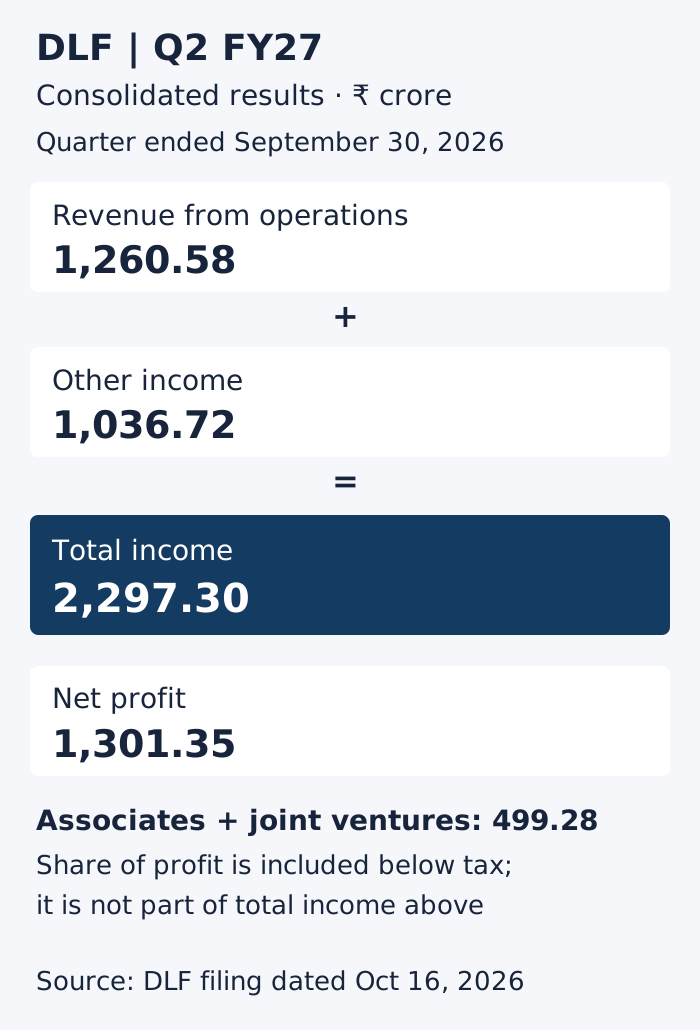
Despite the decline in operating revenue, DLF’s consolidated total income increased 1.57% to ₹2,297.30 crore, compared with ₹2,261.80 crore a year earlier. Higher other income and contributions from joint ventures helped support the reported earnings. The company also recorded ₹3,800 crore in sales bookings during the quarter and maintained a net cash position of ₹15,084 crore. The results underline the importance of examining revenue, other income, property bookings and rental operations separately when assessing the developer’s financial performance.
Key Takeaways
- Net profit: Consolidated profit rose 10.28% to ₹1,301.35 crore from ₹1,180.09 crore in Q2 FY26.
- Operating revenue: Revenue from operations fell 23.28% to ₹1,260.58 crore.
- Total income: Increased 1.57% to ₹2,297.30 crore, supported by higher other income.
- Sales bookings: DLF recorded ₹3,800 crore in bookings during the quarter.
- Rental business: DLF Cyber City Developers reported ₹2,014 crore in revenue and ₹752 crore in net profit.
- Cash position: DLF reported net cash of ₹15,084 crore.
- Key concern: Profit growth was not accompanied by growth in revenue from operations, making the composition and sustainability of earnings important to monitor.
DLF Q2 FY27 Results: Financial Performance at a Glance
The headline figures show that DLF’s profit increased even as its operating revenue declined. Total income, meanwhile, remained slightly higher than in the year-ago quarter.
| Financial metric | Q2 FY27 | Q2 FY26 | Year-on-year change |
|---|---|---|---|
| Revenue from operations | ₹1,260.58 crore | ₹1,643.04 crore | -23.28% |
| Total income | ₹2,297.30 crore | ₹2,261.80 crore | +1.57% |
| Consolidated net profit | ₹1,301.35 crore | ₹1,180.09 crore | +10.28% |
| Other income | ₹1,036.72 crore | ₹618.76 crore | +67.55% |
| Profit before tax and share of profit from joint ventures and associates | ₹1,003.32 crore | ₹1,044.85 crore | -3.97% |
| Share of profit from joint ventures and associates | ₹499.28 crore | ₹411.56 crore | +21.26% |
Source: DLF’s Q2 FY27 financial disclosures and reported results. Figures are rounded where appropriate.
The table reveals an important distinction: DLF’s total income includes more than revenue generated directly from its operations. Other income and the share of profits from joint ventures also influence the final result.
Consequently, the increase in net profit should not be interpreted as evidence that the company’s property development revenue grew. Its revenue from operations declined significantly, while other income and joint-venture contributions supported earnings.
Why Did DLF’s Net Profit Increase Despite Lower Revenue?
DLF’s net profit rose by more than 10% even though revenue from operations dropped by more than 23%. The increase in other income was one of the major factors behind this divergence.
Other income reached ₹1,036.72 crore in Q2 FY27, compared with ₹618.76 crore in the corresponding quarter last year. This represents an increase of approximately 67.55%.
The share of profit from joint ventures and associates also increased to ₹499.28 crore from ₹411.56 crore. These contributions helped support the reported bottom line despite weaker operating revenue.
However, other income and joint-venture profits should not be treated as interchangeable with revenue generated by selling or developing properties. Their composition and recurrence can differ, so investors need to examine the underlying disclosures before deciding how sustainable they may be.
The company’s profit before tax and share of profit from joint ventures and associates was ₹1,003.32 crore, down from ₹1,044.85 crore a year earlier. This measure indicates that the improvement in consolidated net profit did not result from a straightforward increase in the pre-tax result before joint-venture contributions.
For investors, the key question is whether DLF can translate its development pipeline and property demand into stronger operating revenue in subsequent quarters while maintaining its contribution from rental assets and other investments.
Revenue from Operations Falls 23.28%
DLF’s revenue from operations declined to ₹1,260.58 crore from ₹1,643.04 crore in Q2 FY26. The decline reflects the challenges of interpreting quarterly results for a real estate developer, where revenue recognition can depend on project progress, delivery schedules and the timing of transactions.
Property developers do not necessarily recognise revenue in the same quarter in which a customer books a home. Sales bookings, collections and recognised revenue are different measures.
- Sales bookings reflect the value of properties sold or booked during a period under the company’s reporting methodology.
- Revenue from operations reflects income recognised from operating activities under applicable accounting rules.
- Cash collections indicate money received from customers, which may not match recognised revenue in the same period.
This distinction matters for DLF because its reported quarterly sales bookings were ₹3,800 crore even as revenue from operations declined.
The bookings figure suggests continuing sales activity, but it does not automatically mean the entire amount will be recognised as revenue in the same quarter. The timing of construction, contractual conditions and delivery schedules influence when property sales appear in the income statement.
Investors will therefore be watching whether DLF’s bookings convert into revenue and cash flows over subsequent quarters.
Sales Bookings Reach ₹3,800 Crore
DLF reported ₹3,800 crore in sales bookings for Q2 FY27. Demand for its luxury and premium residential offerings remained an important part of the business.
The company’s luxury retirement housing project, The Aureva, in Gurugram sold out during the quarter, according to reported company disclosures. Its super-luxury residential project, The Dahlias, also continued to attract buyers, although project-specific sales figures were not disclosed in the cited report.
Sales bookings provide an indication of demand, but they must be assessed alongside launch schedules, cancellations, collections and revenue recognition. A strong booking quarter can support future revenue, yet it does not guarantee that the same level of demand will persist.
DLF’s future performance will also depend on its ability to introduce projects on schedule and maintain pricing discipline in the premium housing market. The company has identified a pipeline of future residential launches and commercial developments, but the exact timing and value of upcoming launches remain important variables.
Rental Business Provides a More Stable Revenue Stream
DLF’s rental operations offer a different earnings profile from residential development. Rental income generally comes from leasing office, retail and other commercial properties, creating recurring revenue as long as tenants remain in place and lease agreements continue.
DLF Cyber City Developers Ltd. (DCCDL), the group’s rental real estate business, reported consolidated revenue of ₹2,014 crore for Q2 FY27. Its EBITDA increased 9% year-on-year to ₹1,537 crore, while net profit rose 17% to ₹752 crore.
| DCCDL financial metric | Q2 FY27 |
|---|---|
| Consolidated revenue | ₹2,014 crore |
| EBITDA | ₹1,537 crore |
| Net profit | ₹752 crore |
| EBITDA growth year-on-year | +9% |
| Net profit growth year-on-year | +17% |
DLF has reported a rental portfolio spanning approximately 50 million square feet, with high occupancy across its commercial assets. The company is developing additional commercial destinations and has identified further projects intended to support rental growth.
The rental business is important because it can provide recurring income alongside the more variable revenue associated with property development. However, rental operations are also exposed to tenant demand, lease renewals, operating expenses, financing costs and changes in commercial property markets.
Cash Position and Financial Flexibility
DLF reported a net cash position of ₹15,084 crore at the end of the quarter, despite a dividend outflow of approximately ₹1,980 crore.
A net cash position can provide a developer with financial flexibility to fund construction, acquire land, develop commercial properties and meet other obligations without relying entirely on additional borrowing.
For a capital-intensive business, the ability to finance projects from internal resources can be valuable, particularly when interest rates, construction expenses or market conditions change.
However, a strong cash position does not eliminate the need to evaluate future commitments. Property development involves long project timelines, and cash balances must be considered alongside planned launches, construction spending, land investments and other liabilities.
DLF’s cash generation and project pipeline will therefore remain relevant indicators as the company moves through the second half of FY27.
Legal Matters Highlighted in the Financial Disclosures
DLF’s statutory auditor included an emphasis-of-matter paragraph concerning certain legal proceedings and regulatory matters. These include a ₹630 crore penalty imposed by the Competition Commission of India (CCI), disputes involving sale deeds connected to two IT special economic zone or IT park projects in Gurugram, and matters involving the Securities and Exchange Board of India (SEBI).
The ₹630 crore CCI penalty has been deposited under protest, according to reported disclosures. Certain judgments concerning the IT projects have been stayed by the Supreme Court, while relevant regulatory appeals remain pending.
Management stated that, based on advice from external legal counsel, no adjustments had been made to the financial results for these matters because it considered the likelihood of success favourable.
The auditor’s emphasis does not mean that every matter has been decided against DLF or that the company has accepted the underlying allegations. It highlights uncertainty that investors may need to consider when evaluating the company’s legal exposure and potential future financial effects.
The outcomes of pending cases could influence future disclosures or financial obligations. Their eventual impact will depend on the decisions of the relevant courts and regulators.
What DLF’s Results Mean for Investors
DLF’s Q2 results present both positive and cautionary signals. Net profit increased, sales bookings reached ₹3,800 crore and the rental business reported growth in revenue and earnings. The company’s net cash position also provides financial flexibility.
At the same time, revenue from operations fell sharply, while the increase in other income played a major role in supporting total income and the reported profit. Investors will need to distinguish recurring operational performance from other income and joint-venture contributions.
Future results will depend on the pace of property sales, the timing of revenue recognition, project launches, rental income growth and the company’s ability to manage development costs. Legal proceedings and regulatory matters are additional factors to monitor.
A single quarter cannot establish a long-term trend. The next few quarters should provide more information about whether DLF can convert bookings into recognised revenue while sustaining profitability and cash generation.
The Bigger Picture
DLF’s Q2 FY27 performance highlights the complexity of real estate earnings. A developer can report higher net profit while revenue from operations declines because property sales, other income, joint ventures and rental assets affect the income statement in different ways. In DLF’s case, stronger other income and joint-venture contributions helped offset the fall in operating revenue.
The company’s sales bookings, rental portfolio and net cash position provide important context for assessing its longer-term prospects. Yet investors will need to monitor revenue conversion, project launches, recurring earnings and unresolved legal matters to determine whether the latest profit growth reflects a sustainable improvement in performance.
Looking Ahead
DLF’s upcoming quarters will be judged partly on whether its residential bookings translate into stronger recognised revenue and cash collections. The company’s future project launches, demand for premium housing and growth in its commercial rental portfolio will influence that process. Continued rental earnings could provide support, but the pace of property development revenue remains a key variable.
Investors should also track the composition of reported profit, particularly other income and joint-venture contributions, alongside the company’s cash position and legal disclosures. The Q2 results show that DLF remains profitable, but the divergence between operating revenue and net profit makes it important to examine the underlying financial drivers rather than rely on the headline profit growth alone.
Frequently Asked Questions
1. What was DLF’s net profit in Q2 FY27?
DLF reported consolidated net profit of ₹1,301.35 crore for the quarter ended September 30, 2026, up 10.28% from ₹1,180.09 crore a year earlier.
2. Why did DLF’s revenue fall despite higher profit?
Revenue from operations declined 23.28% to ₹1,260.58 crore, but higher other income and a greater contribution from joint ventures helped support the reported net profit.
3. What was DLF’s total income in Q2 FY27?
Consolidated total income was ₹2,297.30 crore, up 1.57% from ₹2,261.80 crore in Q2 FY26.
4. How much sales booking did DLF report?
DLF reported sales bookings of ₹3,800 crore during Q2 FY27.
5. How did DLF’s rental business perform?
DCCDL reported ₹2,014 crore in consolidated revenue, ₹1,537 crore in EBITDA and ₹752 crore in net profit for the quarter.
6. What is DLF’s net cash position?
DLF reported a net cash position of ₹15,084 crore at the end of Q2 FY27.
7. What legal issues were highlighted in the results?
The auditor highlighted pending matters involving a ₹630 crore CCI penalty deposited under protest, disputes over certain Gurugram IT project sale deeds and SEBI-related proceedings. Their final outcomes remain subject to the relevant legal and regulatory processes.
Primary source added October 16, 2026: DLF’s unaudited standalone and consolidated financial results for the quarter and half-year ended September 30, 2026, approved on October 16, 2026. The consolidated income statement appears on page 15.
Get the day’s top stories in your inbox
One concise email. No spam, unsubscribe anytime.


