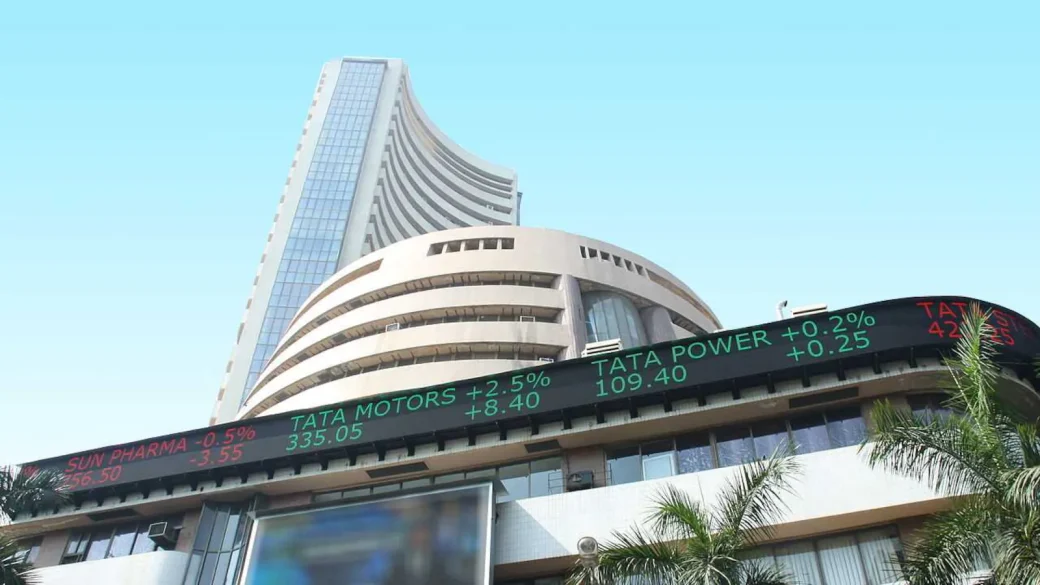
Foreign Portfolio Investors (FPIs) continued their return to Indian equities in August, investing ₹16,621 crore during the first half of the month as improving valuations, resilient corporate earnings and expectations of softer US interest rates boosted investor sentiment. The latest inflow follows a ₹20,200 crore investment in July, marking a sharp reversal from the heavy selling seen during the first four months of the year.
Despite the recent buying, foreign investors remain significant net sellers in Indian equities in 2026. FPIs have withdrawn around ₹2.4 lakh crore from Indian stocks so far this year, already exceeding the ₹1.66 lakh crore they pulled out during the entire 2025. The recent turnaround nevertheless suggests that global investors are becoming more comfortable with Indian valuations and the country’s domestic growth outlook.
FPI Buying Reverses Four-Month Selling Streak
The August inflow follows four consecutive months of heavy FPI selling.
Foreign investors withdrew ₹49,340 crore from Indian equities in June, ₹32,963 crore in May, ₹60,847 crore in April and a massive ₹1.17 lakh crore in March.
Before that selling streak, FPIs had invested ₹22,615 crore in Indian equities in February.
| Month | FPI Equity Flow |
|---|---|
| February 2026 | +₹22,615 crore |
| March 2026 | -₹1.17 lakh crore |
| April 2026 | -₹60,847 crore |
| May 2026 | -₹32,963 crore |
| June 2026 | -₹49,340 crore |
| July 2026 | +₹20,200 crore |
| August 2026, first half | +₹16,621 crore |
The shift from sustained selling to buying in July and August represents a notable change in foreign investor sentiment.
Why Foreign Investors Are Returning
Both foreign and domestic flows have turned positive at the same time. Foreign currency is arriving through other channels too, with the RBI’s FCNR(B) window drawing $52.3 billion, while domestic mutual funds raise IT allocation to 6.6%.
Market experts have attributed the recent buying to several factors.
Indian equities have become relatively more attractive after the market correction, while corporate earnings have remained resilient. Expectations that the US Federal Reserve could move toward lower interest rates have also improved the appeal of emerging-market assets.
Other factors include softer crude oil prices and lower currency volatility.
Key Factors Supporting FPI Buying
Improving valuations
+
Resilient corporate earnings
+
Expectations of US rate cuts
+
Softer crude prices
+
Lower currency volatility
+
Portfolio diversification
↓
Improved foreign investor sentiment
These factors have collectively encouraged some global investors to increase their exposure to Indian equities.
Indian Valuations Have Become More Attractive
One of the major reasons cited for the return of FPIs is the improvement in relative valuations.
Indian equities had traded at significant premiums compared with several other emerging markets.
The correction earlier in the year reduced some of those valuation pressures.
Foreign investors can therefore find better entry points in companies with strong earnings prospects.
Valuation Cycle
High valuations
↓
Market correction
↓
Relative valuations improve
↓
Foreign investors reassess opportunities
↓
Fresh equity inflows
The change does not necessarily mean Indian stocks are universally cheap, but the relative risk-reward equation has become more favorable for some investors.
Corporate Earnings Remain Resilient
Another factor supporting FPI flows is the resilience of corporate earnings.
Companies in several sectors have continued to report steady business performance despite global uncertainty.
Foreign investors often look for markets where earnings growth can support valuations over the medium term.
Earnings Support
Strong domestic demand
+
Corporate earnings
+
Profitability
↓
Investor confidence
↓
Equity inflows
The sustainability of this trend will depend partly on whether earnings upgrades continue.
Expectations of Lower US Interest Rates Are Helping
Expectations of softer US interest rates are another important driver.
When US rates are high, global investors often prefer dollar-denominated assets because they can offer attractive risk-adjusted returns.
Expectations of rate cuts can make emerging markets relatively more attractive.
US Rate Effect
US rates high
↓
Dollar assets more attractive
↓
Capital flows toward US
VS
US rate-cut expectations
↓
Lower US yield advantage
↓
Emerging markets become more attractive
↓
Potential FPI inflows
India could benefit if global liquidity conditions become more supportive.
Crude Oil Prices Also Matter
Lower crude oil prices are generally positive for India’s macroeconomic outlook because India imports a large share of its crude requirements.
Lower oil prices can reduce pressure on the country’s import bill, inflation and current-account balance.
This can improve the attractiveness of Indian financial assets.
Lower Crude Impact
Lower crude prices
↓
Lower import bill
↓
Reduced inflation pressure
↓
Improved external balance
↓
Potentially stronger rupee
↓
Better investor sentiment
A sustained decline in oil prices could therefore support foreign investment.
Currency Stability Is Supporting Sentiment
Currency volatility can be a major concern for foreign investors.
Even when an overseas investor earns a positive return on Indian stocks, currency depreciation can reduce the value of that investment when converted back into dollars.
A more stable rupee reduces this risk.
Currency Effect
Indian stock gains
+
Stable rupee
↓
Higher effective foreign return
VS
Indian stock gains
+
Sharp rupee depreciation
↓
Lower dollar-adjusted return
This helps explain why lower currency volatility is being cited as one of the factors behind recent inflows.
Investors Are Becoming More Selective
The return of foreign capital does not appear to be broad-based across every sector.
Market participants say foreign investors are becoming more selective and increasingly focusing on areas linked to domestic consumption.
Consumer durables and healthcare have attracted interest, along with several other sectors.
Consumer-Focused Companies Are Attracting Interest
India’s large domestic consumer market remains one of the key attractions for international investors.
Companies exposed to household consumption can potentially benefit from rising incomes, urbanization and increasing demand for premium products.
Domestic Consumption Opportunity
Rising incomes
+
Urbanization
+
Premiumization
+
Growing middle class
↓
Higher consumption
↓
Corporate earnings growth
↓
Foreign investor interest
This is particularly relevant when global investors are seeking exposure to India’s domestic growth rather than relying solely on export-driven sectors.
Healthcare Is Also Seeing Foreign Interest
Healthcare was among the sectors that attracted strong FPI buying in July.
India’s healthcare sector includes hospitals, pharmaceuticals, diagnostics and medical-device companies.
The sector can offer relatively defensive earnings characteristics while also benefiting from long-term growth in healthcare spending.
Consumer Durables Attract Foreign Capital
Consumer durables have also emerged as an area of interest.
Demand for electronics, appliances and other household products can benefit from rising disposable incomes and increasing household penetration.
Foreign investors may see these businesses as a way to participate directly in India’s expanding consumer economy.
IT Sector Remains Important
India’s IT industry remains a major component of foreign institutional portfolios.
However, global investors have also been evaluating the sector against concerns surrounding artificial intelligence, global technology spending and the outlook for traditional IT services.
The recent FPI flows suggest that investors are looking beyond a single sector when allocating capital to India.
Metals and Mining Also Saw Buying
Metals and mining were among the sectors that attracted foreign investment in July.
Commodity-linked companies can benefit from changes in global commodity prices and domestic infrastructure demand.
However, the sector remains sensitive to global economic conditions and commodity cycles.
Domestic Growth Is a Major Attraction
One of India’s biggest advantages for global investors is its large domestic market.
Unlike economies heavily dependent on exports, India can generate substantial economic activity through domestic consumption and investment.
India’s Growth Engine
Large population
+
Rising incomes
+
Urbanization
+
Infrastructure spending
+
Digital economy
↓
Domestic demand
↓
Corporate growth
↓
Foreign investment opportunity
This structural story continues to attract long-term global investors even during periods of market volatility.
FPI Selling Earlier in the Year Was Driven by Global Factors
Market experts have suggested that the earlier FPI selling was driven more by global macroeconomic conditions than by a fundamental deterioration in India’s economic outlook.
Higher US yields, dollar strength, crude oil concerns and global risk aversion encouraged investors to reduce exposure to emerging markets.
The improvement in those conditions has allowed some of that capital to return.
India Still Has a Large FPI Outflow for 2026
Despite the July and August inflows, the broader 2026 picture remains negative.
Foreign investors have withdrawn around ₹2.4 lakh crore from Indian equities so far this year.
That means the recent buying has only partially reversed the earlier outflows.
2026 FPI Position
Heavy selling
↓
March-June
↓
More than ₹3.2 lakh crore withdrawn
↓
July
+
₹20,200 crore inflow
↓
August first half
+
₹16,621 crore inflow
↓
Still around ₹2.4 lakh crore net outflow for 2026
The overall annual position therefore remains firmly negative.
2025 Also Saw Significant FPI Outflows
FPIs withdrew approximately ₹1.66 lakh crore from Indian equities during the entire 2025 calendar year.
The fact that the 2026 outflow has already exceeded that figure highlights the scale of selling seen earlier this year.
The recent reversal therefore comes after an unusually large period of foreign selling.
Debt Markets Are Also Receiving Foreign Capital
Foreign investor interest is not limited to equities.
During the first half of August, FPIs invested ₹972 crore in debt securities through the Fully Accessible Route (FAR).
They invested another ₹69 crore through the general route.
August FPI Debt Flows
Equities
↓
₹16,621 crore
+
Debt through FAR
↓
₹972 crore
+
Debt through general route
↓
₹69 crore
↓
Broader foreign investment interest
The debt inflows indicate that some foreign investors are also increasing exposure to Indian fixed-income assets.
What Is the Fully Accessible Route?
The Fully Accessible Route allows eligible foreign investors to invest in specified Indian government securities without the usual investment limits applicable to other foreign investors.
The framework has helped increase foreign participation in India’s government bond market.
The route has become increasingly important as India seeks to deepen its integration with global financial markets.
Global Factors Could Still Reverse the Trend
Although the recent FPI inflows are encouraging, foreign capital remains highly sensitive to global developments.
US Treasury yields, the dollar index, crude oil prices and geopolitical risks can quickly influence portfolio allocations.
A sudden rise in global risk aversion could therefore lead to renewed selling.
FPI Sensitivity
US Treasury yields
+
Dollar index
+
Crude oil
+
Geopolitical tensions
+
Global equity markets
↓
FPI allocation decisions
This makes the sustainability of the current buying trend uncertain.
US-Iran Tensions Remain a Market Risk
Investors are also watching developments surrounding ongoing US-Iran geopolitical tensions.
Any escalation could push crude oil prices higher and increase global risk aversion.
Higher oil prices would be particularly relevant for India because of its dependence on imported crude.
Geopolitical Risk
US-Iran tensions
↓
Potential oil supply concerns
↓
Higher crude prices
↓
Inflation pressure
+
Current-account pressure
↓
Potential FPI selling
The direction of crude prices could therefore be an important market signal in the coming weeks.
Corporate Earnings Will Remain Important
The next phase of earnings announcements will provide investors with more evidence about the strength of India’s corporate sector.
If earnings upgrades continue, foreign investors may become more confident about allocating additional capital.
Conversely, weaker earnings could limit further inflows.
Foreign Investors May Favor Domestic-Focused Businesses
Recent buying patterns indicate a possible preference for businesses that are exposed to India’s domestic economy.
This could include consumer companies, healthcare providers and other businesses whose revenues are less dependent on global trade.
Domestic-Focused Strategy
Indian consumers
↓
Domestic demand
↓
Revenue growth
↓
Corporate earnings
↓
Foreign investment
This strategy can provide investors with exposure to India’s structural growth story while reducing reliance on global export cycles.
FPI Flows Can Influence the Stock Market
Foreign investors are major participants in India’s equity markets.
Large buying or selling flows can influence index performance, sector valuations and market liquidity.
When FPIs return, their purchases can provide additional support to the market.
However, domestic institutional investors and retail investors also play increasingly important roles.
Domestic Investors Provide a Counterbalance
Indian mutual funds, insurance companies and other domestic institutions have become significant sources of market liquidity.
This reduces the market’s dependence on foreign capital compared with earlier periods.
Indian Market Liquidity
Foreign investors
+
Mutual funds
+
Insurance companies
+
Retail investors
+
Other domestic institutions
↓
Indian equity market
A stronger domestic investor base can help absorb foreign selling during periods of global uncertainty.
What the FPI Reversal Means for Indian Equities
The latest inflow is a positive signal for market sentiment.
It suggests that some global investors see Indian equities as more attractive after the correction earlier in the year.
However, the inflow should not be interpreted as a guarantee of a sustained market rally.
Valuations, earnings and global macroeconomic conditions will continue to determine future flows.
What It Means for the Rupee
Higher foreign equity inflows can support demand for the Indian rupee because foreign investors generally need to convert funds into local currency when purchasing Indian assets.
However, the impact on the currency will depend on broader capital flows, trade conditions and global dollar movements.
What It Means for Companies
Companies that attract foreign investor interest could benefit from stronger institutional ownership and market liquidity.
Sectors such as consumer durables, healthcare, IT and metals may remain in focus if the current allocation trends continue.
However, investors are likely to remain selective rather than buying the entire market.
What Investors Should Watch
Investors should monitor:
- FPI flows during the second half of August
- US Federal Reserve rate expectations
- US Treasury yields
- Dollar index movements
- Crude oil prices
- India corporate earnings
- Rupee volatility
- US-Iran geopolitical developments
- Domestic institutional flows
- Sector-specific FPI allocations
The next few weeks will indicate whether the July-August buying trend represents a sustained change in foreign investor positioning.
Key Facts at a Glance
| Metric | Figure |
|---|---|
| FPI equity inflow, August first half | ₹16,621 crore |
| FPI equity inflow, July | ₹20,200 crore |
| FPI outflow, June | ₹49,340 crore |
| FPI outflow, May | ₹32,963 crore |
| FPI outflow, April | ₹60,847 crore |
| FPI outflow, March | About ₹1.17 lakh crore |
| FPI outflow in 2026 so far | About ₹2.4 lakh crore |
| Full-year FPI outflow in 2025 | ₹1.66 lakh crore |
| August debt inflow via FAR | ₹972 crore |
| August debt inflow via general route | ₹69 crore |
Infographic: FPIs Return to Indian Equities
FPI SELLING
↓
MARCH
₹1.17 LAKH CRORE
↓
APRIL
₹60,847 CRORE
↓
MAY
₹32,963 CRORE
↓
JUNE
₹49,340 CRORE
↓
TURNAROUND
↓
JULY
+₹20,200 CRORE
↓
AUGUST FIRST HALF
+₹16,621 CRORE
↓
KEY DRIVERS
IMPROVING VALUATIONS
+
RESILIENT EARNINGS
+
US RATE-CUT EXPECTATIONS
+
SOFTER CRUDE
+
LOWER CURRENCY VOLATILITY
↓
FOREIGN INVESTOR SENTIMENT IMPROVES
↓
INDIAN EQUITIES
The Bigger Picture
Foreign Portfolio Investors have sharply changed direction in India’s equity market after four consecutive months of heavy selling. They invested ₹16,621 crore during the first half of August, following a ₹20,200 crore inflow in July. Market experts attribute the reversal to improving relative valuations, resilient corporate earnings, expectations of softer US interest rates, lower crude prices and reduced currency volatility. Foreign investors have also shown growing interest in sectors linked to India’s domestic consumption, including consumer durables and healthcare.
The turnaround is significant, but it has not erased the damage from the earlier selling wave. FPIs have still withdrawn around ₹2.4 lakh crore from Indian equities in 2026, already exceeding the full-year outflow recorded in 2025. Future flows will depend heavily on global monetary policy, US Treasury yields, crude oil prices, geopolitical developments and the trajectory of corporate earnings. The recent buying therefore represents an improvement in sentiment rather than confirmation that foreign investors have permanently returned to Indian equities.
Looking Ahead
The sustainability of FPI buying will become clearer as August progresses. Investors will closely watch whether foreign funds continue purchasing Indian equities or whether the recent inflows prove temporary. The direction of US interest rates, the dollar, crude oil prices and geopolitical tensions will remain important external factors, while domestic earnings and valuations will determine India’s relative attractiveness.
Over the longer term, India’s large domestic market, economic growth potential and expanding financial ecosystem should continue to attract global investors. However, foreign portfolio flows are likely to remain selective and sensitive to global conditions. If corporate earnings remain resilient and valuations stay competitive with other emerging markets, India could see further FPI inflows. A renewed global risk-off environment, on the other hand, could quickly reverse the trend.
Frequently Asked Questions
How much did FPIs invest in August?
Foreign Portfolio Investors invested ₹16,621 crore in Indian equities during the first half of August.
Why are FPIs buying Indian equities again?
More attractive valuations, resilient corporate earnings and expectations of softer US interest rates have improved sentiment.
How does this compare with July?
July saw ₹20,200 crore of FPI inflows, so August continues the reversal from four months of heavy selling.
Get the day’s top stories in your inbox
One concise email. No spam, unsubscribe anytime.


