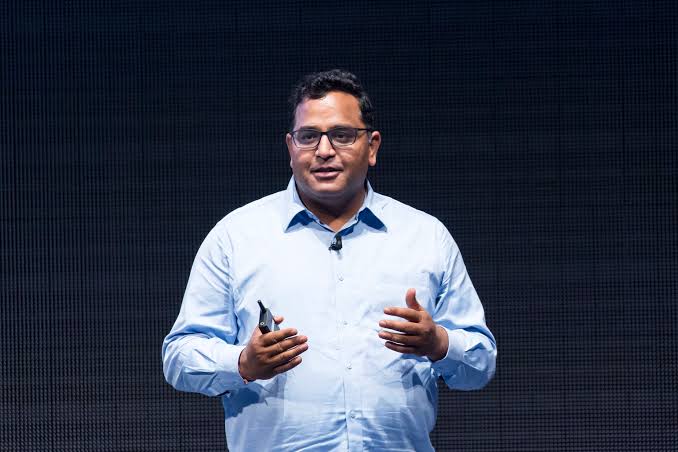
Paytm founder Vijay Shekhar Sharma’s investment vehicle Resilient Asset Management is planning to sell up to 4.98% of One 97 Communications, the parent company of Paytm, through a block market transaction. The proposed sale is valued at around ₹4,059 crore based on Paytm’s closing share price on Monday, marking another significant change in the fintech company’s shareholder structure.
The transaction has an unusual feature: although Resilient Asset Management holds the shares and is carrying out the proposed sale, the economic proceeds from the stake are expected to be retained by Chinese financial technology company Antfin under an existing optionally convertible debenture arrangement. Following the proposed sale, Resilient’s economic and voting interest in Paytm is expected to decline substantially, potentially leaving it with around 5.2%.
Resilient Plans to Sell 4.98% Paytm Stake
Resilient Asset Management, an overseas entity associated with Paytm founder and CEO Vijay Shekhar Sharma, plans to sell up to 4.98% of One 97 Communications through a block deal.
The proposed transaction represents a significant portion of Resilient’s remaining stake in Paytm.
At Monday’s closing price, the shares being offered were valued at approximately ₹4,059 crore.
The sale would reduce Resilient’s holding in Paytm to around 5.2% if the entire proposed stake is sold.
| Particular | Details |
|---|---|
| Seller | Resilient Asset Management |
| Company | One 97 Communications |
| Consumer brand | Paytm |
| Stake proposed for sale | Up to 4.98% |
| Approximate value | ₹4,059 crore |
| Post-sale Resilient holding | Around 5.2% |
| Transaction type | Block market transaction |
| Economic proceeds | Retained by Antfin under existing arrangement |
The proposed transaction was disclosed through a regulatory filing on Monday.
Why Antfin Will Receive the Economic Proceeds
The most unusual aspect of the transaction is that the economic value generated by the proposed sale will not ultimately accrue to Resilient in the ordinary sense.
The arrangement stems from the 2023 transaction through which Sharma’s Resilient Asset Management acquired a 10.3% stake in Paytm from Antfin.
That transaction was structured without Sharma making a conventional cash payment for the shares. Instead, Resilient issued optionally convertible debentures, or OCDs, to Antfin.
The OCD arrangement allowed Sharma’s investment vehicle to obtain the ownership and voting rights associated with the shares while Antfin retained the economic value through the debt instrument.
The latest sale is therefore linked to that earlier structure.
The 2023 Deal Changed Paytm’s Ownership Structure
Paytm is not the only listed Indian fintech facing a sharp market reaction this month. Regulatory scrutiny remains a live theme across Indian fintech, with Policybazaar receiving an IRDAI show-cause notice, and Zaggle shares crashing 20% after weak Q1 results.
In August 2023, Sharma agreed to acquire a 10.3% stake in Paytm from Antfin through Resilient Asset Management.
The transaction was valued at roughly $628 million.
Following the deal, Sharma became Paytm’s largest shareholder, while Antfin’s direct shareholding was reduced.
The transaction was significant because it reduced Antfin’s direct ownership of Paytm at a time when scrutiny of Chinese investment in Indian technology and financial-services companies had increased.
Ownership Restructuring
Before 2023
↓
Antfin holds significant Paytm stake
↓
2023 transaction
↓
Resilient acquires 10.3% from Antfin
↓
Resilient receives ownership and voting rights
↓
Antfin receives OCDs
↓
Latest proposed transaction
↓
Resilient sells part of the stake
↓
Economic proceeds linked to Antfin’s OCD arrangement
The latest transaction effectively continues the unwinding of that earlier structure.
What Are Optionally Convertible Debentures?
An optionally convertible debenture is a debt instrument that can potentially be converted into equity under specified conditions.
In the Paytm transaction, the OCD structure allowed Resilient to acquire the shares while providing Antfin with an economic claim associated with the transaction.
This distinction between legal ownership and economic interest is important for understanding why the proceeds from the latest share sale are expected to go to Antfin.
The arrangement also means that a change in Resilient’s shareholding does not necessarily translate into an equivalent change in the economic value ultimately received by Sharma.
Resilient’s Paytm Holding Could Fall to 5.2%
If Resilient completes the sale of the full 4.98% stake, its remaining holding in Paytm could fall to approximately 5.2%.
That would represent a substantial reduction from the stake accumulated following the 2023 transaction.
The sale would also change the relative balance among Paytm’s major shareholders.
For investors, the transaction is therefore important not only because of its size but also because of what it signals about the ownership structure of the fintech company.
The Deal Comes as Paytm’s Stock Has Recovered
The proposed sale comes after a significant recovery in Paytm’s share price from its earlier lows.
The stock had faced severe pressure in early 2024 following regulatory action involving Paytm Payments Bank.
The company subsequently worked to strengthen its core payments and financial-services businesses while expanding partnerships and improving its operating performance.
The recovery in the share price has also increased the value of stakes held by major shareholders.
This creates an opportunity for existing holders to monetize part of their positions.
Paytm’s Business Has Changed Significantly
Paytm has undergone a major strategic transition over the past few years.
The company has focused increasingly on payments, merchant services and financial distribution while adjusting to regulatory restrictions affecting Paytm Payments Bank.
Its payments business remains a central part of the platform, but the company has also expanded its focus on financial services.
These include lending distribution, insurance-related products, wealth management and other financial offerings.
Paytm Payments Bank Crisis Changed the Company’s Strategy
The Reserve Bank of India imposed restrictions on Paytm Payments Bank in early 2024, creating significant uncertainty around the company’s operations.
The restrictions affected several services linked to the bank and forced Paytm to change its banking and payments infrastructure.
Paytm subsequently shifted its payments-bank relationships and worked with external banking partners to maintain its merchant and consumer businesses.
The episode became one of the biggest challenges in the company’s history as a listed fintech business.
Paytm Has Been Working to Rebuild Investor Confidence
Since the regulatory crisis, Paytm has sought to demonstrate that its core businesses can operate independently of Paytm Payments Bank.
The company has emphasized improvements in its payments ecosystem, merchant relationships and financial-services distribution.
Improving operating performance has helped rebuild investor confidence.
The share-price recovery has also made the company’s ownership structure more valuable than it was during the period of intense regulatory uncertainty.
Why the Stake Sale Matters to Paytm Investors
Large shareholder transactions can influence investor sentiment even when the underlying business remains unchanged.
A block sale of nearly 5% of the company can increase the available public float and potentially improve liquidity.
At the same time, investors may examine why a major shareholder is selling and whether the transaction reflects confidence or simply the unwinding of an existing financial arrangement.
In this case, the Antfin-linked economic structure provides important context.
The Sale Does Not Necessarily Mean Sharma Is Exiting Paytm
The proposed sale would reduce Resilient’s stake substantially, but it would not eliminate its holding.
Resilient could retain around 5.2% after the transaction.
This means Sharma would continue to have an economic and strategic connection to Paytm through his remaining stake.
The transaction should therefore not automatically be interpreted as a complete exit by the Paytm founder.
Antfin’s Economic Interest Is Also Being Unwound
The transaction is significant for Antfin as well.
Antfin originally held a major direct position in Paytm before transferring shares to Resilient in 2023.
The OCD structure allowed Antfin to retain economic value associated with the transferred stake.
The latest sale provides a mechanism through which that economic interest can be realized.
This makes the transaction part of a longer ownership restructuring rather than a straightforward decision by Sharma to cash out his entire Paytm position.
The Block Deal Could Increase Paytm’s Public Float
If the shares are sold to institutional investors and other eligible buyers through the block market, the transaction could broaden the investor base.
A larger public float can improve liquidity and potentially make the stock more accessible to institutional investors.
However, the immediate market reaction will depend on the final transaction price and the demand for the shares.
Large block transactions can also temporarily influence a stock because investors may compare the negotiated sale price with the prevailing market price.
A Separate Block Deal Structure Has Also Been Reported
Additional transaction details reported on Monday indicated that Resilient was preparing a broader block or bulk deal involving Paytm shares, with a base offer of around 3% and a floor price below the prevailing market price.
That transaction was reported at a potential overall value of up to ₹4,895 crore.
The difference between the headline 4.98% stake sale and the base transaction reflects the structure and potential size of the proposed block deal.
The final number of shares sold and the final transaction value will depend on the completed order book and applicable transaction terms.
Paytm’s Shareholder Structure Remains Closely Watched
Paytm has experienced several changes in its shareholder structure since its public listing.
The company initially had significant backing from global technology and financial investors.
Over time, stakes held by major investors have changed through secondary sales, transfers and market transactions.
The movement of large shareholders remains important because Paytm is one of India’s most prominent listed fintech companies.
The Transaction Could Improve Ownership Clarity
The proposed sale may simplify part of the ownership arrangement created through the 2023 Antfin transaction.
The original structure separated ownership and voting rights from the economic interest represented by the OCDs.
Selling part of the underlying shares can help convert that economic arrangement into a more straightforward market transaction.
For investors, greater clarity around the ownership structure can reduce uncertainty.
Why the 2023 Antfin Transaction Was Important
The 2023 deal was closely watched because it involved a transfer of a large Paytm stake from a Chinese investor to an entity controlled by Sharma.
At the time, concerns about foreign ownership in sensitive Indian technology and financial businesses were an important consideration.
The transaction reduced Antfin’s direct shareholding and increased Sharma’s ownership position.
It also gave Sharma greater control over Paytm’s voting rights.
The Current Sale Has a Different Context
The latest transaction is taking place in a different environment.
Paytm is no longer dealing with the same level of uncertainty surrounding Antfin’s direct shareholding.
Instead, the proposed sale appears primarily connected to the financial structure established during the earlier transfer.
The company itself is continuing to operate as a listed Indian fintech business.
What Investors Will Watch Next
Several factors will determine how investors interpret the transaction.
These include:
- Final number of shares sold
- Final sale price
- Discount to the market price
- Resilient’s remaining stake
- Buyer composition
- Paytm’s subsequent share-price movement
- Antfin’s remaining economic exposure
- Future shareholder transactions
The final block-deal price will be particularly important because large institutional transactions can establish a new reference point for the stock.
Paytm’s Fundamentals Remain More Important Long Term
Although a large shareholder sale can create short-term market volatility, Paytm’s long-term valuation will continue to depend primarily on its business performance.
Investors will focus on:
- Revenue growth
- Payment transaction volumes
- Merchant subscriptions
- Financial-services distribution
- Contribution margins
- Cash generation
- Regulatory compliance
- Customer growth
- Competitive position
The shareholder transaction does not directly change these operating metrics.
Paytm Faces Strong Competition
The company operates in a highly competitive digital-payments market.
It competes with major platforms across UPI, merchant payments and financial services.
Competition from companies such as PhonePe, Google Pay and other payment platforms remains intense.
The ability to retain merchants, grow payment volumes and expand higher-margin financial services will therefore remain critical.
Financial Services Could Drive Future Growth
Paytm has increasingly emphasized financial-services distribution as a growth opportunity.
Rather than relying solely on payments revenue, the company can generate income by distributing products such as loans and insurance through its platform.
The strategy allows Paytm to monetize its large consumer and merchant ecosystem without necessarily becoming a traditional balance-sheet lender.
The success of this model will depend on customer demand, lending partnerships and regulatory conditions.
What the Transaction Means for Vijay Shekhar Sharma
For Sharma, the proposed sale would reduce the stake held through Resilient while preserving a meaningful remaining position.
The transaction also demonstrates how the financing structure created during the 2023 Antfin deal is evolving.
The founder would remain an important shareholder even after the proposed sale.
What It Means for Antfin
For Antfin, the transaction provides a route to realize economic value associated with its earlier Paytm stake.
The Chinese investor’s direct shareholding had already been reduced through the 2023 transaction.
The latest sale addresses the economic interest represented through the OCD arrangement.
This could further reduce Antfin’s economic exposure to Paytm over time.
What It Means for Paytm
For Paytm itself, the transaction does not involve the company issuing new shares.
It is a secondary transaction between existing interests and market investors.
Therefore, Paytm does not directly receive the proceeds from the proposed stake sale.
The company continues to operate with the same underlying share capital, subject to changes in the distribution of ownership among shareholders.
What It Means for the Stock Market
A block deal of this size could attract significant institutional attention.
The transaction provides a large quantity of Paytm shares to investors without requiring the stock to be sold gradually through normal market trading.
This can reduce the immediate impact on open-market liquidity compared with a large series of ordinary-market sales.
However, the discount or premium at which the transaction is completed will influence how investors interpret the deal.
Key Facts at a Glance
| Metric | Details |
|---|---|
| Company | One 97 Communications |
| Brand | Paytm |
| Seller | Resilient Asset Management |
| Promoter associated with Resilient | Vijay Shekhar Sharma |
| Stake proposed for sale | Up to 4.98% |
| Approximate transaction value | ₹4,059 crore |
| Potential remaining Resilient stake | Around 5.2% |
| Transaction type | Block market transaction |
| Economic beneficiary | Antfin under existing OCD arrangement |
| Earlier Antfin-to-Resilient transaction | 10.3% stake |
| Value of 2023 transaction | About $628 million |
| Instrument issued to Antfin | Optionally convertible debentures |
| Paytm receives sale proceeds? | No |
| Main purpose | Secondary stake sale and unwinding of earlier economic arrangement |
Infographic: How the Paytm Stake Structure Is Changing
ANTFIN
↓
2023
TRANSFERS 10.3% PAYTM STAKE
↓
RESILIENT ASSET MANAGEMENT
↓
OWNERSHIP + VOTING RIGHTS
+
ANTFIN
↓
OCDs RETAINING ECONOMIC VALUE
↓
2026
RESILIENT PLANS TO SELL
UP TO 4.98%
↓
VALUE
~₹4,059 CRORE
↓
ECONOMIC PROCEEDS
LINKED TO ANTFin’S OCD ARRANGEMENT
↓
RESILIENT’S REMAINING STAKE
~5.2%
↓
PAYTM
CONTINUES AS LISTED COMPANY
WITH NO NEW SHARES ISSUED
The Bigger Picture
The proposed sale of up to 4.98% of Paytm parent One 97 Communications by Vijay Shekhar Sharma’s Resilient Asset Management marks another major change in the fintech company’s shareholder structure. The stake is valued at around ₹4,059 crore based on Monday’s closing price, and Resilient’s holding could fall to around 5.2% if the full stake is sold. The transaction is particularly notable because the economic proceeds are linked to Antfin under the optionally convertible debenture structure created when Resilient acquired a 10.3% Paytm stake from Antfin in 2023.
For Paytm, the transaction does not represent a fresh capital infusion because the shares are being sold by an existing shareholder rather than issued by the company. The bigger significance lies in the continued unwinding of the ownership and economic arrangement established three years ago. For investors, the transaction also comes at a time when Paytm has rebuilt its business following the Paytm Payments Bank crisis and its stock has recovered significantly from its earlier lows.
Looking Ahead
The immediate focus will be on the final size and price of the block transaction and how institutional investors respond to the share sale. The final price could provide an important reference point for Paytm’s valuation, while the reduction in Resilient’s holding could increase the stock’s public float. Investors will also watch whether the transaction leads to further changes in the holdings of other major shareholders.
Over the longer term, Paytm’s performance will depend far more on its operating fundamentals than on the ownership transaction. Payments growth, merchant monetization, financial-services distribution, profitability and regulatory compliance will remain the key drivers of shareholder value. The proposed sale nevertheless represents an important milestone in the gradual restructuring of Paytm’s ownership following the 2023 transfer of Antfin’s stake to Sharma’s Resilient Asset Management.
Frequently Asked Questions
How much Paytm stake is being sold?
Resilient Asset Management plans to sell up to 4.98% of One 97 Communications, the parent of Paytm.
What is the Paytm block deal worth?
The sale is valued at around ₹4,059 crore based on Paytm’s closing share price on Monday.
Who receives the proceeds from the Paytm stake sale?
Under the 2023 arrangement involving optionally convertible debentures, Antfin will receive the economic proceeds of the sale.
Get the day’s top stories in your inbox
One concise email. No spam, unsubscribe anytime.


