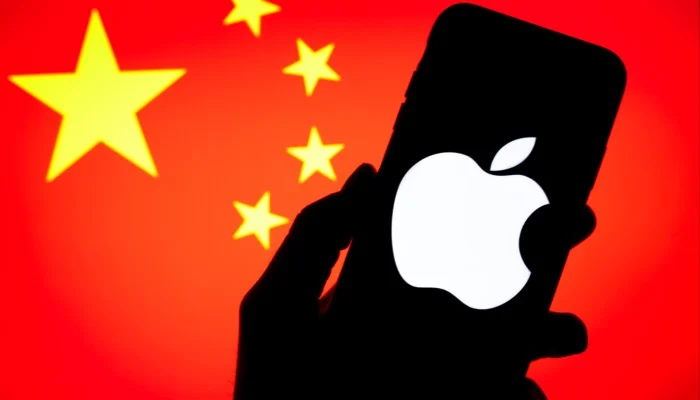
Apple has trained a large language model specifically for the Chinese market with support from Alibaba, marking a significant change in the company’s artificial intelligence strategy in China. The move comes as Apple prepares to bring its Apple Intelligence suite to Chinese consumers after previously planning to rely primarily on AI models developed by local technology companies.
The China-specific model gives Apple greater control over its AI technology while allowing the company to adapt its systems to China’s regulatory requirements. Alibaba has supported Apple in training the model, according to people familiar with the matter. The partnership is expected to play an important role in Apple’s broader effort to introduce generative AI features to iPhones and other devices in mainland China.
Apple Shifts Its AI Strategy in China
Apple’s decision to develop its own China-specific AI model represents a departure from its earlier approach.
The company had been working with Chinese technology firms to provide AI models that could power Apple Intelligence features for users in mainland China.
Apple’s latest move means it will have its own model designed specifically for the local market while continuing to work with domestic AI partners.
| Key Detail | Information |
|---|---|
| Company | Apple |
| AI model | China-specific large language model |
| Development partner | Alibaba |
| Market | Mainland China |
| AI platform | Apple Intelligence |
| Model approach | Apple’s own model with Alibaba support |
| Other AI technology | Alibaba’s Qwen and potentially Baidu technology |
| Regulatory authority | Cyberspace Administration of China |
| Expected rollout | Coming months |
| Target devices | iPhone, iPad, Mac and Vision Pro |
The approach gives Apple more flexibility over how its AI services operate in China.
Alibaba Helped Train Apple’s Model
According to people familiar with the development, Alibaba provided support during the training of Apple’s China-specific AI model.
The exact technical division of responsibilities between the two companies has not been publicly disclosed.
Apple remains responsible for developing its own model, while Alibaba’s involvement provides local AI expertise and infrastructure that can help the system meet the requirements of the Chinese market.
Partnership Structure
Apple
↓
Develops China-specific AI model
↓
Alibaba
↓
Provides AI expertise and training support
↓
Apple Intelligence
↓
Chinese users
This arrangement differs from simply licensing an existing third-party model.
The Move Gives Apple Greater Control
Using its own model could give Apple more control over the AI experience on its devices.
Instead of relying entirely on an external model provider, Apple can determine how its own model is integrated into Siri and other Apple Intelligence features.
Third-Party Approach
Apple
↓
Local AI partner
↓
Third-party model
↓
Apple Intelligence
New Approach
Apple
↓
Own China-specific model
+
Alibaba support
↓
Apple-controlled AI experience
The strategy could make it easier for Apple to customize AI features around its own hardware and software ecosystem.
China Requires a Different AI Strategy
For more context, see Apple Intelligence China Model Reported With Alibaba Help.
Apple faces unique regulatory and market conditions in China.
Major US AI services such as ChatGPT and Claude are not available in the same way to Chinese consumers, limiting the ability of Apple to rely on some of the partners it uses elsewhere.
China also requires generative AI services to comply with local regulatory requirements.
This makes a locally adapted AI strategy particularly important for Apple.
Apple Intelligence Has Yet to Fully Launch in China
Apple has been preparing to introduce Apple Intelligence in mainland China but has faced regulatory and technical hurdles.
The company’s China-specific AI strategy is part of its effort to overcome those challenges.
Apple’s generative AI services are expected to become available in China after completing the necessary regulatory process.
China Rollout
Apple Intelligence
↓
China-specific model
+
Alibaba Qwen
+
Potential additional technology
↓
Regulatory review
↓
Apple devices in China
The rollout is expected to bring AI features to Apple’s Chinese customer base in the coming months.
Apple Recently Integrated Alibaba’s Qwen
The latest development follows Apple’s earlier partnership with Alibaba.
Apple has already enabled mainland Chinese Mac users to connect Alibaba’s Qwen AI service with features including Siri and Writing Tools.
The integration provided an early indication of how Apple was adapting its AI strategy for China.
Earlier Partnership
Apple
↓
Alibaba
↓
Qwen
↓
Siri
+
Writing Tools
↓
Chinese Mac users
The development of Apple’s own model now adds another layer to the partnership.
Qwen Could Still Play a Role
Apple’s own China-specific model is not necessarily expected to replace Alibaba’s Qwen completely.
Reports indicate that the Chinese version of Apple Intelligence could use Apple’s proprietary model alongside Qwen and potentially technology from other Chinese AI companies.
The final division of responsibilities has not been publicly disclosed.
Potential AI Stack
Apple proprietary model
+
Alibaba Qwen
+
Potential Baidu technology
↓
Apple Intelligence
↓
Chinese users
This multi-model approach could allow Apple to combine its own technology with specialized local capabilities.
Baidu Has Also Been Part of Apple’s China AI Efforts
Apple has previously explored technology from Baidu as part of its efforts to bring AI features to Chinese devices.
Baidu is one of China’s largest AI companies and operates its own large language model platform.
The company’s technology could potentially complement Apple’s China-specific AI system, although the exact role of Baidu in the final product remains unclear.
Why Apple Needs AI in China
Artificial intelligence has become an increasingly important differentiator in the Chinese smartphone market.
Local companies have moved aggressively to integrate AI into smartphones, operating systems and consumer applications.
Companies such as Huawei have increasingly emphasized AI capabilities as part of their premium-device strategies.
Apple’s slower AI rollout has therefore created a competitive disadvantage in one of its most important international markets.
Smartphone AI Competition
Huawei
+
Other Chinese smartphone makers
↓
AI-powered devices
↓
Chinese consumers
VS
Apple
↓
Apple Intelligence rollout
↓
China-specific AI model
↓
Competitive catch-up
The new model could help Apple narrow that gap.
Huawei Is Increasing Pressure on Apple
Huawei’s resurgence in China’s premium smartphone market has increased pressure on Apple.
Chinese consumers have access to locally developed AI features that are increasingly integrated into smartphones and digital services.
Apple needs to demonstrate that its devices can offer comparable AI capabilities while maintaining its traditional emphasis on privacy and user experience.
Competitive Pressure
Huawei
↓
Local hardware
+
Local AI
+
Chinese ecosystem
↓
Stronger competition
↓
Apple
↓
China-specific AI
↓
Apple Intelligence
Apple’s China AI strategy is therefore closely connected to its broader effort to remain competitive in the country’s premium smartphone market.
AI Could Help Apple’s China Sales
Apple has faced challenges in China’s smartphone market as domestic competitors strengthen their positions.
A full Apple Intelligence rollout could provide a new reason for consumers to choose newer iPhones.
AI features could become increasingly important in purchasing decisions as smartphone manufacturers integrate assistants, writing tools, image generation, translation and other capabilities.
AI as a Sales Driver
New AI features
↓
More attractive iPhones
↓
Potential upgrade demand
↓
Improved competitiveness
↓
Potentially stronger China sales
Whether AI can materially change Apple’s market position will depend on the quality and availability of the final features.
Regulatory Approval Is Critical
Apple cannot simply deploy its global AI system in China.
Generative AI services must comply with China’s regulatory framework.
The Cyberspace Administration of China plays a central role in overseeing generative AI services and their registration.
Apple’s ability to launch Apple Intelligence therefore depends partly on successfully navigating this regulatory environment.
Regulatory Path
Apple develops model
↓
Local adaptation
↓
Regulatory review
↓
Approval
↓
Apple Intelligence launch
The China-specific model could help Apple tailor its system to local requirements.
Apple’s Approach Is Different From Its Global Strategy
Outside China, Apple has relied on a combination of its own on-device models and partnerships with external AI companies.
For more demanding tasks, Apple has used external AI models through its broader Apple Intelligence architecture.
The China market requires a different configuration because several major Western AI services are unavailable.
Global Strategy
Apple models
+
External AI partners
↓
Apple Intelligence
China Strategy
Apple China model
+
Alibaba Qwen
+
Potential local partners
↓
China Apple Intelligence
The difference demonstrates how geopolitical and regulatory conditions are influencing the design of AI products.
The Partnership Shows Alibaba’s Growing AI Influence
For Alibaba, the partnership with Apple is strategically significant.
Apple is one of the world’s largest technology companies, and supporting its AI rollout gives Alibaba a major international distribution and technology relationship.
The partnership also strengthens Alibaba’s position in China’s rapidly growing AI ecosystem.
Alibaba’s AI Opportunity
Qwen
↓
AI model development
↓
Enterprise adoption
↓
Apple partnership
↓
Consumer-device integration
↓
Greater AI influence
The relationship could help Alibaba expand the role of Qwen and its AI infrastructure beyond its own ecosystem.
Apple Could Benefit From Alibaba’s Local Expertise
China’s AI market has its own regulatory, linguistic and technical requirements.
Alibaba has extensive experience operating AI services in the Chinese market.
That experience can help Apple navigate local challenges while maintaining control over its own AI technology.
Local Expertise
Alibaba
↓
Chinese-language AI
+
Local infrastructure
+
Regulatory environment
+
Consumer behavior
↓
Apple’s China AI development
This could reduce some of the barriers Apple faces when adapting its global AI strategy to China.
Data and Privacy Remain Important
Apple has traditionally positioned privacy as a central part of its product strategy.
The company’s China-specific AI model will therefore need to operate within Apple’s privacy framework while also complying with Chinese data and cybersecurity requirements.
Balancing those priorities could be technically and politically complex.
Privacy Challenge
Apple privacy standards
+
China data regulations
+
AI processing requirements
↓
China-specific Apple Intelligence
The final architecture will determine how much AI processing occurs on the device and how much relies on cloud infrastructure.
On-Device AI Could Remain Important
Apple has invested heavily in running AI models directly on its devices.
On-device processing can reduce the amount of data that needs to leave the user’s phone and can also provide faster responses for certain tasks.
However, larger AI models generally require more computing resources than smartphones can provide.
Hybrid AI
On-device processing
↓
Fast local tasks
+
Cloud processing
↓
More complex AI tasks
+
Local China-specific model
↓
Apple Intelligence
A hybrid architecture could allow Apple to balance performance, privacy and regulatory requirements.
Apple Intelligence Could Expand Across Devices
The China-specific AI strategy is not limited to the iPhone.
Apple Intelligence is expected to eventually support multiple Apple product categories in China.
Potential devices include:
- iPhone
- iPad
- Mac
- Vision Pro
This would allow Apple to create a consistent AI experience across its hardware ecosystem.
Apple Ecosystem
iPhone
+
iPad
+
Mac
+
Vision Pro
↓
China-specific Apple Intelligence
↓
Unified AI experience
A successful rollout could strengthen the overall value of Apple’s ecosystem in China.
AI Is Becoming a Smartphone Differentiator
The smartphone industry is increasingly moving beyond hardware specifications.
AI assistants, image-generation tools, translation, summarization and personalized recommendations are becoming part of the user experience.
Companies that provide strong AI capabilities could gain an advantage in premium smartphone markets.
Smartphone Evolution
Hardware
↓
Apps
↓
Cloud services
↓
AI assistants
↓
Generative AI
↓
Personalized AI experiences
Apple’s China-specific model reflects this broader transformation.
Apple Is Taking a More Direct Role in AI
The development is also significant because Apple has historically been more cautious than some competitors about building massive general-purpose AI models.
Instead of competing directly with every major AI company, Apple has focused on smaller models, on-device processing and strategic partnerships.
Developing a China-specific large language model represents a more targeted investment.
Apple’s AI Strategy
Smaller on-device models
+
External partnerships
↓
China-specific proprietary model
↓
More direct AI control
This could eventually influence Apple’s AI strategy in other markets if the approach proves successful.
The China Model Could Become a Test Case
Apple’s China-specific AI model could serve as an important test of how much control the company wants over its AI stack.
If the model performs well, Apple could gain confidence in developing additional proprietary models for specific markets or applications.
If it struggles, Apple may continue relying more heavily on external AI partners.
Strategic Test
China-specific model
↓
Performance
+
Cost
+
Regulatory success
+
User adoption
↓
Apple evaluates future AI strategy
The results could influence Apple’s long-term approach to generative AI.
The Move Could Strengthen Apple’s Negotiating Position
Having its own China-specific model gives Apple an alternative to depending entirely on domestic AI providers.
That could strengthen Apple’s negotiating position with companies such as Alibaba and Baidu.
Instead of choosing one external model as its sole AI provider, Apple can combine proprietary technology with partner models.
Greater Flexibility
Apple model
+
Alibaba
+
Baidu
+
Other technology
↓
Multiple options
↓
Greater negotiating power
↓
More control over Apple Intelligence
This flexibility could become increasingly valuable as China’s AI market evolves.
What It Means for Apple
For Apple, the China-specific model represents a strategic attempt to close its AI gap in one of the company’s most important markets.
The company gains greater control over its technology while benefiting from Alibaba’s local expertise.
The success of the strategy will ultimately depend on regulatory approval, model quality and how quickly Apple can make the features available to consumers.
What It Means for Alibaba
Alibaba gains an important technology relationship with Apple while strengthening the position of its AI business.
The partnership could increase visibility for Qwen and demonstrate Alibaba’s ability to support sophisticated AI deployments for global technology companies.
It also reinforces Alibaba’s role as one of China’s leading AI infrastructure and model providers.
What It Means for Chinese Consumers
Chinese Apple users could finally gain access to a broader set of Apple Intelligence features.
A localized AI system could provide better Chinese-language understanding and more relevant responses than a global model not designed specifically for the market.
Consumers could also benefit from greater competition between Apple and domestic smartphone manufacturers.
What It Means for the AI Industry
The development highlights how AI models are increasingly being customized for individual markets.
Rather than deploying one global AI system everywhere, technology companies may increasingly develop different models or model configurations to satisfy local regulations, languages and consumer expectations.
Global AI Fragmentation
Global AI model
↓
Local regulations
+
Local languages
+
Local infrastructure
+
Local partners
↓
Country-specific AI systems
This could become an important feature of the global AI industry.
Geopolitics Is Influencing AI Development
Apple’s China strategy also demonstrates how geopolitical tensions are affecting technology architecture.
US and Chinese technology ecosystems increasingly operate under different regulatory and commercial conditions.
Companies operating across both markets may therefore need separate technology strategies.
Global Technology Landscape
United States
↓
US AI ecosystem
+
China
↓
Chinese AI ecosystem
↓
Global companies adapt
↓
Different AI strategies by market
Apple’s approach is an example of this growing fragmentation.
Key Facts at a Glance
| Metric | Detail |
|---|---|
| Company | Apple |
| AI initiative | China-specific large language model |
| Development support | Alibaba |
| Target market | Mainland China |
| Product | Apple Intelligence |
| Previous strategy | Reliance on third-party local models |
| Alibaba model | Qwen |
| Potential additional partner | Baidu |
| Regulatory body | Cyberspace Administration of China |
| Expected rollout | Coming months |
| Target devices | iPhone, iPad, Mac and Vision Pro |
Infographic: Apple’s China AI Strategy
APPLE
↓
CHINA-SPECIFIC AI MODEL
↓
ALIBABA SUPPORTS TRAINING
↓
APPLE INTELLIGENCE
↓
ALIBABA QWEN
+
POTENTIAL BAIDU TECHNOLOGY
↓
REGULATORY APPROVAL
↓
IPHONE
+
IPAD
+
MAC
+
VISION PRO
↓
AI FEATURES FOR CHINESE USERS
What Investors Should Watch
Investors should watch the timing and scope of Apple’s Apple Intelligence rollout in China.
Important indicators include:
- Regulatory approval
- Launch timing
- AI feature availability
- China iPhone sales
- User adoption
- Model performance
- Alibaba’s role
- Qwen integration
- Competition from Huawei
- Apple’s future AI investment
The launch could become an important test of whether Apple’s AI strategy can help restore momentum in the Chinese smartphone market.
The Bigger Picture
Apple’s development of a China-specific AI model with Alibaba’s support marks a significant shift in the company’s approach to artificial intelligence in one of its most important markets. Rather than relying exclusively on third-party Chinese models, Apple is developing its own large language model while using Alibaba’s expertise to support training. The strategy could give Apple greater control over Apple Intelligence while helping the company navigate China’s regulatory and technological environment.
The move also highlights the growing fragmentation of the global AI industry. Companies can no longer assume that the same AI model, cloud infrastructure and partnerships will work equally well in every major market. China’s regulatory requirements, local competitors and restrictions on major US AI services have pushed Apple toward a more localized approach. The resulting partnership with Alibaba could give both companies strategic advantages: Apple gains a path toward a more controlled China AI experience, while Alibaba strengthens its position as a major provider of AI technology to global companies.
Looking Ahead
Apple’s immediate priority will be completing the regulatory and technical work required to launch Apple Intelligence in mainland China. The company’s own model is expected to work alongside local technologies such as Alibaba’s Qwen, with the final combination of models and features still developing. If Apple can deliver a competitive AI experience across the iPhone, iPad, Mac and Vision Pro, the rollout could help reduce the gap between Apple and Chinese smartphone manufacturers that have moved aggressively into AI.
The longer-term significance could extend beyond China. Apple’s experience developing and operating a market-specific AI model may influence how the company approaches artificial intelligence globally. A successful China deployment could demonstrate the value of combining proprietary models with carefully selected regional partners, while also giving Apple greater control over its AI ecosystem. At the same time, the partnership illustrates how regulation, geopolitics and local competition are increasingly shaping the architecture of AI products around the world.
Frequently Asked Questions
What is Apple building in China?
A China-specific AI model developed in partnership with Alibaba, rather than relying on its existing approach.
Why does Apple need a different AI strategy in China?
Local regulatory requirements and market conditions mean the approach used elsewhere cannot simply be transplanted.
Has Apple Intelligence launched in China?
It has yet to fully launch there, which is part of why this China-specific effort matters.
Get the day’s top stories in your inbox
One concise email. No spam, unsubscribe anytime.


