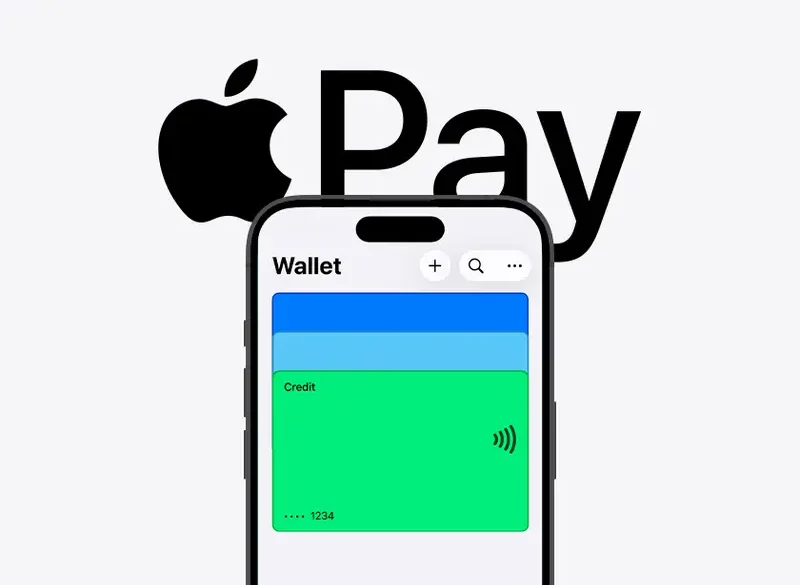
Apple is reportedly preparing to launch Apple Pay in India by October 2026, potentially ending years of waiting for Apple’s digital payments service to officially enter one of the world’s largest digital-payment markets.
According to reports, Apple is targeting a launch around late September or October, with the initial version expected to support Visa and Mastercard credit cards. However, the service is not expected to support UPI at launch, meaning Apple’s first entry into India’s payments ecosystem would focus on traditional card-based contactless payments rather than directly competing with UPI apps such as Google Pay and PhonePe.
Apple has not publicly confirmed the October launch date, so the timeline should currently be treated as a reported target rather than a confirmed launch date.
Apple Pay could finally arrive in India
Apple Pay has been available in numerous international markets for years, allowing users to add supported debit and credit cards to Apple Wallet and make contactless payments using an iPhone or Apple Watch.
India has been one of the major markets where Apple Pay has remained unavailable as a native domestic service.
That could change by October.
APPLE PAY INDIA

Reported target
Late September / October 2026
          ↓
Initial card support
Visa + Mastercard
          ↓
iPhone + Apple Watch
          ↓
Tap-to-pay at compatible terminals
          ↓
UPI NOT expected at launch
The reported rollout would therefore represent a relatively cautious entry rather than an immediate attempt to replicate the full functionality of India’s existing digital-payments ecosystem.
What Apple Pay is expected to support initially
The first phase is expected to centre on credit cards issued on Visa and Mastercard networks.
This means an eligible user would potentially be able to add a supported card to Apple Wallet and use an iPhone or Apple Watch for contactless payments at compatible point-of-sale terminals.
| Feature | Expected at India launch |
|---|---|
| Apple Pay | Yes, reportedly by October |
| Visa credit cards | Expected |
| Mastercard credit cards | Expected |
| UPI | Not expected initially |
| iPhone payments | Expected |
| Apple Watch payments | Expected |
| Contactless/NFC payments | Expected |
| Apple Card | Not part of the reported launch |
The precise list of participating banks and supported cards is expected to become clearer closer to the launch.
Apple Pay will not initially be another UPI app
This is arguably the most important point about the reported India launch.
Apple Pay is not expected to support UPI initially.
India’s digital payments market is dominated by UPI, which allows users to make bank-account-to-bank-account payments through QR codes, mobile numbers and UPI IDs.
Apple Pay’s reported initial model is different.
APPLE PAY

Credit/debit card
       ↓
Apple Wallet
       ↓
NFC
       ↓
Tap at POS terminal
       ↓
Payment


UPI

Bank account
       ↓
UPI app
       ↓
QR / UPI ID
       ↓
Merchant
       ↓
Payment
This means Apple Pay’s initial Indian offering would complement rather than directly replace UPI for most users.
Why UPI support matters so much in India
UPI still sets the baseline any new payments app gets measured against, even as growth cools — see our report on UPI transaction growth falling from 33.5% to 23.5% in FY27 — and on how investors are re-rating listed payment players, as with Paytm shares jumping 5% on a raised Bernstein target.
India has developed an unusually large UPI ecosystem.
The National Payments Corporation of India (NPCI) has built UPI into a broad digital-payment infrastructure that supports bank transfers, merchant payments, credit lines, offline payments and other services. NPCI has also continued expanding UPI into connected devices and new payment experiences.
For Apple, entering India without UPI means entering a market where the most common digital-payment behaviour is fundamentally different from the card-centric model used in many other countries.
INDIA'S PAYMENT ECOSYSTEM

          Digital payments
                 │
       ┌─────────┴─────────┐
       ▼                   ▼
      UPI                 Cards
       │                   │
   QR payments          NFC/tap
       │                   │
Bank account          Credit/debit
       │                   │
       └─────────┬─────────┘
                 ▼
             Consumers
Apple Pay’s first phase would therefore target the card/NFC side of this ecosystem.
Why Apple may be starting with cards
Launching card-based Apple Pay before adding UPI could allow Apple to enter the market with a payment architecture it already operates globally.
The company would not immediately need to redesign Apple Pay around India’s bank-account-based UPI infrastructure.
A phased strategy could look like this:
PHASE 1
Visa + Mastercard
       ↓
NFC / contactless
       ↓
Apple Wallet

PHASE 2?
UPI integration
       ↓
Bank-account payments
       ↓
QR + UPI ecosystem
The second phase is speculative at this point. There is no confirmed Apple announcement that UPI support will follow.
Apple Pay could make the iPhone more useful in India
One of Apple’s major advantages is its tightly integrated hardware and software ecosystem.
Apple Pay could potentially turn the iPhone into a more complete payment device for Indian users.
Instead of opening a separate payment app, users could potentially authenticate a card using Face ID or Touch ID and tap the phone at a compatible terminal.
iPhone
  ↓
Face ID / Touch ID
  ↓
Apple Wallet
  ↓
Stored card
  ↓
NFC
  ↓
POS terminal
  ↓
Payment completed
Apple Watch could provide an even more convenient experience because users would not necessarily need to take their phone out for a contactless payment.
Apple Watch could be a major beneficiary
The Apple Watch is one of the products that could benefit significantly from Apple Pay’s India arrival.
In markets where Apple Pay is supported, users can make contactless payments using the watch at compatible terminals.
For Indian Apple Watch users, this could provide a new use case for the device beyond:
- Fitness tracking
- Notifications
- Calls
- Health features
- Music controls
- App access
The watch could become a regular payment device.
Apple Watch
     ↓
Double-click / authentication
     ↓
Stored card
     ↓
NFC
     ↓
Tap terminal
     ↓
Payment
The exact India experience will depend on Apple’s final implementation and participating banks.
India’s contactless infrastructure has already expanded
Apple Pay’s potential arrival comes at a time when contactless card payments are already available across a large number of Indian point-of-sale terminals.
This is important because Apple does not need to build an entirely new merchant-payment network for NFC card payments.
Instead, the company can potentially leverage existing contactless infrastructure.
India’s payments ecosystem has also already embraced NFC-based initiatives through UPI. NPCI launched UPI Tap & Pay in 2023, allowing users to make payments by tapping NFC-enabled QR codes rather than scanning a conventional QR code.
This means Indian consumers are increasingly familiar with the concept of tap-based payments.
Apple Pay vs UPI
The two systems are fundamentally different.
| Feature | Apple Pay | UPI |
|---|---|---|
| Primary payment source | Card | Bank account |
| Main technology | NFC/contactless | QR, UPI ID, bank rails |
| Typical use | Tap at POS | QR or digital transfer |
| Credit cards | Yes | Supported through specific UPI mechanisms |
| Debit cards | Depending on supported network/bank | Not the core model |
| Bank account transfer | Not core Apple Pay model | Yes |
| QR payments | Not expected to be core launch feature | Core feature |
| Apple Watch | Strong integration | Depends on third-party apps/devices |
| Offline/contactless experience | Strong | Expanding |
| India’s dominant system | No | Yes |
Apple Pay therefore should not initially be viewed as a direct replacement for UPI.
The biggest difference: card versus bank account
A typical Apple Pay transaction starts with a card stored in Apple Wallet.
A typical UPI transaction starts with a bank account connected to a UPI application.
That distinction is crucial.
APPLE PAY
Card → Wallet → NFC → Merchant

UPI
Bank account → UPI → QR/ID → Merchant
For Indian consumers who already use credit cards for everyday spending, Apple Pay could provide a convenient alternative to physically carrying those cards.
Credit card users could be the first major audience
The reported initial focus on Visa and Mastercard credit cards suggests Apple’s first target audience may be India’s growing population of premium card users.
These consumers are already accustomed to:
- Credit-card payments
- Contactless transactions
- Premium smartphones
- Digital wallets
- Apple devices
Apple Pay could make the payment experience more integrated for this group.
Why Apple Pay could appeal to premium users
Apple has a relatively strong position among India’s premium smartphone users.
For these consumers, Apple Pay could offer:
Convenience + security + ecosystem integration.
Instead of carrying multiple physical cards, a user could store eligible cards inside Apple Wallet.
Physical wallet
Cards
Cash
Receipts
      ↓
Digital transition

iPhone / Apple Watch
      ↓
Apple Wallet
      ↓
Multiple supported cards
The actual number of cards supported will depend on Apple’s final India configuration and bank partnerships.
Security is another major selling point
Apple Pay uses tokenisation rather than simply transmitting the physical card number during a transaction.
In Apple’s global Apple Pay architecture, the actual card number is not shared with merchants in the normal transaction process.
Instead, payment credentials are represented through a device-specific account number and security mechanisms.
This can reduce the exposure of the actual card details during payment.
Physical card number
        ↓
Apple Pay setup
        ↓
Tokenised payment credential
        ↓
Merchant transaction
The exact security architecture and implementation for India will follow Apple’s supported payment infrastructure.
Face ID could simplify payments
Apple’s biometric authentication could also make the process convenient.
A typical transaction could involve:
- Holding the iPhone near a contactless terminal.
- Authenticating with Face ID or Touch ID.
- Completing the transaction.
For Apple Watch, authentication is handled differently because the device can remain authorised while worn.
This is one reason Apple Pay can feel more integrated than opening a separate payment application for every transaction.
Apple Pay could increase the value of Apple Wallet
Apple Wallet currently has different levels of functionality depending on the country.
A successful India rollout could significantly expand what Indian users can do with the Wallet app.
Potential functions include:
- Payment cards
- Tickets
- Boarding passes
- Digital passes
- Loyalty cards
- Other supported credentials
The payment-card component would be the most important new addition.
Why Apple has waited so long
Apple’s absence from India’s domestic payment market has attracted attention for years.
India’s payments infrastructure is unusual because UPI has become deeply integrated into consumer behaviour.
Entering the market therefore requires Apple to work within a payment ecosystem that is substantially different from markets where Apple Pay became established earlier.
There are also commercial considerations involving:
- Banks
- Card networks
- Payment processors
- Regulatory requirements
- Transaction economics
- Local payment infrastructure
The reported October target suggests Apple may now have made enough progress on these issues to move toward a launch.
The bank partnership question
Apple Pay does not automatically make every Visa or Mastercard card compatible.
Banks typically need to participate in Apple Pay and support tokenisation and other technical requirements.
This means the actual launch experience could vary significantly between banks.
Apple Pay launch
      ↓
Participating card network
      +
Participating bank
      +
Eligible card
      +
Compatible Apple device
      ↓
Apple Pay works
Therefore, the headline “Apple Pay launches in India” does not necessarily mean every Indian iPhone user will immediately be able to add every card.
Which banks will support it?
The complete list of participating Indian banks has not yet been publicly confirmed for the reported launch.
That will be one of the most important details to watch.
Consumers will need to know:
- Which banks are participating
- Which Visa cards are supported
- Which Mastercard cards are supported
- Whether debit cards are supported
- Whether premium cards are included
- Whether co-branded cards are eligible
- Whether business cards are supported
These details could determine how useful the launch is in its first phase.
Apple’s India payment opportunity
India has a huge digital-payment user base.
But Apple’s smartphone market share is considerably smaller than Android’s.
This means Apple Pay is unlikely to challenge UPI’s overall transaction dominance immediately.
Instead, its first opportunity is likely to be premium smartphone users and existing credit-card customers.
India smartphone market
        ↓
Android = majority
iPhone = smaller share
        ↓
Apple Pay addressable base
        ↓
Premium + high-value consumers
        ↓
Credit-card spending
Apple does not need to replace UPI to make Apple Pay strategically valuable.
Apple Pay could strengthen the Apple ecosystem
Apple increasingly treats hardware, software and services as one ecosystem.
Apple Pay fits directly into this strategy.
iPhone
  +
Apple Watch
  +
Apple Wallet
  +
Apple Pay
  +
Cards
  ↓
Integrated Apple ecosystem
A payment service can also increase customer stickiness because users become more accustomed to storing financial credentials within the ecosystem.
Apple Pay could boost Apple Watch adoption
For Apple, the payment functionality could have an additional strategic benefit.
The Apple Watch is already a strong wearable product, but payments provide another reason for users to wear it regularly.
Imagine a user going for a short walk without their wallet or phone.
With an enabled Apple Watch:
Watch → contactless terminal → payment.
That could make the wearable more useful in everyday life.
Apple Pay and India’s tap-and-pay culture
India’s payment ecosystem has historically been dominated by QR codes.
However, contactless card payments have continued to grow.
Apple Pay could help accelerate consumer awareness of NFC payments among iPhone users.
QR culture
     +
Contactless cards
     +
NFC smartphones
     +
Smartwatches
     ↓
More payment-choice options
This could be particularly useful in places such as:
- Retail stores
- Restaurants
- Airports
- Hotels
- Shopping malls
- Metro systems where supported
- Petrol stations
- Large-format supermarkets
Actual acceptance depends on the merchant terminal and card network.
Apple Pay could complement, not replace, UPI
For many Indian users, the likely future could be:
UPI for everyday bank-account payments
Apple Pay for credit-card contactless payments.
A user could therefore use both.
₹200 local purchase
      ↓
UPI QR

₹5,000 restaurant bill
      ↓
Credit card via Apple Pay

International / premium transaction
      ↓
Card via Apple Pay
This is only an illustrative use case, but it shows how the two systems could coexist.
What happens if Apple eventually adds UPI?
That would be a much bigger development.
If Apple Pay eventually supports UPI, Apple could combine:
Apple hardware + Apple Wallet + NFC + UPI + bank accounts.
That could create a much more direct competitive relationship with existing UPI apps.
TODAY'S REPORTED PHASE 1

Apple Pay
   ↓
Visa / Mastercard
   ↓
NFC


POTENTIAL FUTURE

Apple Pay
   ↓
Cards + UPI
   ↓
NFC + QR
   ↓
One payment interface
However, there is currently no confirmed launch announcement establishing UPI support.
Why Apple may want UPI eventually
UPI is deeply embedded in Indian commerce.
A card-only Apple Pay service would leave out a major portion of everyday digital payments.
UPI is used for everything from small retail purchases to bills, subscriptions, transfers and online commerce.
If Apple wants Apple Wallet to become a comprehensive payment interface in India, UPI integration could eventually become strategically important.
But Apple would need to work within India’s regulatory and technical ecosystem.
Competition with Google and Samsung
Apple’s India launch would also intensify competition among mobile payment ecosystems.
Google Pay and Samsung’s payment products already operate within India’s digital-payment environment, while UPI apps dominate bank-account payments.
Apple would be entering as a premium ecosystem player.
| Platform | Smartphone ecosystem | India payment strength |
|---|---|---|
| Apple Pay | iPhone / Apple Watch | Reported upcoming card/NFC entry |
| Google Pay | Android | Strong UPI presence |
| PhonePe | Android / iOS | Strong UPI presence |
| Paytm | Android / iOS | Strong UPI presence |
| Samsung Wallet/Pay | Samsung devices | Card/NFC + local payment features |
Apple’s biggest differentiator would be tight integration with its hardware.
Apple Pay vs Google Pay in India
The comparison could initially be slightly misleading because Google Pay’s Indian version is heavily built around UPI.
Apple Pay’s reported first version would be card-centric.
Google Pay India
       ↓
UPI
       ↓
Bank account
       ↓
QR / UPI ID

Apple Pay India
       ↓
Visa / Mastercard
       ↓
Credit card
       ↓
NFC / tap
The competitive overlap could become much greater if Apple eventually integrates UPI.
The economics of India’s payment market
Payments in India operate under a different commercial model from many international markets.
UPI’s widespread use has been helped by its low-cost structure and enormous network effect.
Card transactions involve payment networks, banks, merchants and other intermediaries.
Apple will therefore need to establish commercial arrangements that make sense for participating banks and card networks.
The negotiations around transaction economics could be one reason the India rollout has taken time.
Why Apple’s launch could matter to banks
Banks could potentially benefit from increased digital usage of their credit cards.
If Apple Pay makes card payments easier, users may be more likely to use their cards for contactless purchases.
This could potentially increase:
- Credit-card transaction frequency
- Digital wallet usage
- Premium card engagement
- Contactless payments
Banks, however, will need to evaluate the economics of participating in Apple’s ecosystem.
Impact on India’s credit-card market
India’s credit-card market has expanded significantly in recent years.
Consumers increasingly use credit cards for:
- Online shopping
- Travel
- Dining
- Entertainment
- Retail
- Subscription services
Apple Pay could add another layer of convenience for these users.
Credit card
    ↓
Apple Wallet
    ↓
iPhone / Watch
    ↓
Contactless payment
    ↓
More convenient card usage
This could be particularly attractive to consumers who already prefer premium rewards and cashback cards.
The role of NFC
NFC, or Near Field Communication, is the technology that allows devices to communicate over very short distances.
For Apple Pay, the process is essentially:
iPhone / Apple Watch
        ↕
      NFC
        ↕
Payment terminal
The phone or watch does not need to physically touch the terminal.
It simply needs to be brought close enough for the NFC communication to occur.
What merchants need
For Apple Pay card payments to work, merchants generally need compatible contactless payment terminals.
Fortunately, many Indian card terminals already support contactless transactions.
This reduces the infrastructure barrier compared with launching an entirely new payment method.
The bigger challenge is ensuring:
bank compatibility + card compatibility + Apple support.
Will every iPhone support Apple Pay?
Apple Pay generally works on supported iPhone models with NFC and compatible software.
However, the actual India launch requirements will depend on Apple’s final configuration.
Users should therefore wait for Apple’s official India support documentation before assuming that every device or card will be supported.
Will Apple Pay work without internet?
Contactless card payments through Apple Pay can be designed to work without the phone maintaining a conventional internet connection at the moment of payment, because the transaction is processed through the NFC payment infrastructure.
However, exact transaction behaviour, card provisioning and bank requirements can vary.
Users should not assume that every Apple Pay feature will work offline.
Apple Pay is not Apple Card
Another important distinction is between Apple Pay and Apple Card.
Apple Pay is Apple’s digital wallet and payment service for supported cards.
Apple Card is Apple’s own branded credit-card product.
The reported India launch concerns Apple Pay, not an Apple Card launch.
Apple Pay
= Digital payment service / wallet

Apple Card
= Apple's own credit card
The two should not be confused.
What consumers should expect in October
If the reported timeline holds, the first phase could look something like this:
OCTOBER 2026 — REPORTED PLAN

1. Apple Pay becomes available
             ↓
2. Eligible Indian cards can be added
             ↓
3. Visa / Mastercard support
             ↓
4. iPhone + Apple Watch payments
             ↓
5. Tap at compatible POS terminals
             ↓
6. UPI remains outside initial rollout
The precise launch date and participating banks remain to be confirmed by Apple.
What users should watch for
When Apple officially announces the service, the most important details will be:
1. Launch date
Whether Apple actually launches in September or October.
2. Participating banks
The number of Indian banks supporting Apple Pay at launch.
3. Card eligibility
Whether Visa and Mastercard debit cards are supported alongside credit cards.
4. UPI
Whether Apple has any near-term plans to add UPI.
5. Apple Watch
Whether Watch payments receive the same launch coverage.
6. Merchant compatibility
How broadly Apple Pay can be used across Indian contactless terminals.
7. Transaction limits
Whether any India-specific restrictions apply.
Apple’s reported India launch at a glance
| Question | Current reported position |
|---|---|
| Is Apple Pay coming to India? | Reportedly yes |
| Target | Late September/October 2026 |
| Officially confirmed by Apple? | No |
| Initial payment method | Cards |
| Visa | Expected |
| Mastercard | Expected |
| UPI | Not expected initially |
| iPhone | Expected |
| Apple Watch | Expected |
| Apple Card | Not part of reported launch |
| Main technology | NFC/contactless |
What this means for Apple’s India strategy
Apple’s reported Apple Pay launch would represent more than another feature for iPhone users.
It would mark Apple’s deeper entry into India’s financial technology ecosystem.
Apple already has a significant consumer hardware business in India, but payment services could increase the value of the overall ecosystem.
iPhone
  ↓
Apple Wallet
  ↓
Apple Pay
  ↓
Credit cards
  ↓
Apple Watch
  ↓
More ecosystem integration
The payment layer can therefore become another reason for users to remain within Apple’s ecosystem.
India’s payment market is difficult to enter
India is one of the most competitive digital-payment markets in the world.
UPI has established strong consumer habits around QR codes and bank-account payments.
That means Apple does not have the luxury of entering an empty market.
Instead, it needs to convince users that card-based contactless payments offer enough convenience to justify another payment option.
The good news for Apple is that its target audience is already highly concentrated among premium smartphone and credit-card users.
The bigger impact could come later
The first phase of Apple Pay may be relatively limited compared with UPI.
But the strategic importance could increase if Apple eventually expands into:
- UPI
- More banks
- Debit cards
- Transit payments
- Digital identity
- Tickets and passes
- More Apple Wallet features
The initial card launch could therefore serve as the foundation for a broader Apple financial-services ecosystem in India.
Conclusion
Apple Pay is reportedly on track to launch in India by late September or October 2026, potentially bringing Apple’s long-awaited payment service to Indian iPhone and Apple Watch users. However, Apple has not officially confirmed the October launch, so the reported timeline should be treated as a target rather than a guaranteed date.
The initial rollout is expected to focus on Visa and Mastercard credit cards, allowing users to make contactless payments through compatible iPhones and Apple Watches. Crucially, UPI is not expected to be supported at launch, meaning Apple Pay would initially operate as a card-based NFC payment service rather than another UPI application.
This distinction is important because India’s payments ecosystem is fundamentally different from many other countries. UPI dominates everyday digital payments, while credit cards remain particularly important for online shopping, travel, dining, premium purchases and rewards-driven spending.
Apple Pay could therefore initially target a narrower but potentially valuable segment: iPhone users who already use credit cards and want a more convenient contactless payment experience.
The launch could also strengthen Apple’s broader ecosystem. An iPhone combined with Apple Wallet and Apple Watch could provide users with a seamless way to carry and use multiple payment cards without physically carrying them.
For banks, Apple Pay could provide another channel for credit-card usage. For consumers, it could make contactless payments more convenient. For Apple, it could increase ecosystem engagement in one of its fastest-growing markets.
But the biggest question will be what happens after the initial launch.
If Apple eventually integrates UPI, the competitive landscape could change dramatically. Apple Pay would then potentially combine Apple’s hardware ecosystem with India’s dominant bank-account payment infrastructure, putting it in much more direct competition with Google Pay, PhonePe and other UPI platforms.
For now, however, the reported strategy appears to be deliberately limited: bring Apple Pay’s global card-based experience to India first, establish partnerships with banks and card networks, and leave UPI outside the initial rollout.
The October launch, if confirmed, would finally give Indian Apple users access to one of the company’s most important ecosystem services — but the real test will be whether Apple can eventually adapt Apple Pay to the unique realities of India’s UPI-dominated payments market.
Frequently Asked Questions
When will Apple Pay launch in India?
Reports point to a launch by October 2026. Apple has not publicly confirmed a date, so the timeline remains unconfirmed.
Will Apple Pay support UPI in India?
Not at launch, based on current reporting. Apple Pay is expected to start with card payments rather than working as another UPI app.
Will Apple Pay work on Apple Watch in India?
Apple Watch is expected to be a major beneficiary of the launch, since tap-to-pay card payments on the watch do not depend on UPI-style QR flows.
Get the day’s top stories in your inbox
One concise email. No spam, unsubscribe anytime.


