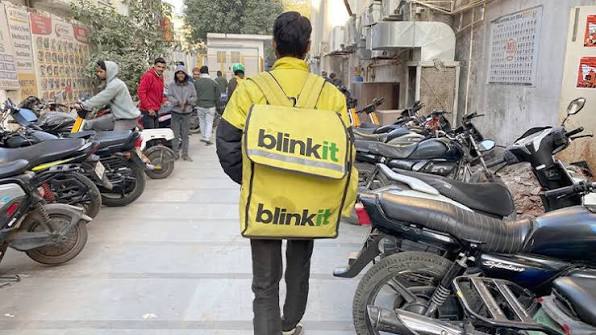
Blinkit’s quick-commerce operations have come under fresh scrutiny after the Maharashtra Food and Drug Administration (FDA) suspended the food licence of one of its dark stores in Malad West, Mumbai, following an inspection that found severe hygiene and food-safety violations, including a cockroach infestation.
The action affects the specific facility inspected by the regulator and does not mean Blinkit’s entire Mumbai or India-wide operation has been shut down. The FDA’s intervention highlights the growing regulatory pressure on quick-commerce companies as dark stores become an increasingly important part of India’s food-retail supply chain.
Blinkit Malad dark store loses food licence
The Maharashtra FDA suspended the food licence of a Blink Commerce Pvt Ltd facility located at Sarvodaya Bhuvan in Malad West with immediate effect after officials inspected the premises on August 7, 2026.
Inspectors reportedly described the facility as extremely unhygienic and found cockroaches on stored fruits and vegetables, along with expired food stock and other storage and hygiene violations.
BLINKIT MALAD DARK STORE

FDA inspection
      ↓
August 7, 2026
      ↓
Severe hygiene violations
      ↓
Cockroaches found
      ↓
Food-safety lapses identified
      ↓
Licence suspended
      ↓
Facility barred from food operations
The suspension means the inspected facility cannot continue normal food-related activities until the regulatory issues are addressed and the authorities permit operations to resume.
What did the FDA find?
The Maharashtra FDA has been active against large e-commerce warehouses too — the Bombay High Court ordered Amazon to hand over expired food stock at its Bhiwandi warehouse to the regulator.
The inspection identified multiple problems rather than a single isolated issue.
The most serious finding was reportedly a cockroach infestation, including cockroaches found around stored fruits and vegetables. Officials also identified expired food products and improper storage conditions.
| Issue identified | Food-safety concern |
|---|---|
| Cockroach infestation | Potential contamination |
| Cockroaches around fruits and vegetables | Direct hygiene concern |
| Expired food stock | Product safety and compliance risk |
| Improper storage | Risk of contamination or deterioration |
| Unhygienic premises | Failure to maintain required food-handling standards |
| Other food-safety lapses | Regulatory non-compliance |
The combination of pest infestation and poor storage is particularly serious because a dark store is not simply a retail outlet. It functions as a food-storage and fulfilment centre where products are continuously received, stored, picked and dispatched to customers.
Why cockroach infestation is a major food-safety issue
Cockroaches can contaminate food and food-contact surfaces through their bodies, droppings and contact with waste or contaminated areas.
In a warehouse environment, the problem becomes more complicated because a single infestation can potentially affect multiple categories of inventory.
COCKROACH INFESTATION
        ↓
Movement across storage areas
        ↓
Potential contact with food
        ↓
Potential contamination
        ↓
Consumer health risk
        ↓
Regulatory action
For a quick-commerce operation promising delivery within minutes, maintaining hygiene at the storage point is therefore critical.
The dark-store model makes hygiene especially important
Blinkit operates through a network of dark stores that are designed primarily for online order fulfilment rather than traditional walk-in shopping.
Customers place orders through the app.
The dark store receives the order, workers pick the products, pack them and hand them to delivery partners.
CUSTOMER
   ↓
Blinkit App
   ↓
Order generated
   ↓
Dark Store
   ↓
Product picked
   ↓
Product packed
   ↓
Delivery partner
   ↓
Customer
This model makes the dark store the physical bridge between digital ordering and the consumer’s kitchen.
If food safety fails at this point, the problem can move directly from the warehouse to households.
Why expired food is another serious concern
The FDA also found expired food stock at the facility.
Expired products should be identified and removed from saleable inventory rather than remaining mixed with products available for fulfilment.
VALID STOCK
   ↓
Available for sale

EXPIRING SOON
   ↓
Priority monitoring

EXPIRED
   ↓
REMOVE FROM SALE
   ↓
SEGREGATE
   ↓
SAFE DISPOSAL
For quick-commerce companies carrying thousands of products with different shelf lives, automated inventory management is therefore essential.
The problem with high-speed grocery delivery
Quick commerce is built around speed.
Companies compete to deliver products in minutes, which requires inventory to be stored extremely close to customers.
That creates a large network of small fulfilment locations.
TRADITIONAL RETAIL

Few large warehouses
        ↓
Supermarkets
        ↓
Customers


QUICK COMMERCE

Many dark stores
        ↓
Small delivery radius
        ↓
Very fast delivery
        ↓
More storage locations
        ↓
More locations to monitor
The business advantage is speed.
The regulatory challenge is maintaining identical food-safety standards across hundreds or thousands of facilities.
One dark store does not represent the entire Blinkit network
The FDA action applies to the specific Malad West facility inspected by authorities.
It does not mean Blinkit’s entire network has lost its food licence.
This distinction is important because quick-commerce companies operate numerous dark stores across different cities and neighbourhoods.
BLINKIT NETWORK

Delhi
├── Store A
├── Store B
└── Store C

Mumbai
├── Store A
├── MALAD STORE ← FDA action
├── Store C
└── Store D

Bengaluru
├── Store A
└── Store B
The immediate regulatory action is therefore facility-specific.
Maharashtra FDA is increasing food-safety enforcement
The Blinkit action comes during a wider food-safety enforcement campaign in Maharashtra.
The state FDA has recently inspected restaurants, food establishments and quick-commerce facilities, with several licences suspended after officials identified hygiene, storage and other food-safety violations.
This indicates that regulators are increasingly treating digital food-retail infrastructure as part of the formal food-safety ecosystem.
MAHARASHTRA FDA

Restaurants
     +
Food manufacturers
     +
Retail stores
     +
Quick-commerce dark stores
     +
E-commerce warehouses
     ↓
Food-safety inspections
     ↓
Violations
     ↓
Regulatory action
Blinkit has faced food-safety scrutiny before
The latest incident is not the first time a Blinkit facility has faced regulatory scrutiny.
The Food Safety and Standards Authority of India (FSSAI) has previously highlighted violations at quick-commerce facilities, including a Blinkit facility where officials reported food being stored on the floor, dusty racks, missing pest-control documentation, personnel without protective caps and issues involving cold-storage calibration.
Earlier regulatory actions also affected quick-commerce facilities operated by Blinkit and Zepto in Maharashtra.
FSSAI has subsequently emphasised that e-commerce and quick-commerce companies need to maintain food-safety standards across their warehouses and storage facilities.
Regulators are treating dark stores as food businesses
The regulatory message is becoming increasingly clear.
A dark store may look like a logistics facility from the outside, but if it stores and handles food products, it must meet applicable food-safety requirements.
DARK STORE
     ↓
Stores food?
     ↓
YES
     ↓
Food-safety obligations
     ↓
Licence
+
Hygiene
+
Pest control
+
Storage
+
Expiry management
+
Food-handler practices
This has major implications for the entire quick-commerce industry.
FSSAI has already issued specific guidance for e-commerce
FSSAI has directed e-commerce companies to strengthen food-safety practices across their warehouses and storage facilities.
The regulator has also asked platforms to disclose warehouse information through the FoSCoS system and ensure appropriate licensing or registration of facilities involved in food operations.
The regulator has also discussed displaying expiry or “use by” information to consumers and requiring food handlers to undergo appropriate food-safety training.
FSSAI EXPECTATIONS

Warehouse licensing
       +
Food-handler training
       +
Hygiene standards
       +
Warehouse disclosure
       +
Expiry information
       +
SOP compliance
       +
Regular monitoring
Shelf-life management is becoming critical
FSSAI has also emphasised that food sold through e-commerce and quick-commerce channels should have adequate remaining shelf life.
According to FSSAI’s guidance cited in its media compendium, platforms should list and deliver food products with at least 30% of shelf life remaining or at least 45 days before expiry, where applicable under the relevant requirements.
FOOD LISTED ONLINE
        ↓
Check expiry
        ↓
Check remaining shelf life
        ↓
Meets required threshold?
   ┌────┴────┐
  YES        NO
   ↓          ↓
List       Don't list
This makes expiry tracking an important operational function rather than simply an accounting issue.
The dark-store food-safety checklist
A compliant dark store needs to manage several areas simultaneously.
| Area | What needs to be controlled |
|---|---|
| Pest control | Regular inspection and treatment |
| Food storage | Clean, dry and appropriate areas |
| Expiry | Automated tracking and segregation |
| Cold chain | Correct temperature monitoring |
| Hygiene | Clean racks, floors and surfaces |
| Food handlers | Protective equipment and training |
| Documentation | Licences, certificates and inspection records |
| Inventory | Separation of expired/damaged products |
| Waste | Timely removal and safe disposal |
A failure in one area can potentially affect the safety of the wider inventory.
Why pest control matters in dark stores
Dark stores contain exactly the conditions that can attract pests if hygiene controls fail:
- Food products
- Packaging materials
- Waste
- High inventory turnover
- Multiple deliveries each day
- Storage racks
- Limited customer visibility
FOOD INVENTORY
      +
PACKAGING
      +
WASTE
      +
HIGH STOCK MOVEMENT
      ↓
Potential pest attraction
      ↓
Need for strict pest control
This makes documented pest-control audits especially important.
Technology can help prevent expiry and hygiene failures
Quick-commerce companies have a significant technological advantage when it comes to inventory monitoring.
Every product can potentially be tracked using:
- Barcode
- Batch number
- Expiry date
- Storage location
- Stock movement
- Order history
PRODUCT
   ↓
Barcode scan
   ↓
Batch + expiry recorded
   ↓
Inventory system
   ↓
Automatic alerts
   ↓
Near-expiry stock identified
   ↓
Remove / prioritise / dispose
But technology alone is not enough.
The physical condition of the warehouse still has to be monitored through regular inspections.
The importance of FEFO inventory management
Food warehouses commonly use FEFO — First Expiry, First Out.
Under this system, the products that expire first are prioritised for sale or dispatch.
PRODUCT A
Expires Aug 15
████████████████
      ↓
Dispatch first

PRODUCT B
Expires Sep 20
████████████

PRODUCT C
Expires Dec 10
████
FEFO can reduce food waste and lower the probability of expired products remaining in active inventory.
What happens when a licence is suspended?
A food-licence suspension is a serious regulatory measure.
The affected facility cannot simply continue operating normally as though the inspection had not occurred.
The operator generally has to address the identified deficiencies and satisfy the regulator before normal food operations can resume.
FDA INSPECTION
      ↓
Violations identified
      ↓
Licence suspended
      ↓
Corrective measures
      ↓
Compliance verification
      ↓
Regulatory decision
      ↓
Possible resumption
The exact timeline depends on the regulator’s requirements and the facility’s ability to rectify the violations.
What Blinkit will need to address
Based on the reported findings, the facility’s corrective action would need to focus on areas such as:
Pest eradication
The infestation needs to be addressed through professional pest-control measures.
Deep cleaning
Storage areas, floors, racks and food-handling surfaces need thorough cleaning.
Expired stock removal
Expired products need to be identified, segregated and safely disposed of.
Inventory controls
The company needs to ensure expired products cannot accidentally enter the picking system.
Food-safety audits
Regular internal inspections can help identify problems before regulatory inspections.
Staff compliance
Employees handling food products need to follow hygiene and protective-equipment requirements.
FIX THE STORE

Pest control
     +
Deep cleaning
     +
Expired stock removal
     +
Inventory audit
     +
Staff training
     +
Documentation
     ↓
FDA verification
     ↓
Potential reopening
What this means for Blinkit’s quick-commerce model
The incident exposes a structural challenge in quick commerce.
The industry is built around more dark stores + more inventory + faster fulfilment.
But every additional store creates another location that needs to meet food-safety standards.
MORE DARK STORES
      ↓
Closer to customers
      ↓
Faster delivery
      ↓
Higher operational complexity
      ↓
More compliance points
This could become increasingly expensive as companies scale.
Quick commerce is moving from logistics to food retail
The early perception of quick commerce was largely about delivery speed.
Today, platforms increasingly sell:
- Fresh produce
- Dairy
- Packaged foods
- Meat
- Bakery products
- Frozen foods
- Beverages
- Household products
That means the sector increasingly resembles a distributed grocery-retail network.
QUICK COMMERCE 1.0
        ↓
"10-minute delivery"


QUICK COMMERCE 2.0
        ↓
Distributed grocery network
        ↓
Food storage
        ↓
Food handling
        ↓
Food safety
        ↓
Regulatory compliance
The Malad action highlights this transition.
The economics of compliance
Food-safety compliance adds costs to the quick-commerce model.
Companies need to spend on:
| Compliance area | Potential cost |
|---|---|
| Pest control | Recurring |
| Cleaning | Recurring |
| Staff training | Recurring |
| Quality audits | Recurring |
| Temperature monitoring | Equipment + maintenance |
| Inventory systems | Technology |
| Waste disposal | Operational |
| Compliance staff | Personnel |
These costs may appear small at the individual-store level, but they can become substantial when multiplied across hundreds or thousands of locations.
The consumer trust question
Quick commerce depends heavily on convenience and trust.
Customers assume that products arriving at their doorstep are safe to consume.
A food-safety incident can therefore create a reputational risk even if it affects only one facility.
CUSTOMER
   ↓
Orders food online
   ↓
Trusts platform
   ↓
Receives product
   ↓
Consumes product
   ↓
Expected:
Fresh + safe + valid
The larger the platform, the more important maintaining that trust becomes.
What this means for other quick-commerce companies
Blinkit is not alone in facing increased regulatory scrutiny.
Other quick-commerce operators, including Zepto, have also faced food-safety actions at individual facilities in Maharashtra. FSSAI has highlighted multiple enforcement actions involving quick-commerce dark stores.
This suggests that regulators are increasingly looking beyond traditional shops and restaurants.
QUICK-COMMERCE INDUSTRY

Blinkit
   +
Zepto
   +
Swiggy Instamart
   +
Other platforms
      ↓
Dark stores
      ↓
Food-safety oversight
The sector may therefore see tighter compliance standards across the board.
What could change for quick-commerce companies?
Companies could respond by increasing:
- Automated expiry tracking
- Pest-control frequency
- Surprise internal inspections
- Food-safety staff
- Warehouse cleaning schedules
- Temperature monitoring
- Employee training
- Supplier audits
- Expired-stock segregation
- Regulatory documentation
REGULATORY PRESSURE
        ↓
HIGHER COMPLIANCE INVESTMENT
        ↓
BETTER STORE STANDARDS
        ↓
LOWER FOOD-SAFETY RISK
The downside is that compliance costs could put additional pressure on an industry already competing heavily on delivery speed and price.
Blinkit food-safety issue at a glance
┌──────────────────────────────────────┐
│       BLINKIT MALAD FDA ACTION       │
├──────────────────────────────────────┤
│ Location: Malad West, Mumbai         │
│ Operator: Blink Commerce Pvt Ltd     │
│ Inspection: Aug 7, 2026               │
│ Regulator: Maharashtra FDA           │
│ Licence: Suspended                    │
│ Major finding: Cockroach infestation │
│ Other finding: Expired food stock    │
│ Other issue: Poor hygiene/storage    │
│ Facility affected: Specific dark     │
│ store inspected                       │
└──────────────────────────────────────┘
The reported findings come from the FDA inspection and media reports on the regulatory action.
Blinkit vs traditional supermarket: compliance challenge
| Factor | Traditional supermarket | Quick-commerce dark store |
|---|---|---|
| Customer access | Public | Usually restricted |
| Store size | Often larger | Usually smaller |
| Number of locations | Lower | High |
| Delivery speed | Normal | Minutes |
| Inventory movement | Moderate/high | Very high |
| Food storage | Yes | Yes |
| Pest-control requirement | High | High |
| Expiry tracking | Important | Extremely important |
| Regulatory complexity | High | Increasing |
The key difference is scale of the network.
A quick-commerce company can have many small storage points operating simultaneously.
The larger industry lesson
The Blinkit case reinforces a simple principle:
Fast delivery cannot come at the expense of food safety.
The customer may care about receiving groceries in 10 minutes, but the product still needs to have been stored under appropriate conditions before it reaches the delivery rider.
FAST DELIVERY
      +
SAFE STORAGE
      +
VALID PRODUCTS
      +
HYGIENE
      ↓
GOOD QUICK-COMMERCE EXPERIENCE
Speed is the consumer-facing promise.
Food safety is the operational responsibility behind it.
What regulators are likely to watch next
Dark-store hygiene
Authorities may continue surprise inspections of quick-commerce warehouses.
Pest-control records
Documentation could become increasingly important in proving that facilities are being monitored.
Expiry management
Regulators may pay closer attention to how companies segregate and dispose of expired inventory.
Cold-chain compliance
Dairy, frozen food, meat and other temperature-sensitive products require proper storage.
Food-handler training
Staff working with food products need to understand hygiene and handling requirements.
Warehouse licensing
Companies may face greater scrutiny over whether every food-handling location is properly registered or licensed.
Key questions after the Malad action
Will Blinkit reopen the facility?
The store would need to address the deficiencies and satisfy the regulator before food operations can resume.
How extensive was the infestation?
The reported findings describe the conditions as serious, but the exact quantity of affected inventory has not been publicly established in the sources reviewed.
Was any contaminated food delivered?
The regulatory reports cited here concern conditions found at the inspected facility. They do not establish that contaminated products were delivered to customers.
Will Maharashtra inspect more dark stores?
The latest action is part of a broader food-safety enforcement drive, making further inspections possible.
Will other platforms face similar scrutiny?
Given FSSAI’s focus on e-commerce warehouses and previous actions involving other quick-commerce facilities, stronger industry-wide compliance is likely to remain a priority.
Conclusion
The Maharashtra FDA’s suspension of the food licence at a Blinkit dark store in Malad West, Mumbai, is a significant warning for India’s rapidly expanding quick-commerce industry.
The regulator’s inspection on August 7 reportedly found cockroaches around stored fruits and vegetables, expired food stock, improper storage and extremely unhygienic conditions. The findings were serious enough for the FDA to suspend the facility’s food licence with immediate effect.
The action is important because dark stores have become the backbone of India’s quick-commerce model.
Customers see only the final stage: they place an order and receive groceries within minutes.
Behind that experience is a complex physical network of warehouses, racks, refrigerators, inventory systems, workers and delivery hubs. Every one of those facilities has to maintain appropriate food-safety standards.
The Malad incident demonstrates what can happen when those controls fail.
A cockroach infestation is not simply a cleanliness problem. In a food-storage facility, pests can create contamination risks across products and surfaces. The presence of expired food adds another layer of concern because products that have crossed their expiry dates must be removed from saleable inventory.
The incident also comes at a time when Maharashtra’s FDA is conducting a broader food-safety crackdown, while FSSAI has been increasingly focused on the responsibilities of e-commerce and quick-commerce platforms. Regulators have stressed that warehouses and storage facilities involved in online food sales need appropriate licensing, hygiene systems, trained food handlers and proper inventory controls.
For Blinkit, the immediate priority will be to address the deficiencies at the affected facility, strengthen pest control, remove expired inventory, improve hygiene and demonstrate compliance to the regulator.
For the wider quick-commerce sector, however, the implications are much bigger.
Companies have spent years competing over 10-minute and 15-minute delivery promises. As the industry matures, the competitive equation is likely to shift from simply asking “How fast can you deliver?” to also asking “How safely and reliably can you store and deliver food?”
The number of dark stores is increasing, food categories are expanding and consumers are increasingly relying on quick-commerce platforms for everyday groceries.
That means food-safety compliance will become a core operating requirement rather than a back-office regulatory issue.
The central lesson from the Blinkit Malad case is therefore straightforward:
Quick commerce can be fast, but food safety cannot be rushed.
The long-term winners in the sector will need to combine rapid delivery with strong warehouse hygiene, automated expiry management, rigorous pest control and transparent food-safety practices.
For consumers, the incident is also a reminder that the quality of an online grocery order depends not only on the product itself, but on everything that happens to it inside the dark store before it reaches the doorstep.
Frequently Asked Questions
Why was the Blinkit food licence suspended?
The Maharashtra FDA inspected a Blinkit dark store in Malad West, Mumbai and found severe hygiene and food-safety violations, including a cockroach infestation.
Does this affect all Blinkit stores?
No. The suspension applies to one dark store in Malad West and does not represent the entire Blinkit network.
Why is hygiene a bigger issue in dark stores?
Dark stores hold packaged and fresh food for rapid dispatch and are not open to customers, so lapses are less visible. High-speed grocery delivery also puts pressure on stock rotation, which raises the risk of expired items reaching buyers.
Get the day’s top stories in your inbox
One concise email. No spam, unsubscribe anytime.


