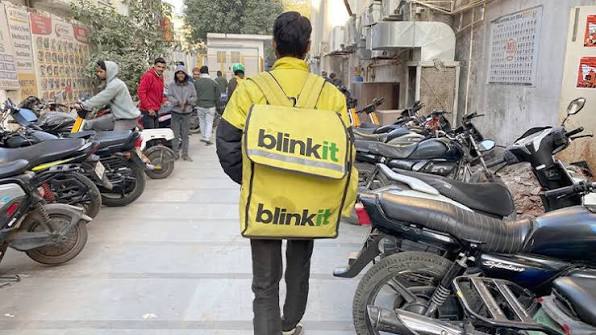
Blinkit’s rapid growth in India’s quick-commerce market is masking a significant profitability challenge: inventory spoilage and losses. According to disclosures in Eternal’s latest shareholder letter, Blinkit lost 1.8% of its Net Order Value (NOV) during the April-June quarter due to expired products, damaged goods, goods lost in transit, and theft. Based on the company’s quarterly NOV of ₹17,132 crore, these inventory losses amounted to around ₹308 crore—roughly three times Blinkit’s adjusted EBITDA of ₹102 crore for the period. The figures highlight the hidden costs associated with operating an inventory-led quick-commerce business.
While Blinkit achieved its highest-ever quarterly adjusted EBITDA and continued to improve operational efficiency, the inventory losses underline the trade-off between offering ultra-fast deliveries and managing highly perishable inventory. Most of these losses stem from fruits, vegetables, and other fast-moving grocery items that have limited shelf lives.
Spoiled Inventory Cost Blinkit Around ₹308 Crore
Scale keeps rising, as Blinkit’s daily orders crossed 36 lakh in Q1 FY27.
Blinkit disclosed that inventory losses accounted for 1.8% of Net Order Value (NOV) during the quarter.
Key Financial Metrics
| Metric | Q1 FY27 |
|---|---|
| Net Order Value (NOV) | ₹17,132 crore |
| Inventory loss rate | 1.8% of NOV |
| Estimated inventory losses | ₹308 crore |
| Adjusted EBITDA | ₹102 crore |
| Inventory losses vs EBITDA | Nearly 3x |
The losses include:
- Expired food products.
- Damaged inventory.
- Goods lost during transportation.
- Theft and shrinkage.
These costs are already included in the company’s cost of goods sold (COGS) and are deducted before gross profit and adjusted EBITDA are calculated.
Why Inventory Losses Matter
Although Blinkit reported an adjusted EBITDA profit of ₹102 crore, the company had already absorbed approximately ₹308 crore in inventory-related losses before arriving at that figure.
This means that if spoilage and shrinkage had been significantly lower, Blinkit’s operating profitability could have been considerably stronger.
Impact on Profitability
| Factor | Effect |
|---|---|
| Inventory spoilage | Reduces gross profit |
| Damaged goods | Higher operating costs |
| Theft and losses | Margin pressure |
| Perishable groceries | Increased inventory risk |
The disclosure provides investors with a clearer picture of one of the biggest operational challenges facing quick-commerce businesses.
Inventory-Led Model Increases Revenue—and Risk
Blinkit’s transition from a marketplace model to an inventory-led model has fundamentally changed its business economics.
Previously, Blinkit earned commissions by connecting buyers and sellers. Today, it purchases inventory directly and sells products to customers.
This shift has several implications:
- Higher reported revenue, as the full value of goods sold is recognized.
- Greater control over pricing and customer experience.
- Increased exposure to spoilage and inventory risks.
- Higher working capital requirements.
While the model supports faster deliveries and potentially higher long-term margins, it also means Blinkit bears the financial burden when products expire or become unsellable.
Marketplace vs Inventory-Led Model
| Marketplace Model | Inventory-Led Model |
|---|---|
| Commission-based revenue | Full product sales recognized as revenue |
| Limited inventory risk | Company owns inventory |
| Lower working capital | Higher inventory investment |
| Lower spoilage exposure | Higher spoilage and shrinkage risk |
Store Expansion Adds Another Layer of Cost
Blinkit continues investing aggressively in expanding its dark-store network.
However, according to the shareholder letter:
- The cost of establishing a new dark store has increased from around ₹1 crore to ₹2.5 crore.
- The company added 200 new stores during the quarter, one of its slowest expansion periods in recent quarters.
Higher capital expenditure, combined with inventory losses, illustrates the balancing act Blinkit faces as it pursues rapid growth while working toward sustainable profitability.
Strong Operations Despite Margin Challenges
Despite these headwinds, Blinkit reported a significant operational improvement.
The company posted an adjusted EBITDA profit of ₹102 crore, compared with an adjusted EBITDA loss of ₹162 crore in the same quarter last year, reflecting improved efficiencies and a more stable competitive environment.
Operational Snapshot
| Indicator | Status |
|---|---|
| Adjusted EBITDA | ₹102 crore profit |
| Inventory losses | ₹308 crore |
| Business model | Inventory-led |
| Expansion strategy | Continued dark-store growth |
Looking Ahead
Blinkit’s latest disclosures reveal that while the company has made significant progress toward operating profitability, inventory management remains one of its biggest challenges. The estimated **₹308 crore in quarterly losses from spoilage, damage, theft, and shrinkage—nearly three times its adjusted EBITDA—**highlights the operational complexities of running an inventory-led quick-commerce business. As Blinkit expands its network and deepens its grocery offerings, improving inventory forecasting and reducing wastage will be critical to strengthening margins.
Looking ahead, investors are likely to focus not only on Blinkit’s revenue growth and store expansion but also on how effectively it manages inventory losses. Continued improvements in supply chain efficiency, demand forecasting, and product turnover could play a key role in translating strong order growth into sustainable long-term profitability.
Get the day’s top stories in your inbox
One concise email. No spam, unsubscribe anytime.


