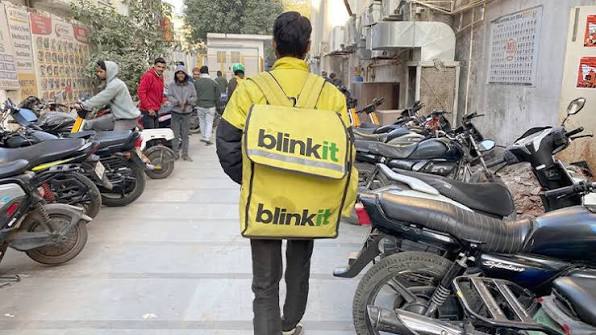
Eternal-owned quick-commerce platform Blinkit has come under increased food-safety scrutiny as state regulators step up inspections of quick-commerce warehouses and dark stores across Maharashtra and Karnataka.
In Maharashtra, the Food and Drug Administration (FDA) has suspended the food licence of a Blinkit facility in Mumbai’s Malad West after officials found serious hygiene and food-safety violations, including a large cockroach infestation, improper food storage and expired and tampered products. The action is part of a wider crackdown covering quick-commerce facilities, warehouses, hotels and other food businesses.
In Karnataka, food-safety authorities have also intensified inspections of food businesses and warehouses. However, the Bengaluru warehouse specifically sealed in the latest inspections was operated by Zepto, not Blinkit. It is therefore important not to conflate the Karnataka action against Zepto with the separate Maharashtra action against Blinkit.
Blinkit facility in Mumbai faces FDA action
The Maharashtra FDA suspended the food licence of Blink Commerce Pvt Ltd’s Malad West facility following an inspection conducted on August 7, 2026.
Officials reportedly found the facility in severely unhygienic condition, with food products stored on rusted racks and directly on the floor. Cockroaches were found around stored fruits and vegetables, while expired, damaged and tampered packaged products were also discovered.
The inspection also identified inadequate pest-control measures, poor waste management and deficiencies in the handling and storage of food.
FDA inspection
      ↓
Cockroach infestation
      +
Improper storage
      +
Expired / tampered products
      +
Poor pest control
      +
Hygiene violations
      ↓
Blinkit licence suspended
The facility has been prohibited from carrying out food-related activities while the suspension remains in force.
What did the Maharashtra FDA find?
The reported violations covered several parts of the warehouse’s food-handling operations.
Among the issues identified were:
- Cockroach infestation
- Food stored on rusted racks
- Food stored directly on the floor
- Expired packaged food
- Damaged and tampered products
- Poor cold-storage cleanliness
- Inadequate pest and rodent control
- Poor waste-management practices
- Missing health and fitness records for food handlers
- Lack of appropriate protective equipment for workers
These findings are significant because dark stores function as the final storage and handling point before products are delivered to consumers.
Cockroaches found around fruits and vegetables
One of the most serious findings was the reported presence of cockroaches around stored fresh produce.
Fresh fruits and vegetables are particularly sensitive to contamination because they can be consumed with minimal processing.
The finding raises questions about:
- Pest-control systems
- Cleaning schedules
- Separation of contaminated products
- Inspection procedures
- Staff hygiene
- Storage practices
The FDA’s action demonstrates that quick delivery does not exempt dark stores from the same food-safety requirements that apply to traditional food businesses.
Expired and tampered products were also found
Officials reportedly found expired, damaged and tampered packaged food at the Malad facility.
The presence of expired products inside a food-storage facility raises concerns about inventory-management systems and the procedures used to identify and remove products after their expiry dates.
For a quick-commerce operation, inventory moves rapidly, making automated tracking and physical stock checks particularly important.
Product received
      ↓
Inventory system
      ↓
Expiry tracking
      ↓
Stock rotation
      ↓
Expired product removal
      ↓
Safe disposal
Any failure in this chain can potentially result in an expired product remaining available for sale.
Why dark-store hygiene matters
Regulators are sweeping the whole category, having also sealed a Zepto warehouse in Bengaluru Rural, even as quick commerce becomes a dominant sales channel for brands such as Yoga Bar.
Quick-commerce companies operate networks of small warehouses, commonly known as dark stores, that are located close to residential areas.
Unlike traditional supermarkets, these facilities are primarily designed for online order fulfilment rather than customer shopping.
A typical process looks like this:
Supplier
   ↓
Dark store / warehouse
   ↓
Inventory storage
   ↓
Picking
   ↓
Packing
   ↓
Delivery partner
   ↓
Consumer
Because the dark store sits directly between the supplier and consumer, hygiene problems at the facility can directly affect products delivered to households.
Maharashtra FDA has been inspecting quick-commerce facilities
The Blinkit action is not an isolated food-safety intervention.
The Maharashtra FDA has recently taken action against multiple food businesses, including other quick-commerce facilities.
A Blinkit warehouse in Pune’s Balewadi area had also faced FDA action in recent weeks, while a Zepto facility in Dharavi was subjected to similar regulatory scrutiny.
The regulator’s latest campaign is broader than quick commerce, covering warehouses, manufacturers, retailers, hotels and other businesses involved in food handling.
Karnataka is conducting its own crackdown
Karnataka’s Food Safety and Drug Administration has also significantly expanded inspections.
The latest Bengaluru campaign has included hotels, restaurants, food warehouses and other establishments.
Officials inspected 26 three-star and five-star hotels in Bengaluru and reportedly found expired food, rotten meat, fungal-affected vegetables and other hygiene violations.
The Karnataka FDA has indicated that inspections will extend across the food supply chain.
Its commissioner said the department intends to inspect establishments involved in food preparation, storage and manufacturing rather than limiting enforcement to roadside eateries.
Zepto warehouse sealed in Bengaluru
A separate quick-commerce case emerged in Karnataka when authorities sealed a Zepto warehouse at a Nippon Express facility in Hoskote taluk, Bengaluru Rural district.
Officials found unhygienic food-handling and storage conditions, along with improper labelling and misbranding.
The warehouse was sealed under applicable food-safety provisions, and the department recommended further legal proceedings.
This is important because it shows that regulatory scrutiny is expanding across India’s quick-commerce industry, even though the Karnataka action was against Zepto rather than Blinkit.
Maharashtra and Karnataka crackdown: What is confirmed?
| State | Company / establishment | Latest action |
|---|---|---|
| Maharashtra | Blinkit, Malad West | Food licence suspended |
| Maharashtra | Other Blinkit facilities | Previous inspections/actions reported |
| Karnataka | Zepto, Hoskote | Warehouse sealed |
| Karnataka | Indira Canteens | Inspections and action |
| Karnataka | Hotels and restaurants | Widespread inspections |
The available reporting does not establish that Karnataka FDA raided Blinkit warehouses specifically in the latest crackdown.
The broader statement that Maharashtra and Karnataka regulators are intensifying food-safety enforcement is supported, but the company-specific actions should be kept separate.
The issue could put quick-commerce operations under the microscope
Quick-commerce companies have expanded their dark-store networks rapidly to support delivery times measured in minutes.
That operating model creates a unique challenge.
Companies must simultaneously manage:
- Large numbers of SKUs
- Perishable products
- Short delivery windows
- High inventory turnover
- Temperature-sensitive goods
- Multiple suppliers
- Frequent replenishment
- Expiry management
More dark stores
      +
More inventory
      +
More deliveries
      ↓
Greater operational complexity
      ↓
Greater need for food-safety controls
As the industry expands, regulators are likely to pay greater attention to how these systems operate.
Speed cannot come at the expense of food safety
The core proposition of quick commerce is convenience and speed.
Customers expect products to arrive within minutes.
But food-safety compliance requires time-consuming processes such as:
- Stock inspection
- Cleaning
- Pest control
- Temperature monitoring
- Expiry checks
- Waste disposal
- Employee hygiene checks
The challenge for operators is to integrate these controls into a high-speed fulfilment model.
10-minute delivery
       +
Food-safety compliance
       ↓
Efficient warehouse operations
The regulatory action highlights that delivery speed cannot override food-safety requirements.
Expiry management becomes especially important
Quick-commerce companies typically maintain large inventories across many small facilities.
This makes expiry management critical.
Products approaching their expiry dates need to be identified and removed in time.
An effective system needs both technology and physical verification.
Barcode / SKU tracking
        +
Expiry-date monitoring
        +
Physical stock checks
        ↓
Expired-product prevention
The discovery of expired products suggests that regulators will likely continue examining these systems closely.
Perishable products create additional risks
Fresh produce, dairy products, meat and other perishables require more careful handling than packaged products.
They may require:
- Temperature control
- Refrigeration
- Frequent quality checks
- Shorter inventory cycles
- Strict separation
- Faster disposal when damaged
A failure in any of these areas can increase the risk of contamination or spoilage.
Cold storage is another concern
The Maharashtra inspection reportedly identified cleanliness problems in cold-storage areas.
Cold storage is particularly important because temperature directly affects the safety and shelf life of many food products.
Correct temperature
       ↓
Safe storage
       ↓
Longer usable life

Incorrect temperature
       ↓
Faster deterioration
       ↓
Potential food-safety risk
For quick-commerce companies selling fresh and chilled products, maintaining appropriate storage conditions across hundreds of facilities can be operationally demanding.
Worker hygiene also matters
The Malad inspection reportedly found that health and fitness records for food handlers were missing and that workers lacked appropriate protective equipment.
Food handlers can play an important role in preventing contamination.
Proper procedures can include:
- Regular health checks
- Protective clothing
- Hand hygiene
- Clean gloves where required
- Proper handling techniques
- Training in food-safety procedures
These requirements become particularly important when employees handle unpackaged or fresh food.
What the action means for Eternal
Blinkit is owned by Eternal, formerly known as Zomato.
The regulatory action against the Malad facility therefore has implications beyond one physical warehouse.
Eternal’s quick-commerce business depends on a large network of dark stores, making operational consistency an important part of its business model.
A food-safety issue at one location does not automatically indicate that all Blinkit facilities have similar conditions.
However, repeated regulatory actions can increase pressure on the company to demonstrate consistent compliance across its network.
One facility’s suspension does not mean Blinkit is shut down
The FDA action applies to the specific Malad West facility.
It does not mean Blinkit has been ordered to stop operations across Mumbai or India.
The company operates a large network of facilities, and regulatory action against one location should not be interpreted as a nationwide suspension.
One facility
      ↓
Licence suspended
      ≠
Nationwide Blinkit shutdown
This distinction is important when assessing the business impact.
Potential operational impact
A facility suspension can nevertheless disrupt local operations.
If a dark store is unable to handle food products, orders may need to be redirected to nearby facilities.
This could potentially affect:
- Delivery times
- Product availability
- Local order capacity
- Inventory distribution
- Operating costs
The actual impact would depend on how many nearby facilities can absorb the affected demand.
Could the crackdown increase costs?
Stricter food-safety enforcement could increase compliance costs for quick-commerce companies.
Potential expenses include:
- More frequent inspections
- Pest-control services
- Warehouse cleaning
- Staff training
- Food-safety audits
- Cold-chain monitoring
- Inventory controls
- Waste disposal
- Facility upgrades
For a business operating hundreds or thousands of dark stores, even relatively small increases in per-store costs can become significant.
But better compliance could strengthen the sector
The crackdown could also benefit established quick-commerce companies if it raises industry-wide standards.
Companies that already have strong:
- Inventory-management systems
- Food-safety teams
- Warehouse processes
- Supplier audits
- Technology infrastructure
may find it easier to comply with stricter requirements.
In the longer term, stronger standards could also improve consumer confidence.
Regulators are moving beyond restaurants
The latest inspections show that food-safety enforcement is increasingly looking beyond restaurants and street vendors.
Regulators are examining the entire food chain.
Manufacturer
      ↓
Warehouse
      ↓
Retailer / Dark store
      ↓
Delivery
      ↓
Consumer
This approach makes it harder for unsafe handling practices to remain hidden at intermediate stages of the supply chain.
Karnataka FDA says enforcement will expand
Karnataka’s FDA commissioner has indicated that the department intends to go wherever food is prepared, stored or manufactured.
The agency’s recent campaign has already moved into star hotels, food trucks, warehouses and other establishments.
This suggests that quick-commerce warehouses and other food-storage facilities are likely to remain part of the regulatory focus.
What consumers should do
Consumers using quick-commerce platforms can also take basic precautions.
They should check:
- Expiry dates
- Packaging integrity
- Signs of spoilage
- Temperature of chilled products
- Product smell or appearance
- Whether fresh produce appears damaged
If an item appears unsafe, consumers should avoid consuming it and report the issue to the platform.
For serious food-safety complaints, consumers can also approach the relevant food-safety authorities.
What happens next for Blinkit?
The immediate priority for Blinkit will be addressing the deficiencies identified at the Malad facility and meeting the requirements necessary for any regulatory action concerning the suspended licence.
The company may need to strengthen:
- Pest control
- Cleaning systems
- Stock rotation
- Expiry monitoring
- Cold storage
- Food-handler hygiene
- Waste disposal
- Warehouse audits
The broader challenge is ensuring that these standards are consistently applied across its network.
The bigger picture for quick commerce
The latest regulatory action comes at a time when India’s quick-commerce industry is expanding rapidly.
Blinkit, Zepto and Swiggy Instamart have built large networks of dark stores to support increasingly fast delivery.
The business model depends on decentralised inventory.
Instead of maintaining a few large warehouses, companies position inventory close to customers.
That improves delivery speed but creates more locations that need to be monitored for food safety.
Traditional retail

Few large warehouses
        ↓
Fewer inspection points

Quick commerce

Many dark stores
        ↓
More inspection points
        ↓
Higher compliance complexity
Food safety could become a competitive issue
As regulatory scrutiny increases, food safety could become another area where quick-commerce companies compete.
Consumers may increasingly value platforms that provide:
- Better product freshness
- Reliable expiry controls
- Transparent sourcing
- Strong cold-chain management
- Better complaint resolution
The industry’s competitive focus could therefore expand beyond delivery speed and discounts.
Key takeaways
1. Maharashtra FDA has suspended the food licence of Blinkit’s Malad West facility after finding serious hygiene and food-safety violations.
2. Inspectors reportedly found cockroach infestation around stored fruits and vegetables, along with expired, damaged and tampered food products.
3. Food was reportedly stored on rusted racks and directly on the floor, while pest control and waste-management practices were also flagged.
4. The Malad facility has been prohibited from carrying out food-related activities while the licence suspension remains in force.
5. Karnataka is conducting a separate and broader food-safety crackdown covering hotels, restaurants, warehouses and other food businesses.
6. A Zepto warehouse in Hoskote, Bengaluru, was sealed after Karnataka FDA officials found unhygienic food handling and storage, improper labelling and misbranding.
7. The latest available reporting does not show that Karnataka FDA specifically raided Blinkit warehouses; the confirmed Blinkit action is in Maharashtra.
8. The enforcement highlights the growing regulatory challenge for quick-commerce companies operating large networks of decentralised dark stores.
9. Expiry management, pest control, cold storage, worker hygiene and inventory handling are likely to receive greater regulatory attention.
10. The crackdown could increase compliance costs for quick-commerce operators while potentially raising food-safety standards across the sector.
Conclusion
The latest food-safety crackdown highlights a growing challenge for India’s rapidly expanding quick-commerce industry: how to maintain food-safety standards across hundreds or thousands of decentralised dark stores while simultaneously promising extremely fast deliveries.
The Maharashtra FDA’s action against Blinkit’s Malad West facility is particularly significant because inspectors reportedly found multiple problems rather than a single isolated violation.
Cockroach infestation, improper storage, expired and tampered products, poor pest control and hygiene deficiencies all point to weaknesses in warehouse-level food handling.
The suspension applies to the specific Malad facility and does not represent a nationwide shutdown of Blinkit.
However, the incident puts the company’s dark-store operating model under greater scrutiny.
At the same time, food-safety enforcement is expanding in Karnataka, although the latest confirmed quick-commerce action there involves Zepto rather than Blinkit. A Zepto warehouse in Hoskote was sealed after authorities found unhygienic food handling and storage, as well as labelling violations.
The distinction matters because the broader crackdown across Maharashtra and Karnataka should not be presented as evidence that Blinkit warehouses in both states have been raided unless authorities or reliable reporting confirm those specific actions.
For the quick-commerce industry, however, the message from regulators is clear.
Food businesses will increasingly be monitored across the entire supply chain — from manufacturing and storage to retail and delivery.
The industry’s rapid expansion means companies are operating more facilities closer to consumers. That improves delivery times but also increases the number of locations that must meet food-safety requirements.
For Blinkit and its parent Eternal, the immediate task will be to address the deficiencies identified at the Malad facility and ensure that similar problems are not repeated elsewhere.
That means stronger pest-control systems, better inventory and expiry management, cleaner storage areas, appropriate cold-chain controls and stricter employee hygiene procedures.
The longer-term impact could extend beyond one company.
As regulators increase scrutiny of dark stores, food safety could become an increasingly important competitive factor in India’s quick-commerce market.
The industry was built around one promise — getting products to consumers faster.
The latest enforcement actions reinforce another requirement that cannot be compromised: getting those products to consumers safely.
Frequently Asked Questions
Why was the Blinkit licence suspended?
The Maharashtra FDA found hygiene violations at the Mumbai facility, including cockroaches around fruits and vegetables and expired or tampered products.
Who owns Blinkit?
Blinkit is owned by Eternal, and operates dark stores and warehouses across Indian cities.
Is this part of a wider crackdown?
Yes. Maharashtra and Karnataka regulators have stepped up inspections of quick-commerce warehouses and dark stores.
Get the day’s top stories in your inbox
One concise email. No spam, unsubscribe anytime.


