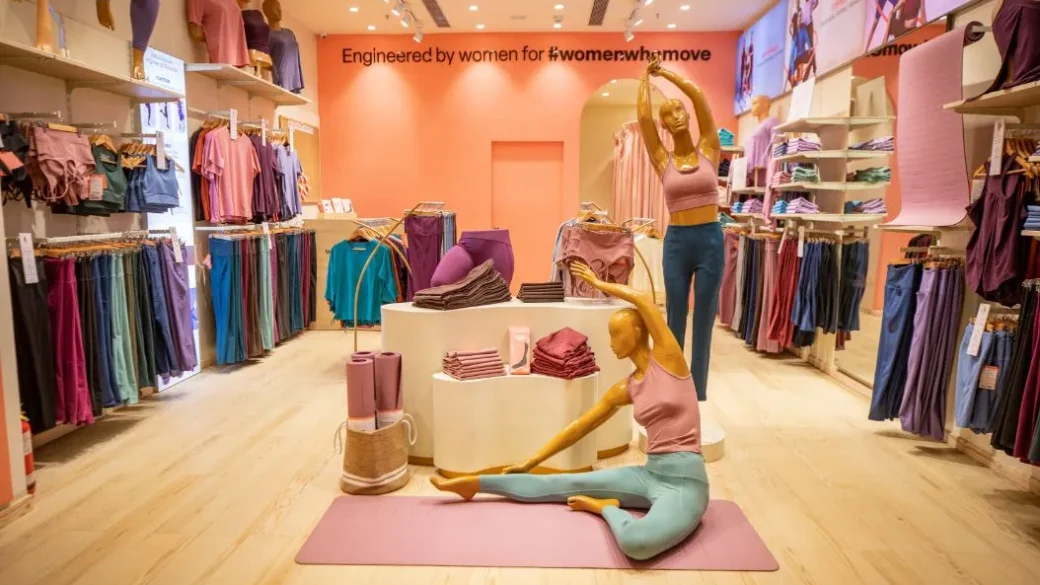
Bengaluru-based direct-to-consumer athleisure brand BlissClub has raised ₹160 crore in a Series B funding round led by Singularity AMC, with existing backers Elevation Capital and Eight Roads Ventures also participating. Founder and CEO Minu Margeret and her partner, Meesho co-founder Vidit Aatrey, have invested personal capital in the round as the company prepares for its next phase of expansion.
The fresh funding comes as BlissClub moves beyond its original positioning as a women’s activewear brand and builds a broader omnichannel apparel business. The company plans to use the capital to expand its product portfolio, grow its offline retail network, strengthen product development and invest in technology and talent. It is also approaching breakeven after several years of rapid revenue growth.
What Happened
BlissClub has raised ₹160 crore, or about $16.8 million, in a Series B funding round led by Singularity AMC. Existing investors Elevation Capital and Eight Roads Ventures participated again, while founder Minu Margeret and Vidit Aatrey also contributed personal capital.
The funding gives BlissClub additional capital to scale its business at a time when India’s D2C apparel market is becoming increasingly competitive. The company intends to expand into new categories, increase its physical retail presence and continue investing in product innovation.
BlissClub was founded in 2020 and initially focused on technical activewear designed for Indian women. Since then, it has expanded into a wider athleisure and functional-apparel business, with products including leggings, tops, outerwear and accessories.
Funding Snapshot
| Category | Details |
|---|---|
| Company | BlissClub |
| Funding round | Series B |
| Amount raised | ₹160 crore |
| Dollar value | About $16.8 million |
| Lead investor | Singularity AMC |
| Existing investors | Elevation Capital, Eight Roads Ventures |
| Founder participation | Minu Margeret |
| Other founder participation | Vidit Aatrey |
| Founded | 2020 |
| Retail footprint | More than 40 stores |
| FY25 operating revenue | ₹131.5 crore |
| FY25 revenue growth | 51% year over year |
The company had previously raised $15 million in its Series A round in May 2022, led by Eight Roads Ventures with participation from Elevation Capital.
How BlissClub Plans to Use the Funds
The new capital will support several areas of the company’s expansion.
BlissClub plans to introduce additional product categories while continuing to develop its core activewear portfolio. It has already moved into menswear and is preparing to launch denim, which management has described as a major product initiative after several years of development.
The company also intends to increase its offline retail presence across major metropolitan and Tier-I cities.
Other planned investments include:
- New apparel and lifestyle categories
- Expansion of physical stores
- Product research and development
- Technology for its D2C operations
- Hiring for future growth
- Strengthening its omnichannel infrastructure
The strategy reflects a broader shift among Indian D2C brands from an online-first model toward a combination of digital and physical retail.
From Women’s Activewear to Broader Athleisure
BlissClub’s original focus was women’s activewear, particularly products designed around comfort, functionality and everyday use.
The company has gradually expanded that proposition into a wider athleisure category. Its entry into menswear earlier this year is one part of that strategy, while the planned denim launch could take the brand further into mainstream casual apparel.
This expansion gives BlissClub the opportunity to increase the number of products purchased by existing customers while reaching new consumer groups.
However, entering broader apparel categories also puts the company into competition with a much larger set of established brands and fashion retailers.
Offline Retail Becomes a Bigger Focus
Omnichannel expansion is where a lot of consumer capital is going right now, with Apna Mart raising ₹120 crore in Series C to build out its store network.
BlissClub currently operates more than 40 stores, and management plans to accelerate physical expansion in India’s leading metropolitan and Tier-I markets.
The company currently has a presence in cities including Bengaluru, Delhi, Mumbai, Hyderabad and Pune.
The move toward physical stores reflects an important change in India’s D2C landscape. Online channels allow brands to launch products and reach consumers without building expensive retail networks, but physical stores can provide consumers with opportunities to try products, understand fit and interact directly with the brand.
For apparel companies, this can be particularly important because sizing and product feel are major factors in purchase decisions.
BlissClub’s Channel Mix
| Sales Channel | Approximate Contribution |
|---|---|
| Online | 80–85% of revenue |
| Own website and app | Majority of online sales |
| Marketplaces | Smaller portion of online sales |
| Offline | About 15% of revenue |
The company has said nearly 80% of its online sales come through its own website and app, with the balance generated through marketplaces. Offline currently contributes about 15% of revenue.
That gives BlissClub significant room to expand its physical distribution without abandoning its D2C foundation.
Revenue Growth and Path to Breakeven
BlissClub’s latest fundraising comes as the company moves closer to profitability.
The company said it expects to close FY26 with approximately ₹200 crore in net revenue and a lower single-digit loss, putting it closer to breakeven. Management also said the business has continued to grow at more than 60% year over year over the past two years.
The company’s FY25 operating revenue stood at ₹131.5 crore, up 51% from ₹87 crore in FY24. Its losses also declined by more than half during the same period, according to Entrackr.
Financial Progress
| Metric | FY24 | FY25 |
|---|---|---|
| Operating revenue | ₹87 crore | ₹131.5 crore |
| Revenue growth | — | 51% |
| Loss trend | Higher | Reduced by more than half |
The improvement suggests that BlissClub is attempting to combine growth with tighter financial management rather than relying solely on aggressive customer acquisition.
Product Differentiation Is Central to the Strategy
BlissClub says its competitive strategy is based more on product development than price.
The company has invested in proprietary fabrics and works directly with textile mills, which management says provides greater control over product quality, innovation and costs.
This approach is significant in apparel because discount-led growth can make it difficult for brands to maintain healthy margins.
By developing differentiated fabrics and products, BlissClub is attempting to encourage repeat purchases rather than relying primarily on promotional pricing.
Repeat customers are particularly valuable for D2C brands because the cost of acquiring a new customer can be substantially higher than generating another purchase from an existing customer.
Why the Funding Matters
Brand-building costs are climbing across the category, as seen in Godrej Consumer lifting advertising spend to ₹306 crore.
The ₹160 crore round gives BlissClub financial capacity to expand at a time when investors are increasingly focused on sustainable growth in the consumer startup sector.
The company’s progress toward breakeven could also allow the new capital to be used primarily for expansion rather than covering persistent operating losses.
For investors, the combination of revenue growth, improving losses and an expanding physical footprint creates a different proposition from early-stage D2C brands that remain heavily dependent on external funding.
The participation of existing investors also indicates continued support for the company’s strategy.
Competition in India’s Athleisure Market
BlissClub operates in an increasingly crowded Indian activewear and athleisure market.
Established sportswear companies, fashion retailers, digital-first brands and international labels are competing for consumers who increasingly wear athletic-inspired clothing for both exercise and everyday activities.
This creates opportunities for specialist brands but also raises customer-acquisition and marketing costs.
BlissClub’s focus on product quality and proprietary fabrics could help differentiate it, but the company will need to maintain that differentiation as it expands into categories such as menswear and denim.
The Challenge of Going Offline
Expanding physical stores can increase brand visibility and improve customer experience, but it also introduces higher fixed costs.
Rent, employees, inventory and store operations can increase the cost of serving customers compared with a purely online model.
The challenge for BlissClub will be ensuring that each new store generates sufficient sales to justify those costs.
The company’s strategy of expanding deeper into cities where it already has a presence could help it build greater local brand awareness before entering a large number of new markets.
D2C Brands Move Toward Omnichannel
BlissClub’s strategy reflects a wider evolution in India’s consumer startup ecosystem.
Many D2C brands initially built their businesses through websites, social media and online marketplaces. As they grow, physical stores can become an important way to improve customer acquisition, product discovery and brand recognition.
The shift does not necessarily mean abandoning online sales.
Instead, brands increasingly use stores and digital channels together, allowing consumers to discover products physically while continuing to purchase through apps and websites.
For BlissClub, maintaining a strong direct-to-consumer channel while expanding retail could help preserve its relationship with customers and reduce dependence on third-party marketplaces.
What Investors Will Watch
The next phase of BlissClub’s growth will depend on several factors:
- Revenue growth after the new funding
- Progress toward breakeven
- Performance of new categories
- Menswear and denim adoption
- Store-level profitability
- Repeat purchase rates
- Online customer acquisition costs
- Offline expansion efficiency
- Inventory management
- Contribution margins
The ability to expand without reversing its progress on profitability will be particularly important.
Industry Impact
BlissClub’s funding round reflects continued investor interest in India’s consumer and athleisure markets, but it also shows how the D2C model is evolving.
Investors are increasingly backing brands that can demonstrate repeat purchases, strong product differentiation and a credible route toward profitability.
The company’s move into physical retail could also contribute to the broader professionalization of India’s activewear market, where specialist domestic brands are competing with established global and Indian players.
If BlissClub can successfully combine online scale with profitable offline expansion, it could offer a model for other Indian D2C brands seeking to move beyond their initial digital-only phase.
Looking Ahead
BlissClub’s ₹160 crore Series B funding provides the company with fresh capital to broaden its product range, expand offline retail and move closer to becoming a larger omnichannel athleisure brand. Its progression from a women’s activewear startup to a business with more than 40 stores, a menswear line and plans for denim illustrates the changing ambitions of India’s D2C consumer companies. The company’s improving financial performance and stated path toward breakeven also give it an opportunity to pursue expansion without relying entirely on aggressive cash spending.
The next phase will test whether BlissClub can translate its product-focused strategy into repeat purchases and profitable growth across both online and physical channels. Investors will be watching store productivity, new-category performance, customer retention and margins as the company expands. For India’s broader D2C sector, BlissClub’s trajectory could provide another example of how consumer startups are moving from online-first brands toward diversified, omnichannel businesses with greater emphasis on sustainable unit economics.
Frequently Asked Questions
How much did BlissClub raise?
₹160 crore in a Series B round led by Singularity AMC, with existing backers Elevation Capital and Eight Roads Ventures also participating. The Bengaluru-based brand sells direct-to-consumer athleisure.
What will BlissClub use the funding for?
Expanding from women’s activewear into broader athleisure and pushing into offline retail. The company is also working toward breakeven, so the capital supports both category expansion and the cost of building a store footprint.
Who founded BlissClub?
Founder and CEO Minu Margeret leads the company. Meesho co-founder Vidit Aatrey, her partner, is also associated with the business. Product differentiation has been central to how the brand positions against larger athleisure players.
Get the day’s top stories in your inbox
One concise email. No spam, unsubscribe anytime.


