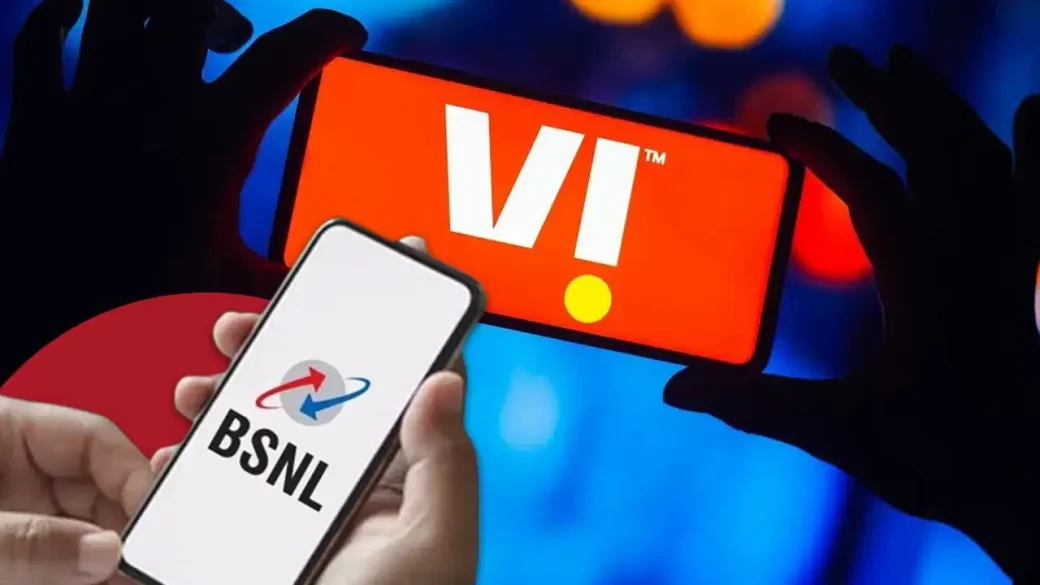
BSNL and Vodafone Idea (Vi) are discussing a deeper partnership that could allow Vi to use more of BSNL’s telecom infrastructure for 4G and 5G services, while the two companies also explore cooperation in areas such as fibre networks, data centres, cloud computing, artificial intelligence and enterprise services.
The discussions are significant because both operators are under pressure to expand their networks while controlling capital expenditure. BSNL is undertaking a large-scale 4G rollout and preparing for 5G, while Vi is accelerating its own 5G expansion after years of constrained network investment. Sharing infrastructure could allow both companies to reduce duplication, lower costs and improve network reach.
The government has a particularly important role in the potential partnership because it owns nearly half of Vodafone Idea following the company’s conversion of government dues into equity, while BSNL is fully state-owned. This creates an unusual situation in which a private-sector telecom operator and a government-owned telecom company are exploring deeper infrastructure cooperation.
BSNL and Vi are already sharing some infrastructure
The proposed expansion would build on an existing relationship.
BSNL has already leased 1,441 towers to Vodafone Idea, according to the latest report, and the companies are discussing adding more sites. Vi could use these additional towers to expand or strengthen its 4G and 5G network without having to build every site independently.
CURRENT ARRANGEMENT

BSNL
  │
  ├── Towers
  │       ↓
  │   1,441 sites leased
  │       ↓
  │   Vodafone Idea
  │
  └── Existing infrastructure sharing

              ↓

PROPOSED EXPANSION
More towers
+
Fibre
+
Technology
+
Enterprise services
+
Data centres / cloud / AI
The idea is essentially to make greater use of infrastructure that already exists rather than duplicating investments.
Why tower sharing matters
That capital-efficiency logic shows up in both companies’ current plans: BSNL has lined up a large network build-out, covered in our report on BSNL’s ₹77,000 crore capex for 4G and 5G expansion, while Vi is still repairing its balance sheet, as seen in Vi’s Q1 results, where losses fell 43% and ARPU rose to ₹195.
Building a mobile network requires substantial capital.
A telecom operator has to spend on:
- Towers
- Radio equipment
- Fibre backhaul
- Power systems
- Transmission equipment
- Spectrum
- Maintenance
- Network upgrades
If two operators can use the same physical infrastructure, they can potentially reduce some of these costs.
WITHOUT SHARING

BSNL tower ── BSNL equipment
Vi tower ──── Vi equipment

2 sites
2 infrastructure investments


WITH SHARING

          Shared tower
          /          \
       BSNL           Vi
       equipment      equipment

Potentially:
lower duplication
+
faster deployment
+
better asset utilisation
Tower sharing does not mean that BSNL and Vi would become a single network or merge their businesses. It primarily involves allowing operators to use common infrastructure under commercial and regulatory arrangements.
The partnership could go beyond towers
The latest discussions are broader than simple passive infrastructure sharing.
Potential areas include:
| Area | Potential objective |
|---|---|
| Towers | Expand 4G/5G coverage |
| Fibre | Improve backhaul and connectivity |
| Spectrum | Explore more efficient utilisation, subject to regulatory rules |
| Data centres | Share or collaborate on digital infrastructure |
| Cloud computing | Develop enterprise/cloud services |
| AI | Explore technology and network applications |
| IoT | Support connected-device services |
| Enterprise services | Expand B2B offerings |
The Department of Telecommunications has previously confirmed that BSNL and Vi were discussing infrastructure and spectrum sharing, including towers and fibre.
BharatNet could become an important part of the relationship
The two companies have also started sharing fibre networks under BharatNet, the government’s large-scale rural broadband programme.
A test reportedly connected nine Vodafone Idea stations directly to BharatNet.
This could be strategically important because fibre backhaul is essential for supporting higher-capacity mobile networks.
BharatNet fibre
      ↓
Regional connectivity
      ↓
Vi network site
      ↓
4G / 5G tower
      ↓
Mobile users
BharatNet is designed to provide broadband connectivity to approximately 2.5 lakh Gram Panchayats and enable non-discriminatory access to broadband infrastructure for telecom service providers.
Why fibre sharing is important for 5G
5G requires more than simply installing new radio equipment.
As data traffic increases, mobile sites need strong backhaul connections to carry traffic between the tower and the wider network.
That makes fibre particularly valuable.
5G RADIO
   ↓
Mobile tower
   ↓
Fibre backhaul
   ↓
Core network
   ↓
Internet / cloud / enterprise services
If Vi can access more fibre through BSNL’s infrastructure, it could potentially accelerate 5G deployment in locations where building new backhaul would otherwise take more time or money.
Vi needs more network capacity
The potential partnership comes at an important time for Vodafone Idea.
Vi has been accelerating its network expansion after years of financial pressure restricted its ability to invest at the same pace as Reliance Jio and Bharti Airtel.
In Q1 FY27, Vi reported:
| Metric | Q1 FY27 |
|---|---|
| Revenue | ₹11,689 crore |
| Net loss | ₹3,754 crore |
| ARPU | ₹195 |
| Subscribers | 193.1 million |
| 4G/5G subscribers | 130.1 million |
| Daily data usage | 88.4 PB |
| 5G coverage | 200+ cities |
Vi also secured ₹6,400 crore through warrants and financing facilities and placed around ₹9,000 crore of network-equipment orders.
This makes infrastructure sharing particularly relevant.
VI TURNAROUND

More funding
      ↓
More network investment
      +
BSNL infrastructure sharing
      ↓
Faster 4G / 5G expansion
      ↓
Better coverage
      ↓
Higher customer retention
      ↓
Subscriber growth
BSNL is also entering a major investment phase
BSNL is simultaneously preparing for a large network expansion.
The company has proposed a ₹77,000 crore capital investment plan over five years, including plans to add around 200,000 4G sites and roll out 5G in strategic high-traffic areas.
This creates a potential strategic overlap.
BSNL is investing heavily in infrastructure, while Vi needs infrastructure to expand its network.
Instead of building completely separate assets in every location, greater sharing could allow both companies to extract more value from the infrastructure being created.
BSNL
₹77,000 crore proposed capex
       ↓
Large 4G/5G network
       ↓
More infrastructure

        +

VI
Needs network expansion
       ↓
Infrastructure sharing
       ↓
Potentially lower duplication
BSNL has already deployed nearly one lakh indigenous 4G sites
The government said in February 2026 that BSNL had deployed nearly one lakh indigenous 4G sites, with the network designed to be 5G-ready.
That infrastructure could become increasingly valuable as BSNL expands its own 5G services.
For Vi, access to suitable BSNL infrastructure could provide another avenue for expanding coverage.
A potential win-win for both operators
The strategic logic is relatively straightforward.
For BSNL
BSNL could generate additional revenue by leasing infrastructure to Vi.
For Vi
Vi could gain access to additional infrastructure without bearing the entire cost of building new sites.
For consumers
Better infrastructure utilisation could potentially translate into improved coverage and capacity.
For the government
The arrangement could support more efficient use of publicly funded telecom infrastructure.
BSNL
Infrastructure
   ↓
Lease / share
   ↓
Vodafone Idea
   ↓
More coverage
   ↓
More customers / better service

BSNL also earns
infrastructure revenue
Why the government stake in Vi matters
The potential cooperation has an unusual ownership dimension.
The Indian government owns nearly 49% of Vodafone Idea, while BSNL is completely government-owned.
This means the government has an economic interest in both sides of a potential infrastructure-sharing arrangement.
             GOVERNMENT
             /         \
            ↓           ↓
       BSNL 100%     ~49% Vi
            │           │
            └─────┬─────┘
                  ↓
        Potential collaboration
However, the commercial arrangements would still need to comply with telecom regulations and applicable competition and spectrum-sharing rules.
Lawmakers are backing deeper cooperation
The discussions have also received support from lawmakers, who argue that greater collaboration could reduce unnecessary duplication and help both operators deploy networks faster.
The argument is particularly relevant because telecom infrastructure requires large amounts of capital and the two companies face different financial and operational constraints.
LAWMAKER LOGIC

Shared infrastructure
       ↓
Less duplication
       ↓
Lower costs
       ↓
Faster rollout
       ↓
Better network utilisation
Could BSNL and Vi share spectrum too?
Spectrum sharing has also appeared in the broader discussions between the companies.
The Department of Telecommunications previously said talks included potential sharing of towers, fibre and spectrum.
However, spectrum sharing is considerably more complex than tower sharing.
It involves:
- Regulatory permissions
- Spectrum bands
- Licensing conditions
- Technical compatibility
- Interference management
- Network architecture
- Commercial agreements
Therefore, the existence of discussions should not be interpreted as confirmation that BSNL and Vi will begin commercial spectrum sharing immediately.
Tower sharing vs spectrum sharing
| Feature | Tower sharing | Spectrum sharing |
|---|---|---|
| Infrastructure | Physical site | Radio-frequency resource |
| Complexity | Relatively lower | Higher |
| Main benefit | Lower site costs | Better spectrum utilisation |
| Regulatory complexity | Moderate | Higher |
| Potential impact | Coverage / deployment | Capacity / network efficiency |
| Status | Existing relationship, expansion discussed | Discussions reported |
This distinction is important because the most immediate opportunity appears to be infrastructure sharing rather than a full technical integration of the two networks.
AI and cloud could create a second layer of cooperation
The discussions also extend beyond traditional telecom infrastructure.
BSNL and Vi are reportedly exploring cooperation involving:
- Artificial intelligence
- Cloud computing
- Data centres
- Internet of Things
- Enterprise services
This reflects a broader change in the telecom industry.
Operators increasingly want to become digital infrastructure providers rather than simply companies selling mobile data.
TRADITIONAL TELECOM

Tower
 ↓
Calls
 ↓
Data


DIGITAL TELECOM

Tower
 ↓
Connectivity
 ↓
Cloud
 ↓
AI
 ↓
IoT
 ↓
Data centres
 ↓
Enterprise services
AI could help improve network operations
AI can potentially be used by telecom companies for:
- Predictive network maintenance
- Traffic forecasting
- Network optimisation
- Energy management
- Customer-service automation
- Fraud detection
- Churn prediction
- Capacity planning
BSNL has already said it is using AI-powered tools including its Vaani digital assistant, a plan recommender and other AI-based systems.
That suggests the potential technology partnership could build on existing AI initiatives rather than starting from scratch.
Data centres could become strategically important
India’s rapidly growing digital economy is increasing demand for data-centre infrastructure.
Telecom companies already own important assets such as:
- Fibre networks
- Edge locations
- Data centres
- Network operation centres
- Enterprise connectivity
- Large customer bases
Combining these assets could allow operators to offer more integrated enterprise services.
TELECOM INFRASTRUCTURE
        ↓
Fibre
        ↓
Edge computing
        ↓
Data centres
        ↓
Cloud
        ↓
AI services
        ↓
Enterprise customers
This could potentially create a new revenue stream beyond traditional mobile connectivity.
Enterprise services could be a major opportunity
Both BSNL and Vi have enterprise businesses.
Businesses increasingly need a combination of:
- Connectivity
- Cloud
- Cybersecurity
- IoT
- Data storage
- Managed services
- AI
A deeper partnership could allow the two operators to use their existing infrastructure to compete for these higher-value services.
BUSINESS CUSTOMER

Connectivity
      +
Cloud
      +
Data centre
      +
AI
      +
IoT
      ↓
Enterprise solution
The opportunity is especially relevant because enterprise customers generally have different requirements from mass-market mobile subscribers.
IoT could benefit from wider network infrastructure
Internet of Things applications depend on widespread connectivity.
Potential use cases include:
- Smart meters
- Logistics tracking
- Industrial monitoring
- Agriculture
- Smart-city infrastructure
- Fleet management
- Connected machinery
Greater tower and fibre availability could improve the underlying infrastructure required for these services.
The partnership could reduce capex duplication
One of the biggest potential advantages is capital efficiency.
Imagine two operators each needing 10,000 additional sites.
Without sharing:
BSNL → 10,000 sites
Vi   → 10,000 sites

Total = 20,000 site investments
With suitable infrastructure sharing:
Shared sites
      ↓
One physical infrastructure layer
      ↓
Both operators deploy equipment
      ↓
Potentially lower total infrastructure cost
The actual savings would depend on commercial terms, technical requirements and how many sites can practically be shared.
It could accelerate 5G rollout
Vi is already expanding 5G, while BSNL is preparing its own 5G network.
Sharing infrastructure could potentially help both companies reach more locations faster.
EXISTING BSNL SITES
       ↓
Available infrastructure
       ↓
Vi equipment
       ↓
5G deployment
       ↓
More coverage
This is particularly useful in areas where obtaining new tower sites is difficult or expensive.
Rural connectivity could be another major benefit
BSNL has historically had a strong presence in rural and remote areas.
Vi has a large national customer base.
A deeper infrastructure relationship could therefore combine:
BSNL’s infrastructure footprint + Vi’s mobile customer base.
BSNL
Strong rural infrastructure
       +
Vi
Large mobile customer base
       ↓
Shared network assets
       ↓
Potentially wider coverage
The arrangement could be especially useful in locations where building duplicate networks does not make commercial sense.
But infrastructure sharing has limitations
The partnership would not automatically solve the two companies’ financial problems.
For Vi, the biggest challenges remain:
- Large spectrum obligations
- AGR dues
- Negative net worth
- Need for sustained capital expenditure
- Competition from Jio and Airtel
For BSNL, challenges include:
- Network execution
- Customer experience
- 4G rollout completion
- 5G deployment
- Financial sustainability
- Competition with private operators
Infrastructure sharing can lower some costs, but it cannot replace the need for strong business execution.
Vi’s financial pressure remains significant
Vi’s Q1 FY27 results showed improvement, but the company remains loss-making.
Its recent performance included:
Revenue
₹11,689 crore
      ↑

Loss
₹3,754 crore
      ↓

ARPU
₹195
      ↑

Subscribers
193.1 million

5G
200+ cities
The company also has substantial future obligations, including deferred spectrum payments and AGR dues.
This is why cost-efficient network expansion is particularly important for Vi.
BSNL also needs to make its investment count
BSNL’s proposed ₹77,000 crore investment programme represents a major commitment.
The company therefore needs to maximise the utilisation of the infrastructure it builds.
If third-party operators such as Vi can use some of that infrastructure commercially, BSNL could potentially generate additional returns from its network assets.
BSNL CAPEX
₹77,000 crore proposed
       ↓
Network infrastructure
       ↓
BSNL users
       +
Potential third-party usage
       ↓
Higher asset utilisation
       ↓
Additional infrastructure revenue
Could this change India’s telecom competition?
India’s telecom market is dominated by Reliance Jio and Bharti Airtel, with Vi as the third major private operator and BSNL as the major state-owned player.
A stronger BSNL-Vi relationship could therefore strengthen the position of the two smaller players.
CURRENT MARKET

Jio
████████████████████████

Airtel
██████████████████

Vi
████████

BSNL
████
A more efficient Vi and BSNL could create stronger competitive pressure on the market leaders.
However, infrastructure sharing alone would not eliminate the substantial differences in subscriber scale, financial strength and network maturity.
Potential impact on consumers
Consumers could benefit if the partnership produces:
- Better coverage
- More 4G capacity
- Faster 5G rollout
- Improved rural connectivity
- Fewer network dead zones
- Better network resilience
But there is no guarantee that infrastructure sharing will immediately translate into better speeds or lower tariffs.
The outcome would depend on how extensively the networks are integrated and where shared assets are deployed.
Potential impact on telecom equipment companies
Greater network deployment could also benefit equipment suppliers.
Potential beneficiaries could include companies supplying:
- Radio access equipment
- Fibre
- Transmission systems
- Antennas
- Power systems
- Network software
- Cloud infrastructure
- AI systems
Vi has already placed significant equipment orders as part of its network expansion, while BSNL is undertaking a much larger infrastructure buildout.
Potential impact on India’s telecom infrastructure
The broader significance is that telecom infrastructure could increasingly become a shared national digital asset rather than something each operator builds independently.
OLD MODEL

Operator A → Own infrastructure
Operator B → Own infrastructure
Operator C → Own infrastructure


EVOLVING MODEL

Shared towers
+
Shared fibre
+
Shared backhaul
+
Potential spectrum cooperation
+
Data centres
+
Cloud
+
AI
Such a model could improve capital efficiency across the industry.
Why this matters for India’s 5G ambitions
India has moved rapidly on 5G deployment, but maintaining and expanding coverage requires significant investment.
Infrastructure sharing could help operators deploy more efficiently, particularly outside the most commercially attractive urban markets.
For BSNL and Vi, this could be particularly valuable because both are trying to expand their networks while competing with operators that already have large-scale 5G infrastructure.
Key numbers at a glance
| Indicator | Detail |
|---|---|
| BSNL towers already leased to Vi | 1,441 |
| Additional tower sharing | Under discussion |
| BharatNet-linked Vi stations in reported test | 9 |
| BSNL proposed 5-year capex | ₹77,000 crore |
| BSNL additional 4G sites targeted | 200,000 |
| BSNL indigenous 4G sites deployed | Nearly 100,000 |
| Vi Q1 FY27 revenue | ₹11,689 crore |
| Vi Q1 FY27 loss | ₹3,754 crore |
| Vi Q1 FY27 ARPU | ₹195 |
| Vi 4G/5G subscribers | 130.1 million |
| Vi 5G footprint | 200+ cities |
| Government ownership in Vi | Nearly 49% |
| BharatNet target | ~2.5 lakh Gram Panchayats |
BSNL-Vi partnership roadmap
             BSNL + VI
                 │
       ┌─────────┴─────────┐
       ↓                   ↓
 Existing sharing      New discussions
       │                   │
 1,441 towers       More towers
       │             Fibre sharing
       │             Technology
       │             AI / cloud
       │             Data centres
       │             Enterprise
       ↓                   ↓
       └─────────┬─────────┘
                 ↓
       Lower infrastructure
            duplication
                 ↓
       Faster network rollout
                 ↓
        Stronger 4G / 5G
                 ↓
       Better asset utilisation
What could happen next?
The next stage will depend on whether the discussions result in formal commercial arrangements.
Potential developments include:
1. More BSNL towers leased to Vi
This would be the most straightforward extension of the existing relationship.
2. Wider fibre sharing
This could be particularly useful for 5G backhaul.
3. More BharatNet integration
Additional Vi sites could potentially connect to BharatNet infrastructure where technically and commercially viable.
4. Technology cooperation
AI, cloud, IoT and enterprise services could become a new area of collaboration.
5. Spectrum-sharing discussions
This remains a more complex possibility requiring regulatory and technical evaluation.
6. Greater enterprise cooperation
The companies could potentially combine connectivity and digital infrastructure offerings for businesses.
What investors should watch
The key question is whether the discussions move from broad cooperation to measurable commercial outcomes.
Important indicators include:
| Indicator | Why it matters |
|---|---|
| Number of additional towers | Shows scale of sharing |
| Fibre kilometres shared | Indicates backhaul impact |
| 5G sites using shared infrastructure | Shows deployment benefit |
| Commercial revenue to BSNL | Measures asset monetisation |
| Vi’s network capex savings | Measures financial benefit |
| Enterprise contracts | Shows technology-business potential |
| Spectrum-sharing agreement | Could materially alter network economics |
The biggest potential benefit: doing more with existing assets
The fundamental idea behind the partnership is simple:
India already has a huge amount of telecom infrastructure. The challenge is making better use of it.
BSNL has a large infrastructure footprint and is investing heavily in new sites. Vi needs to expand its network but remains financially constrained.
Infrastructure sharing can potentially connect these two needs.
BSNL
"More infrastructure"

        +

VI
"Need for infrastructure"

        ↓

SHARING

        ↓

Lower duplication
+
Faster deployment
+
Better asset utilisation
+
Potentially stronger competition
Risks and challenges
Several issues could still prevent the partnership from reaching its full potential.
Technical compatibility
BSNL and Vi use different network architectures and equipment, so shared infrastructure needs to be technically compatible.
Commercial negotiations
The companies must agree on pricing, maintenance, power costs and responsibilities.
Regulatory approval
Spectrum or active-network sharing could require additional regulatory scrutiny.
Network quality
Sharing a tower does not automatically mean both networks will deliver identical performance.
Investment priorities
BSNL must balance third-party leasing with its own network expansion requirements.
Competitive concerns
The government-owned operator and a company in which the government is a major shareholder must ensure that commercial arrangements remain transparent and compliant.
The bigger picture
The BSNL-Vi discussions represent something more significant than a simple tower-leasing agreement.
India’s telecom industry is entering a period in which connectivity, fibre, cloud, AI, data centres and enterprise services are increasingly interconnected.
BSNL is trying to transform itself from a traditional state-owned telecom operator into a modern digital infrastructure provider, while Vi is trying to rebuild its network and compete more effectively after years of financial stress.
Their interests therefore overlap.
BSNL
Infrastructure
+
Vi
Customers + network demand
+
AI
+
Cloud
+
Data centres
+
Enterprise
        ↓
Potential digital infrastructure
partnership
Conclusion
BSNL and Vodafone Idea are discussing a deeper infrastructure and technology partnership that could significantly expand the existing relationship between the two telecom operators. The immediate focus is on allowing Vi to use more of BSNL’s towers for 4G and 5G services, while the broader discussions reportedly cover fibre, data centres, cloud computing, AI, IoT and enterprise services.
The companies already have an infrastructure-sharing arrangement under which BSNL has leased 1,441 towers to Vi. They have also started sharing fibre networks under BharatNet, with a reported test connecting nine Vi stations directly to the government-backed fibre network.
The timing is particularly important. BSNL is proposing a ₹77,000 crore five-year capital investment programme aimed at adding around 200,000 4G sites and rolling out 5G in strategic locations. It had already deployed nearly one lakh indigenous 4G sites by February 2026, with the network designed to be 5G-ready.
At the same time, Vi is accelerating its own turnaround. In Q1 FY27, the operator reported revenue of ₹11,689 crore, a reduced net loss of ₹3,754 crore, ARPU of ₹195 and 193.1 million subscribers. Its 5G network had expanded to more than 200 cities, while it secured ₹6,400 crore in funding and placed ₹9,000 crore of network-equipment orders.
For Vi, using more BSNL infrastructure could reduce the need to duplicate towers and potentially accelerate network expansion. For BSNL, leasing infrastructure to Vi could generate additional revenue and improve utilisation of assets that it is already investing heavily to build.
The potential cooperation also has a unique ownership dimension. The Indian government owns nearly 49% of Vodafone Idea, while BSNL is entirely state-owned. That gives the government an interest in both sides of the potential arrangement, although any commercial or spectrum-sharing agreement would still need to comply with applicable telecom regulations.
The most interesting part of the discussions, however, may ultimately be what happens beyond towers. Cooperation in AI, cloud, data centres, IoT and enterprise services could allow the companies to move toward a broader digital-infrastructure partnership rather than remaining focused only on mobile connectivity.
For India’s telecom market, deeper BSNL-Vi cooperation could strengthen the two operators’ ability to compete with Reliance Jio and Bharti Airtel. It could also support faster 4G and 5G deployment, particularly in areas where building completely separate infrastructure would be expensive.
But the partnership is not a guaranteed solution to either company’s problems. Vi still faces substantial financial obligations and needs sustained investment, while BSNL must execute its huge 4G and 5G expansion programme efficiently.
The real significance of the discussions is therefore capital efficiency. Instead of every operator building completely independent networks, India could move toward greater sharing of towers, fibre, backhaul and digital infrastructure.
If the talks translate into formal agreements, the BSNL-Vi relationship could become an important example of how India’s telecom companies use shared infrastructure, cloud, AI and digital assets to reduce costs and accelerate network expansion.
Frequently Asked Questions
Are BSNL and Vi already sharing infrastructure?
Yes. The two operators already share some telecom infrastructure. The current discussions are about widening that arrangement to cover more towers, fibre and other network assets for 4G and 5G.
Does the government have a stake in Vodafone Idea?
Yes. The Indian government owns nearly 49% of Vodafone Idea after the company converted government dues into equity, while BSNL is fully state-owned. That gives the government an interest on both sides of the talks.
What is the difference between tower sharing and spectrum sharing?
Tower sharing lets operators use each other’s physical sites and passive infrastructure to cut costs. Spectrum sharing involves the airwaves themselves and is governed by separate telecom rules, so it would need its own regulatory clearance.
Get the day’s top stories in your inbox
One concise email. No spam, unsubscribe anytime.


