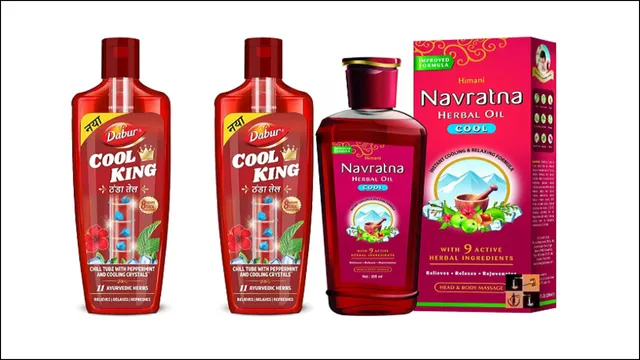
The Delhi High Court has allowed Dabur India to sell its existing stock of “Cool King Thanda Tael” until September 30, 2026, bringing a temporary resolution to a long-running trade dress dispute with Emami. The court has permitted Dabur to dispose of 9,020 cartons of the product, but only under strict conditions, including recalling all unsold stock after the deadline and stopping sales through e-commerce platforms. The dispute centres on allegations that Dabur’s packaging for Cool King Thanda Tael was deceptively similar to Emami’s Navratna Ayurvedic Oil.
The latest order follows a series of proceedings that began with Emami’s trademark and passing-off lawsuit against Dabur. In January 2026, the Delhi High Court restrained Dabur from selling Cool King Thanda Tael under the disputed trade dress. A Division Bench subsequently upheld that injunction in May. Dabur later sought permission to clear its existing inventory, and a single judge allowed the company to sell the stock until September 30. Emami challenged that order, arguing that the single judge could not modify an injunction already upheld by the Division Bench. The Division Bench agreed with Emami on the jurisdictional issue but ultimately allowed Dabur to sell the existing inventory under the same conditions.
Delhi High Court Allows Dabur to Clear Existing Stock
The latest court order allows Dabur to sell its existing inventory of Cool King Thanda Tael until September 30, 2026.
The permission applies to 9,020 cartons of stock manufactured before the January 31, 2026 injunction.
Dabur cannot manufacture fresh stock under the disputed packaging.
| Dabur-Emami Dispute | Details |
|---|---|
| Companies involved | Dabur India and Emami |
| Dabur product | Cool King Thanda Tael |
| Emami product | Navratna Ayurvedic Oil |
| Existing stock permitted | 9,020 cartons |
| Sale deadline | September 30, 2026 |
| New manufacturing | Not permitted under disputed trade dress |
| E-commerce sales | Not permitted |
| Unsold stock after deadline | Must be recalled |
| Main legal issue | Trademark, passing off and trade dress |
The permission is therefore temporary and applies only to inventory that already existed when the injunction was issued.
What Is the Dispute Between Dabur and Emami?
For more context, see Dabur Sues FSSAI Over ‘100% Pure’ Trademark Ban.
Emami, which markets Navratna Ayurvedic Oil, filed a commercial suit against Dabur alleging trademark infringement, passing off, unfair trade practices and related claims.
At the centre of the dispute is the overall appearance of Dabur’s Cool King Thanda Tael packaging.
Emami argued that Dabur’s product adopted elements that were deceptively similar to its Navratna product.
Packaging Dispute
Emami’s Navratna Oil
↓
Established trade dress
+
Colours
+
Layout
+
Visual elements
↓
Dabur’s Cool King Thanda Tael
↓
Alleged similarity
↓
Potential consumer confusion
The court’s earlier proceedings considered the overall visual, structural and phonetic similarities between the products.
Delhi HC Initially Restrained Dabur
The legal dispute has been running for several years.
An earlier interim order dated August 9, 2023 restrained Dabur from selling Cool King Thanda Tael in the disputed trade dress or any other deceptively similar trade dress.
That order was subsequently challenged and went through further proceedings.
The case eventually returned to the Delhi High Court for a detailed consideration of Emami’s request for an interim injunction.
January 2026 Order Strengthened Emami’s Position
On January 31, 2026, Justice Tejas Karia of the Delhi High Court granted an interim injunction in favour of Emami.
The order restrained Dabur from selling Cool King Thanda Tael under the disputed trade dress or another trade dress that was deceptively similar to Emami’s product.
Legal Timeline
August 2023
↓
Initial restraint against Dabur
↓
August 2023
↓
Dabur challenges the order
↓
January 31, 2026
↓
Delhi HC grants interim injunction
↓
May 22, 2026
↓
Division Bench upholds injunction
↓
June 19, 2026
↓
Single judge allows existing stock to be cleared
↓
August 2026
↓
Division Bench rules on Emami’s challenge
↓
September 30, 2026
↓
Deadline for permitted stock clearance
The latest decision therefore sits within a much longer trademark dispute.
Division Bench Upheld the Injunction in May
Dabur appealed against the January 2026 injunction.
On May 22, a Division Bench comprising Justice V. Kameswar Rao and Justice Manmeet Pritam Singh Arora upheld the restraint.
The bench found that the products’ overall appearance, layout and colour scheme could create a likelihood of confusion.
This was important because the Division Bench’s ruling meant that the injunction imposed by the single judge remained operative.
Dabur Later Asked to Sell Existing Inventory
After the injunction was upheld, Dabur approached the single judge seeking permission to exhaust its existing stock.
The company argued that it should be allowed to sell products that had already been manufactured before the injunction.
The request focused on avoiding economic waste from inventory that could otherwise become unsellable.
Dabur’s Position
Existing inventory
↓
Manufactured before injunction
↓
Product already produced
↓
Unable to sell under injunction
↓
Potential inventory loss
↓
Request for temporary clearance period
The single judge subsequently granted permission for Dabur to sell the existing stock until September 30.
Emami Challenged the Stock-Clearance Order
Emami challenged the single judge’s decision before the Division Bench.
Its argument was primarily procedural.
Emami contended that once the Division Bench had upheld the injunction, the single judge could not subsequently relax or modify that injunction.
The Division Bench accepted this argument.
Court’s Reasoning
Single judge issues injunction
↓
Dabur appeals
↓
Division Bench upholds injunction
↓
Injunction becomes binding
↓
Single judge later modifies its effect
↓
Jurisdictional problem
The Division Bench said that any clarification, variation or relaxation of its injunction should have been sought from the Division Bench or a superior court.
But Dabur Still Gets to Sell 9,020 Cartons
Despite finding that the single judge should not have modified the injunction, the Division Bench did not completely prevent Dabur from clearing the existing stock.
This was because Emami had agreed to Dabur selling its existing inventory subject to conditions.
The Division Bench therefore treated the permission as having been granted by the Division Bench itself.
This distinction is important.
The court did not overturn the injunction.
Instead, it created a limited exception allowing Dabur to dispose of the existing stock under strict conditions.
Dabur Must Recall Unsold Stock After September 30
One of the most important conditions is the mandatory recall of any inventory that remains unsold after September 30.
The recall must cover products held by:
- Distributors
- Retailers
- Chemists
- Shopkeepers
- E-commerce platforms
- Other sales and distribution channels
The remaining stock cannot continue to be sold after the deadline.
Stock-Clearance Process
Existing 9,020 cartons
↓
Sale permitted until September 30
↓
Unsold stock identified
↓
Recall from distribution channels
↓
No further sale
↓
Stock dealt with according to court directions
This prevents the temporary permission from becoming a permanent exemption from the injunction.
Dabur Cannot Sell the Product Online
The court has also imposed restrictions on e-commerce sales.
Dabur has undertaken to stop selling the disputed product through online platforms and to seek the removal of its listings and product images.
This includes platforms such as Amazon and BigBasket.
The existing stock can instead be sold through physical shops operated by wholesalers and retailers, subject to the court’s conditions.
Distribution Restrictions
Physical wholesalers
+
Physical retailers
↓
Permitted until September 30
E-commerce platforms
↓
Sales stopped
↓
Listings and images removed
The restriction gives Dabur a limited channel through which it can liquidate the existing inventory.
Dabur Cannot Manufacture New Stock
The permission is strictly limited to existing inventory.
Dabur cannot manufacture additional Cool King Thanda Tael products using the disputed trade dress.
This prevents the company from treating the stock-clearance period as permission to continue normal production.
Existing Stock vs New Production
Existing stock
↓
9,020 cartons
↓
Temporary sale permitted
New manufacturing
↓
Not permitted
↓
Injunction remains applicable
This is a critical distinction in the court’s order.
Why September 30 Was Chosen
The court previously noted that Cool King Thanda Tael is a cooling oil that is primarily consumed during the summer season.
Allowing Dabur until September 30 provides a limited period during which the company can sell inventory during the remaining seasonal demand.
The deadline therefore attempts to balance two competing interests.
Balancing the Interests
Dabur
↓
Avoid unnecessary inventory loss
+
Emami
↓
Protect trade dress and market position
↓
Court
↓
Temporary stock clearance
+
Strict deadline
+
Mandatory recall
The court has treated stock liquidation as discretionary relief rather than an entitlement.
The Court Says Stock Clearance Is Not a Permanent Right
The Division Bench emphasized that allowing a company to sell existing infringing or disputed stock is not an automatic legal right.
Such permission is discretionary and can be granted to reduce economic waste where appropriate.
The court also noted that Dabur could choose to repackage the products using a trade dress that is sufficiently distinct from Emami’s product.
Dabur’s Options
Option 1
↓
Sell existing stock under court conditions
↓
Deadline September 30
OR
Option 2
↓
Repackage products
↓
Use a distinct trade dress
↓
Continue business subject to the court’s broader orders
This gives Dabur an alternative to continuing sales under the disputed packaging.
Why the Trade Dress Issue Matters
Trade dress refers to the overall visual appearance and presentation of a product.
It can include elements such as:
- Packaging
- Colours
- Layout
- Design
- Product presentation
- Typography
- Visual arrangement
In consumer goods, trade dress can be particularly important because shoppers may recognize products by their overall appearance before reading the brand name carefully.
Consumer Recognition
Packaging
↓
Visual identity
↓
Brand recognition
↓
Purchase decision
↓
Potential confusion if competing products look too similar
This is why trade dress disputes can have significant commercial consequences for FMCG companies.
The Case Highlights Competition in the Personal Care Market
Dabur and Emami both operate large consumer-product portfolios.
Their businesses include Ayurvedic, personal-care and wellness products sold through extensive retail networks.
Products such as cooling oils compete heavily for consumers in India’s mass-market personal-care segment.
The dispute therefore involves more than packaging design.
It also concerns brand differentiation and consumer recognition.
Why Existing Inventory Creates a Legal Challenge
Trademark disputes can create a difficult problem when a court issues an injunction after products have already been manufactured.
A company may have large quantities of finished goods in warehouses and distribution channels.
Immediately destroying or withdrawing all of that inventory can result in substantial economic losses.
Inventory Problem
Manufacturing completed
↓
Products distributed
↓
Court issues injunction
↓
Sales stopped
↓
Large inventory remains
↓
Economic loss
The court’s temporary clearance mechanism attempts to address this problem without weakening the underlying injunction.
The Court Also Emphasized Judicial Hierarchy
One of the most significant legal points in the latest ruling concerns the relationship between single judges and Division Benches.
Once a Division Bench has decided an appeal and upheld an injunction, a single judge cannot subsequently issue an order that effectively modifies that decision.
Judicial Hierarchy
Single Judge
↓
Initial order
↓
Division Bench
↓
Appeal decision
↓
Binding determination
↓
Any modification
↓
Must return to Division Bench or superior court
The court said allowing repeated applications to weaken an injunction could undermine the judicial hierarchy and create multiple rounds of litigation.
The Decision Could Have Wider Trademark Implications
The ruling is relevant beyond Dabur and Emami.
Indian consumer companies regularly face disputes over:
- Packaging
- Product names
- Logos
- Colours
- Labels
- Trade dress
- Advertising
- Product positioning
The case demonstrates that even when a company has already manufactured substantial inventory, an injunction can restrict future sales.
FMCG Companies May Need Stronger Packaging Checks
The dispute also highlights the importance of conducting detailed trademark and trade dress checks before launching new products.
Companies operating in crowded categories may need to evaluate not only whether a brand name is available but also whether the product’s overall appearance could create confusion.
Product Launch Checklist
Brand name
+
Trademark search
+
Packaging design
+
Colour scheme
+
Layout
+
Competitor analysis
↓
Legal review
↓
Product launch
Such checks can reduce the risk of costly litigation after products reach the market.
Financial Impact on Dabur
The immediate financial impact of the latest ruling will depend on how much of the 9,020-carton inventory Dabur can sell before September 30.
The permission allows the company to recover some value from inventory that could otherwise have become stranded.
However, any stock remaining after the deadline will have to be recalled.
Financial Outcome
9,020 cartons
↓
Sales before September 30
↓
Revenue recovered
+
Unsold cartons
↓
Mandatory recall
↓
Potential inventory loss
The actual financial impact will become clearer after the clearance period ends.
Impact on Emami
For Emami, the decision maintains the broader injunction against Dabur’s disputed trade dress.
The temporary clearance of existing stock does not authorize Dabur to manufacture or sell new products under the disputed packaging indefinitely.
The September 30 deadline therefore provides Emami with a clear endpoint for the temporary exception.
Emami’s Position
Injunction remains
↓
No new disputed production
↓
Limited existing-stock clearance
↓
September 30 deadline
↓
Unsold products recalled
This preserves Emami’s core legal protection while allowing existing inventory to be dealt with.
Key Numbers at a Glance
9,020 cartons
Existing Dabur stock covered by the temporary clearance permission
September 30, 2026
Deadline for selling the permitted inventory
January 31, 2026
Date of the Delhi High Court’s interim injunction against Dabur’s disputed trade dress
May 22, 2026
Date the Division Bench upheld the injunction
June 19, 2026
Date the single judge allowed Dabur to exhaust existing stock
August 2026
Latest Division Bench ruling on the stock-clearance issue
2
Main products at the centre of the dispute: Dabur Cool King Thanda Tael and Emami Navratna Ayurvedic Oil
What Happens After September 30?
Once the deadline expires, Dabur cannot continue selling any remaining stock covered by the permission.
Unsold products must be recalled from the distribution network.
If Dabur cannot comply with the recall requirement, it cannot rely on the temporary permission to continue sales.
The company can instead consider repackaging the product with a sufficiently distinct trade dress.
Post-September 30
September 30 deadline
↓
Inventory count
↓
Unsold products recalled
↓
No further sales
OR
↓
Repackaged product
↓
Distinct trade dress
The next stage of the broader trademark dispute will continue separately.
What the Case Means for Indian FMCG Companies
The Dabur-Emami dispute shows how intellectual-property disputes can affect products after they have already reached the market.
For FMCG companies, packaging is often a crucial part of brand identity.
A successful product launch therefore requires both marketing and legal scrutiny.
FMCG Brand Protection
Distinctive brand
+
Unique packaging
+
Trademark protection
+
Legal clearance
↓
Lower litigation risk
↓
Stronger consumer identity
The case reinforces the importance of treating packaging as a strategic intellectual-property asset.
Looking Ahead
The Delhi High Court’s latest ruling gives Dabur a limited opportunity to sell 9,020 cartons of existing Cool King Thanda Tael stock until September 30, 2026, while keeping the broader injunction against the disputed trade dress intact. Dabur cannot manufacture fresh stock under the contested packaging and must stop selling the permitted inventory through e-commerce platforms. Any products remaining unsold after the deadline must be recalled from distributors, retailers, chemists, shopkeepers and other channels. The court has also made clear that the permission to clear existing inventory is discretionary and does not amount to a permanent right to sell products under a disputed trade dress.
For Emami, the ruling preserves the key protection it secured through the January injunction and the Division Bench’s May decision, while allowing a temporary exception to prevent economic waste from existing inventory. For the wider FMCG industry, the case highlights the commercial importance of packaging, trade dress and early intellectual-property checks. The dispute also reinforces a broader legal principle: once a Division Bench has upheld an injunction, any subsequent request to modify or relax that order must be addressed to the appropriate appellate court rather than repeatedly brought before a single judge. The final commercial impact on Dabur will depend on how much of the 9,020 cartons it can sell before September 30 and whether it chooses to repackage the product for future sales.
Frequently Asked Questions
What did the Delhi High Court allow?
Dabur may sell its existing Cool King Thanda Tael stock until September 30.
What is the dispute about?
Emami and Dabur are in conflict over trade dress, the overall look and packaging of the product.
Was Dabur restrained earlier?
Yes. The Delhi HC initially restrained Dabur, and a division bench upheld the injunction in May.
Get the day’s top stories in your inbox
One concise email. No spam, unsubscribe anytime.


