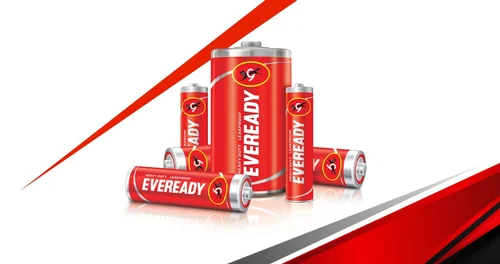
Eveready Industries India reported a strong start to fiscal 2027, with consolidated net profit rising 22.3% year over year to ₹37 crore in the June quarter. Revenue from operations increased 9% to ₹407.7 crore, marking the company’s seventh consecutive quarter of revenue growth. The performance was supported by stronger battery and lighting sales, while the commissioning of its new alkaline battery plant in Jammu began adding to the company’s premium battery business.
The results also show that Eveready is beginning to benefit from investments aimed at strengthening its battery portfolio and reducing dependence on imported alkaline batteries. EBITDA increased 9.6% to ₹61.5 crore, while the EBITDA margin remained broadly stable at 15.1%. The company managed to protect profitability despite inflation in key inputs such as zinc and foreign-exchange-linked costs.
What Happened
Eveready Industries India reported consolidated revenue of ₹407.7 crore for Q1 FY27, compared with ₹374.1 crore in the corresponding quarter of the previous year.
Net profit increased to ₹37 crore from ₹30.2 crore, representing a 22.3% year-on-year improvement. EBITDA rose 9.6% to ₹61.5 crore from ₹56.1 crore, while the EBITDA margin was broadly stable at 15.1%, compared with 15% a year earlier.
The company said the quarter benefited from growth in batteries and lighting, while its flashlight business faced some pressure. Commercial production at its new Jammu alkaline battery facility also began during the quarter.
Q1 FY27 Financial Highlights
| Metric | Q1 FY27 | Q1 FY26 | YoY Change |
|---|---|---|---|
| Revenue from operations | ₹407.7 crore | ₹374.1 crore | 9% |
| EBITDA | ₹61.5 crore | ₹56.1 crore | 9.6% |
| EBITDA margin | 15.1% | 15.0% | Stable |
| Net profit | ₹37.0 crore | ₹30.2 crore | 22.3% |
| Basic EPS | ₹5.08 | ₹4.15 | Higher |
The numbers indicate that Eveready’s profit grew faster than revenue, suggesting that operating efficiency and cost management helped offset higher input expenses.
Battery Business Leads Growth
The battery segment was the biggest contributor to Eveready’s quarterly performance.
Battery revenue increased 11.9% year over year, with alkaline batteries emerging as a particularly strong growth area. Revenue from alkaline batteries jumped 56% to ₹32.1 crore from ₹20.6 crore in Q1 FY26.
Alkaline batteries now account for about 12% of the company’s battery revenue, while carbon-zinc and other products continue to represent the majority.
The stronger alkaline performance is strategically important because premium batteries typically offer higher value than traditional dry-cell products.
Eveready has been investing in this category as it seeks to capture a larger share of India’s premium battery market.
Jammu Alkaline Battery Plant Begins Production
A major development during the quarter was the start of commercial production at Eveready’s new alkaline battery facility in Jammu.
Commercial production began on May 29, 2026, making the facility an important part of the company’s strategy to expand domestic alkaline battery manufacturing. The plant has an annual capacity of 456 million units.
The facility is expected to support import substitution and provide greater control over the company’s premium battery supply chain.
Eveready had previously highlighted the Jammu facility as a major strategic investment. The company said in its FY26 results that the plant would strengthen its presence in the premium battery segment and reduce reliance on imports.
Jammu Plant Snapshot
| Parameter | Details |
|---|---|
| Location | Jammu |
| Product | Alkaline batteries |
| Commercial production | May 29, 2026 |
| Annual capacity | 456 million units |
| Strategic objective | Premium battery expansion and import substitution |
| Expected benefit | Greater manufacturing scale and potential cost efficiencies |
The plant is still at an early stage of its ramp-up, meaning its full contribution to revenue and margins is likely to become clearer over subsequent quarters.
Lighting Business Records Double-Digit Growth
Eveready’s lighting segment also performed strongly during the quarter.
Revenue from lighting increased 13.7%, supported by healthy volumes in LED bulbs and emergency lighting products. The company also indicated that price erosion in the lighting market was beginning to moderate.
The moderation in pricing pressure is important because the lighting industry has faced intense competition, particularly in LED products.
Improving price stability could allow manufacturers to focus more on volume growth and product mix rather than competing primarily through discounts.
Eveready’s performance suggests that its lighting business is beginning to contribute more consistently to the company’s overall growth.
Flashlight Business Faces Seasonal Pressure
The flashlight segment was the main weak spot in the quarter.
Revenue declined 6.7%, with the company attributing the decline partly to the delayed onset of the monsoon. Conventional flashlight demand can be affected by seasonal weather patterns, and weaker monsoon-related demand weighed on the segment.
However, the rechargeable flashlight category continued to grow strongly.
Revenue from rechargeable flashlights increased more than 20% to ₹31.5 crore from ₹25.8 crore in Q1 FY26.
This indicates a gradual shift in consumer preference toward rechargeable products and provides Eveready with an opportunity to improve the mix within its flashlight business.
Profit Growth Outpaces Revenue
One of the strongest aspects of the quarter was the improvement in net profit relative to revenue.
Revenue increased 9%, but net profit rose 22.3%.
This difference suggests that Eveready was able to control costs and improve operating leverage despite continued pressure from raw-material prices.
Zinc remains an important input for the company’s battery business, making commodity-price movements an important factor for margins.
The company has used procurement initiatives, pricing actions and foreign-exchange hedging to manage some of these pressures.
Profitability Trend
The company’s EBITDA increased from ₹56.1 crore to ₹61.5 crore.
At the same time, the margin remained almost unchanged at around 15%.
Maintaining margins while growing revenue is significant because it indicates that the company has so far avoided allowing higher input costs to substantially erode profitability.
New Products Support Portfolio Expansion
Eveready also continued to introduce new products during the quarter.
Among the launches were the SHOR rechargeable torch with an animal-alarm feature aimed at farm protection, the Xtra Bright LED bulb for emergency lighting and a portable liquid vaporizer for which the company has applied for a patent.
The launches illustrate the company’s effort to expand beyond traditional batteries and flashlights.
Product innovation could help Eveready increase its addressable market and generate additional revenue from its existing distribution network.
Market Position in Batteries
Consumer-brand results this quarter have been mixed on the same demand backdrop, with Wakefit lifting Q1 profit 19% as revenue crossed ₹400 crore.
Eveready remains one of India’s established battery and flashlight brands, with batteries representing a major part of its business.
The company has been trying to strengthen its position in alkaline batteries as consumers increasingly use higher-powered electronic devices that can benefit from premium battery technology.
The new Jammu facility gives the company a domestic production base for this segment.
Eveready’s FY26 results showed that its alkaline battery market share was approaching 20%, while it maintained more than 52% share in the dry-cell battery segment, according to the company’s results announcement.
The company’s ability to convert the new manufacturing capacity into market-share gains will therefore be an important factor in its growth strategy.
Why the Jammu Plant Matters
The Jammu facility could have a larger impact on Eveready’s financial performance as utilization increases.
At higher production volumes, fixed manufacturing costs can potentially be spread across more units, improving operating efficiency.
Domestic manufacturing could also reduce exposure to imported alkaline batteries and associated currency movements.
However, the benefits will depend on how quickly Eveready ramps production and builds demand for its alkaline portfolio.
The company will need to balance capacity utilization with pricing, distribution and consumer demand.
India’s Premium Battery Market
India’s battery market is gradually becoming more segmented.
Traditional carbon-zinc batteries remain important because of their affordability and widespread use, but alkaline batteries are gaining relevance in applications involving higher energy requirements.
Growth in consumer electronics, toys, gaming devices, smart accessories and other battery-powered products can support demand for premium batteries.
For Eveready, expanding alkaline capacity provides an opportunity to capture this shift while retaining its established position in the mass-market battery category.
Competition Remains Strong
Margin expansion of this kind has been the exception rather than the rule, with several peers reporting the opposite — including Paper Boat, whose FY26 profit fell 96%.
Eveready competes with domestic and international battery brands across different segments.
The premium battery market includes established global players, while the mass-market segment is highly competitive on price and distribution.
The company’s large distribution network remains an important advantage, but maintaining market share will require continuous investment in product quality, pricing and brand visibility.
The Jammu plant could strengthen the company’s competitive position if it allows Eveready to offer a wider range of alkaline products at competitive prices.
Input Costs Remain a Key Risk
Despite the strong quarterly results, commodity costs remain a potential challenge.
Zinc prices can materially affect battery manufacturing economics. Currency movements can also influence imported inputs and other costs.
Eveready’s ability to manage these pressures through procurement, pricing and hedging will remain important.
If raw-material inflation accelerates sharply, the company could face pressure on margins unless it is able to pass higher costs on to consumers.
What Investors Should Watch
The next few quarters will provide a clearer picture of whether Q1’s performance can be sustained.
Key indicators include:
- Utilization of the Jammu alkaline battery plant
- Growth in alkaline battery revenue
- Battery market-share gains
- EBITDA margin movement
- Zinc and other raw-material prices
- Lighting segment growth
- Recovery in flashlight demand
- Growth in rechargeable products
- New-product contribution
- Cash generation and debt reduction
The Jammu plant’s ramp-up is likely to be one of the most closely watched developments.
Industry Impact
Eveready’s results highlight the broader shift taking place in India’s consumer battery market.
Established companies are increasingly investing in premium products and domestic manufacturing while attempting to protect their traditional mass-market businesses.
The shift toward rechargeable products and alkaline batteries also reflects changing consumer requirements as electronic devices become more sophisticated.
For the broader battery industry, the expansion of domestic alkaline manufacturing could increase local supply and reduce reliance on imports.
Looking Ahead
Eveready’s Q1 FY27 results suggest that the company is entering the new financial year with improving operating momentum. Revenue growth has now continued for seven consecutive quarters, while the 22.3% increase in net profit indicates that the company is managing costs effectively despite inflationary pressure on key inputs. The most important strategic development is the commissioning of the Jammu alkaline battery facility, which gives Eveready additional domestic capacity in a premium segment that is growing faster than its traditional battery business.
The next phase will depend on how quickly the Jammu facility reaches higher utilization and whether the company can translate its increased alkaline capacity into market-share gains and stronger margins. Investors will also need to monitor zinc prices, lighting demand, rechargeable flashlight growth and the performance of new products. If Eveready can sustain revenue growth while improving the contribution from premium batteries, the company could strengthen its competitive position and build on the operational progress achieved during FY26 and the first quarter of FY27.
Frequently Asked Questions
What were Eveready Q1 FY27 results?
Consolidated net profit rose 22.3% year over year to ₹37 crore, with revenue from operations up 9% to ₹407.7 crore. It was the company’s seventh consecutive quarter of revenue growth, led by battery and lighting sales.
Why does the Jammu alkaline battery plant matter?
It moves Eveready further into premium batteries, where realisations and margins are higher than in the traditional zinc-carbon range. The plant was commissioned during the quarter and began contributing to the premium battery business.
Which Eveready businesses grew fastest?
Batteries led growth and lighting recorded double-digit growth. The flashlight business faced seasonal pressure. Profit growth outpaced revenue growth, indicating margin improvement rather than purely volume-driven gains.
Get the day’s top stories in your inbox
One concise email. No spam, unsubscribe anytime.


