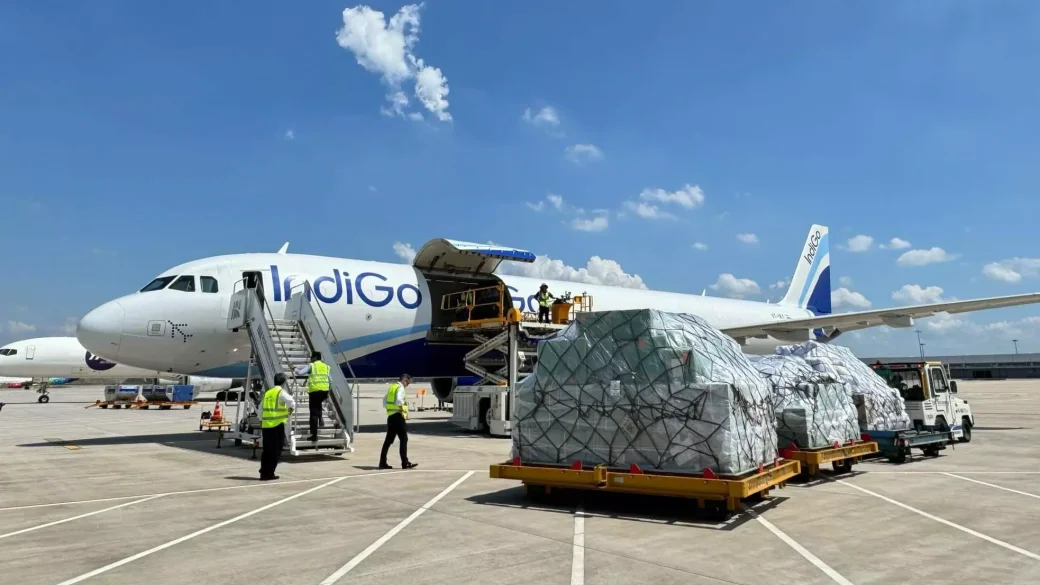
Indian manufacturers and retailers are increasingly turning to air freight to move goods ahead of the country’s peak festive shopping season, as companies seek faster delivery and more predictable supply chains amid rising demand. The shift is particularly relevant for consumer electronics, fashion, toys, lifestyle products and other categories where missing a narrow sales window can result in lost revenue.
The greater reliance on air cargo reflects a broader change in how Indian businesses are managing inventory and logistics. While sea and road transport remain significantly cheaper for large volumes, manufacturers are willing to pay a premium for speed when products need to reach distribution centres and stores before major festivals. The trend also highlights the growing importance of India’s air-cargo infrastructure as domestic consumption becomes increasingly time-sensitive.
What Happened
Indian manufacturers are increasing their use of air freight to transport goods in preparation for the festive season, when consumer spending typically rises sharply.
Companies are using air cargo to shorten transit times and reduce the risk of inventory arriving after key promotional periods. For businesses selling products with seasonal demand, a delay of even several days can affect sales, discounts and inventory planning.
The shift is also being encouraged by businesses adopting more flexible supply-chain strategies. Rather than relying entirely on the lowest-cost transport option, companies are increasingly balancing logistics costs against delivery speed, inventory requirements and the potential cost of stockouts.
Key Details
| Factor | Impact |
|---|---|
| Festive demand | Creates a narrow window for manufacturers to replenish inventory |
| Air freight | Offers faster movement than sea transport |
| Key users | Consumer electronics, fashion, toys and lifestyle manufacturers |
| Main advantage | Speed and supply-chain flexibility |
| Main drawback | Higher transportation costs |
| Alternative modes | Sea, road and rail remain more economical for bulk cargo |
| Business objective | Ensure products reach markets before peak demand |
Why Festive Demand Is Driving Air Cargo
India’s festive calendar is one of the most important periods for consumer businesses.
Demand typically increases around major festivals as consumers purchase smartphones, televisions, appliances, clothing, jewellery, gifts and other discretionary products. E-commerce platforms and retailers also launch large promotional campaigns during this period.
That creates a significant logistical challenge for manufacturers.
Companies must ensure that sufficient inventory is available at warehouses, retail stores and fulfilment centres before customers begin shopping. If goods remain stuck in transit, businesses may lose sales even if overall demand remains strong.
Air freight provides a way to compress delivery times and respond to changing demand more quickly.
Speed Versus Cost
The fundamental trade-off is straightforward: air freight is considerably faster but more expensive than ocean transportation.
For high-value products, the additional freight cost can represent a relatively small proportion of the final selling price. For lower-value or bulky products, however, using air cargo can significantly reduce margins.
Manufacturers therefore tend to use air freight selectively, particularly when the value of speed outweighs the additional transportation expense.
Consumer Electronics Among the Key Users
Consumer electronics are particularly suited to air freight because products such as smartphones, laptops, wearables and other devices have relatively high value compared with their physical size.
A manufacturer can move a substantial amount of product value in a comparatively small cargo volume.
This makes air freight economically more viable than it would be for low-value commodities.
Festive promotions also increase the importance of timely availability for electronics brands. Retailers and e-commerce platforms often advertise specific models with limited promotional windows, making inventory shortages particularly costly.
Fashion and Lifestyle Products
Fashion companies are another category that can benefit from faster transportation.
Clothing, footwear and lifestyle products often have seasonal demand and shorter product cycles. Companies may need to move products quickly from manufacturing centres to Indian distribution hubs to align inventory with changing consumer preferences.
Air freight allows brands to reduce the time between manufacturing and retail availability.
It can also provide greater flexibility when companies discover that demand for a particular product or size is stronger than expected.
E-Commerce Adds Pressure
Surface capacity is being expanded in parallel, with Indian Railways planning to lift its freight modal share to 40% by 2036.
The growth of e-commerce has further increased the importance of logistics speed.
Online marketplaces can generate very large order volumes within a short period during festive sales. This creates pressure on sellers and manufacturers to maintain inventory at fulfilment centres before major campaigns begin.
A product that is unavailable during a high-traffic sale can quickly lose visibility to competing products.
Faster transportation can therefore become a strategic tool rather than simply a logistics expense.
Supply Chains Are Becoming More Flexible
The increased use of air cargo also reflects a broader shift away from rigid supply-chain models.
Manufacturers traditionally planned large shipments well in advance, particularly when importing products or components by sea. Such shipments are cheaper but require longer lead times.
Modern supply chains increasingly combine multiple transport modes.
A company may move most of its inventory by sea while using air freight for urgent replenishment. This allows businesses to maintain lower average logistics costs while retaining the ability to respond to sudden demand changes.
A Hybrid Logistics Model
| Transport Mode | Primary Use | Key Advantage | Limitation |
|---|---|---|---|
| Air freight | Urgent and high-value goods | Fastest delivery | High cost |
| Sea freight | Large-volume shipments | Low unit cost | Long transit times |
| Road freight | Domestic distribution | Flexible door-to-door movement | Distance and congestion constraints |
| Rail freight | Bulk and long-distance movement | Efficient for certain cargo | Less flexible than road |
The increasing use of air freight does not mean sea transport is being replaced. Instead, businesses are using different modes according to the urgency and economics of each shipment.
Importers Also Face Timing Pressures
The issue is particularly important for companies importing finished products or components.
International shipments can involve manufacturing schedules, port handling, customs clearance and inland transportation. Any disruption along the route can push deliveries beyond the intended sales period.
Air cargo can shorten the international transportation portion of the journey, although customs and other clearance requirements still need to be managed.
For companies operating with limited inventory buffers, this flexibility can be valuable during the festive season.
The Cost Challenge
The biggest disadvantage of the trend is higher logistics expenditure.
Air cargo rates can be several times higher than ocean freight depending on the route, cargo type, market conditions and available capacity.
Companies cannot absorb those costs indefinitely.
The economics work best when air freight prevents a much larger loss, such as missed sales, production stoppages or expensive inventory shortages.
Businesses therefore need sophisticated demand forecasting to determine which products should move by air and which can remain on slower transport networks.
Inventory Management Becomes More Important
The shift also demonstrates the relationship between transportation and inventory management.
A company that maintains large inventory buffers may have less need for emergency air shipments. Businesses operating leaner inventories, however, may be more dependent on fast transportation when demand exceeds forecasts.
The optimal strategy depends on the cost of holding inventory compared with the cost of accelerating transportation.
For consumer businesses, this calculation becomes especially important before festivals because demand can change rapidly.
India’s Air Cargo Infrastructure
The increasing use of air freight is also supported by the development of India’s logistics infrastructure.
Major airports have expanded cargo-handling capabilities, while logistics companies and freight forwarders are investing in technology and specialized facilities.
India’s large domestic market creates an opportunity for airports to serve as important distribution hubs for high-value and time-sensitive goods.
Improving customs processes, warehousing, cold-chain facilities and multimodal connectivity can further increase the usefulness of air cargo.
Impact on Logistics Companies
Peak-season volumes flow through to operators’ books, though not always to margins — Delhivery grew Q1 revenue 28% while profit fell 65%.
Higher seasonal demand can benefit airlines, freight forwarders, express logistics companies and airport cargo operators.
Cargo carriers may see stronger utilization during the festive period, particularly on routes connecting manufacturing centres with major consumption markets.
However, seasonal spikes also create capacity challenges.
If demand rises sharply, freight rates can increase and available cargo space can become constrained. Companies that wait too long to secure capacity could therefore face higher costs or delivery delays.
Industry Impact
The increased use of air freight indicates that speed is becoming a more important component of India’s manufacturing and retail supply chains.
For manufacturers, the ability to move inventory quickly can improve responsiveness and reduce the risk of missing seasonal demand. For logistics providers, it creates opportunities to offer integrated services combining air, road, warehousing and last-mile distribution.
The trend could also encourage greater investment in India’s air-cargo infrastructure.
At the same time, businesses will need to ensure that greater reliance on premium logistics does not undermine profitability. Air freight can solve a timing problem, but it cannot compensate indefinitely for inaccurate demand forecasts or inefficient inventory planning.
Challenges Ahead
The biggest challenge will be balancing speed with cost.
Companies that rely too heavily on air freight could see logistics expenses rise significantly, particularly if freight rates increase during the festive peak.
Another challenge is capacity availability. Airlines have finite cargo space, and passenger aircraft belly capacity can also become constrained during busy periods.
Businesses will therefore need to plan shipments earlier and use data-driven demand forecasting to identify products that require expedited transportation.
What Businesses Should Watch
Manufacturers and retailers will likely focus on several factors during the festive period:
- Air-freight rates and available capacity
- Consumer demand forecasts
- Inventory levels at major warehouses
- Sea-freight transit times
- Port and airport congestion
- Customs clearance times
- E-commerce promotional schedules
- Domestic trucking capacity
The ability to combine these variables effectively could determine how efficiently companies manage the seasonal surge.
Looking Ahead
The growing use of air freight ahead of India’s festive season highlights how manufacturers are increasingly prioritizing supply-chain speed alongside traditional cost considerations. For high-value and time-sensitive products, faster transportation can protect sales opportunities and help companies respond when demand moves beyond forecasts. The trend is likely to remain concentrated in categories such as electronics, fashion and lifestyle goods where product value, seasonality and short promotional windows make expedited logistics economically viable.
For the logistics industry, the festive season could provide another test of India’s expanding air-cargo infrastructure and multimodal supply chains. Companies will need to determine where premium transportation genuinely adds value and where lower-cost sea, rail or road options remain more appropriate. As Indian consumption and e-commerce continue to expand, businesses that combine accurate demand forecasting with flexible logistics networks will be better positioned to manage seasonal spikes without allowing transportation costs to erode margins.
Frequently Asked Questions
Why are Indian manufacturers using more air freight?
Speed and predictability ahead of the festive shopping peak. Air freight compresses lead times so companies can restock fast-moving lines mid-season rather than committing all inventory months ahead.
Which sectors use air freight most in the festive season?
Consumer electronics is a key user, along with fashion and lifestyle products. Both have high value density and short selling windows, which is what makes the cost of air freight economically defensible.
Is air freight worth the extra cost?
It depends on margin and stockout risk. For high-value, fast-moving goods, the cost of missing peak demand usually exceeds the freight premium. For bulky, low-margin items it rarely does, so most goods still move by surface.
Get the day’s top stories in your inbox
One concise email. No spam, unsubscribe anytime.


