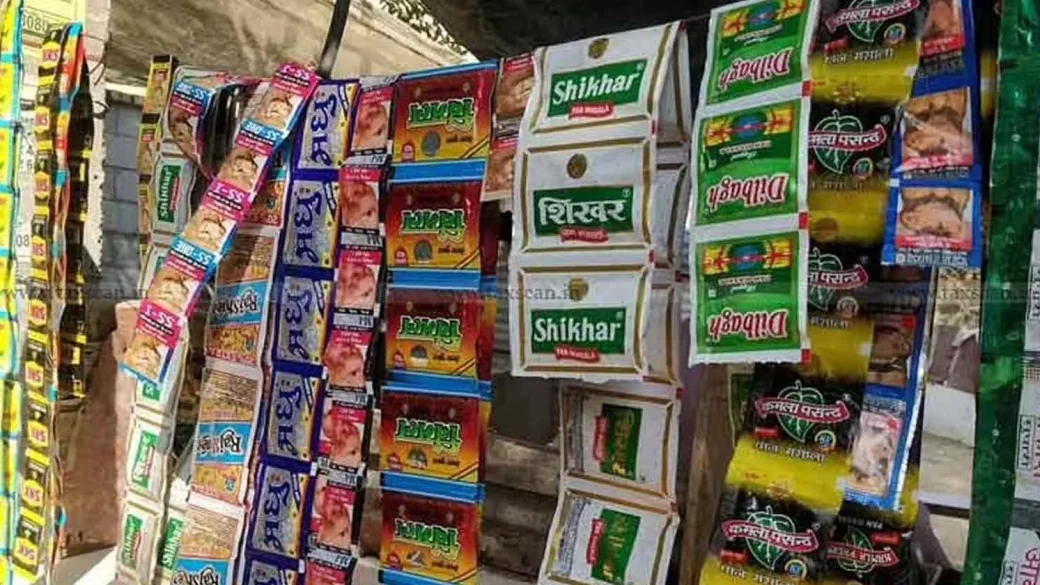
India’s pan masala industry is facing a major packaging reset after the Food Safety and Standards Authority of India (FSSAI) introduced new rules restricting the use of plastic, aluminium foil and metallised layers in packaging.
The amended Food Safety and Standards (Packaging) Regulations, 2018, allow pan masala to be packaged using paper, paperboard, cellulose and other naturally derived materials, provided they are completely free from plastic and specified synthetic materials. Tin and glass containers have also been permitted.
The rules specifically prohibit materials including polyethylene, polypropylene, polyester, polyvinyl chloride (PVC), synthetic polymers, copolymers and laminates. Aluminium foil and metallised layers are also excluded from the permitted packaging formats.
The change could force pan masala manufacturers and packaging suppliers to redesign widely used sachets and invest in new packaging materials and production processes.
What has FSSAI changed?
The move follows a run of tighter enforcement by the regulator, which recently took on Dabur over its ‘100% Pure’ labelling and ordered other food brands to pull non-compliant products.
The latest amendment changes the packaging options available for pan masala products.
Under the new provisions, manufacturers can use:
- Paper
- Paperboard
- Cellulose
- Other naturally derived materials
- Tin containers
- Glass containers
However, paper or cellulose-based packaging must be completely free from plastic and specified synthetic materials.
The rules specifically rule out:
- Polyethylene
- Polypropylene
- Polyester
- PVC
- Synthetic polymers
- Copolymers
- Plastic laminates
- Aluminium foil
- Metallised layers
OLD PACKAGING MODEL

Paper/printed layer
       +
Plastic film
       +
Aluminium/metallised barrier
       ↓
Pan masala sachet

NEW DIRECTION

Paper / paperboard / cellulose
       +
No plastic
       +
No aluminium foil
       +
No metallised layer
The move effectively targets the multilayer packaging formats commonly associated with small pan masala sachets.
When were the new rules notified?
FSSAI’s amendment was notified in August 2026 after an earlier draft proposal was issued in April.
The regulator had initially proposed replacing plastic packaging with paper, cellulose and other naturally derived alternatives and invited stakeholders to submit comments.
The final amendment now moves the industry from consultation toward compliance.
The change is therefore more significant than the April proposal because manufacturers will need to align their packaging with the amended regulatory framework.
Why is pan masala packaging being targeted?
Pan masala is commonly sold in small, lightweight sachets that traditionally rely on multilayer materials to protect the product.
These packages can combine different materials to provide:
- Moisture resistance
- Aroma protection
- Product protection
- Longer shelf life
- Low weight
- Low packaging cost
- Easy sealing
The new rules challenge this established packaging model by removing several of the materials traditionally used to create those barriers.
Traditional sachet

Plastic
+
Metallised layer
+
Barrier materials
       ↓
Moisture + aroma protection

New requirement

Paper / cellulose / natural material
       ↓
Must deliver required protection
without prohibited layers
This makes the change a technical packaging challenge as much as a regulatory one.
Plastic packaging is not the only material affected
One of the most important aspects of the new rules is that manufacturers cannot simply replace plastic with aluminium foil.
The amendment also restricts aluminium foil and metallised layers.
This significantly narrows the available packaging options.
Plastic
   ❌

Aluminium foil
   ❌

Metallised layer
   ❌

Paper
   ✓

Paperboard
   ✓

Cellulose
   ✓

Tin
   ✓

Glass
   ✓
This is likely to accelerate the search for alternative barrier technologies.
Why metallised layers matter
Metallised films are commonly used in flexible packaging because they can provide strong barriers against moisture, oxygen and light while keeping packages lightweight.
Removing them means packaging companies may need to develop alternative structures that can provide adequate product protection without relying on metalised plastic films.
That could be particularly challenging for products where preservation of aroma, flavour and texture is important.
Packaging companies face a technology challenge
The new rules create an opportunity as well as a challenge for packaging manufacturers.
Companies will need to develop materials that can simultaneously provide:
- Adequate barrier properties
- Mechanical strength
- Sealability
- Printability
- Product protection
- Shelf-life performance
- Regulatory compliance
while avoiding the materials specifically prohibited by FSSAI.
COMPLIANT PACKAGING

Natural material
      +
Barrier performance
      +
Print quality
      +
Sealing performance
      +
Shelf-life protection
      ↓
Regulatory compliance
This could encourage innovation in paper-based and cellulose-based flexible packaging.
Paper will become more important
Converters that already supply paper-based cartons to food and beverage clients are best placed here, though the shift is not instant and the cost impact on pan masala brands is still unclear.
Paper and paperboard are among the materials explicitly permitted under the amended framework.
However, simply switching from plastic film to ordinary paper may not be sufficient.
Packaging must still protect the product and meet applicable food-contact and safety requirements.
This means manufacturers could increasingly explore specialised paper structures and other naturally derived materials.
Cellulose could become an important alternative
Cellulose-based materials are another permitted option.
Cellulose is a naturally derived material that can be engineered into films and other packaging structures.
Its inclusion in the permitted list could encourage greater investment in cellulose-based packaging technology.
Natural cellulose
       ↓
Film / packaging structure
       ↓
Product protection
       ↓
Plastic-free packaging
The commercial viability of these alternatives will depend on cost, scalability and performance.
Tin and glass offer another route
FSSAI has also permitted tin and glass containers for pan masala packaging.
These materials can provide strong physical and barrier protection, but they have obvious disadvantages compared with lightweight flexible sachets.
| Packaging | Potential advantage | Challenge |
|---|---|---|
| Paper | Lightweight, renewable | Barrier performance |
| Paperboard | Structural strength | Cost and moisture resistance |
| Cellulose | Plastic-free alternative | Scale and economics |
| Tin | Strong barrier | Weight and cost |
| Glass | Strong barrier, reusable | Weight and breakage |
For low-priced, mass-market products, packaging economics will be particularly important.
The sachet economy could face disruption
Small sachets are an important part of India’s FMCG distribution system because they allow products to be sold at low price points.
Pan masala manufacturers have historically relied heavily on compact packaging that is:
- Cheap
- Lightweight
- Easy to transport
- Easy to display
- Suitable for high-volume production
A major change in packaging material could therefore affect the economics of the entire product.
New packaging rules
        ↓
New material
        ↓
New packaging machinery
        ↓
Potentially higher costs
        ↓
Impact on product economics
Manufacturers will have to determine whether the additional packaging cost can be absorbed or needs to be reflected elsewhere in the supply chain.
Packaging machinery may need changes
Changing the packaging substrate can also require changes to manufacturing equipment.
Existing form-fill-seal systems are often configured around specific film characteristics.
A paper or cellulose-based material can behave differently during:
- Feeding
- Folding
- Sealing
- Cutting
- Printing
- High-speed packaging
Manufacturers may therefore need to modify machinery or install new equipment.
Packaging converters will feel the impact
The effects will extend beyond pan masala brands.
Packaging converters that manufacture multilayer plastic and metallised structures could see demand shift.
At the same time, companies producing:
- Paper packaging
- Cellulose films
- Natural-material barriers
- Tin containers
- Glass packaging
could see new opportunities.
Regulatory change
       ↓
Demand shifts
       ↓
Plastic laminate suppliers
       ↓
Potential pressure

Paper / cellulose suppliers
       ↓
Potential opportunity
The rule could accelerate sustainable packaging
FSSAI’s move is part of a wider policy direction toward reducing plastic use and promoting alternative packaging materials.
The regulator had earlier described the proposed changes as part of efforts to promote safe, sustainable and eco-friendly packaging practices in the food sector.
The latest amendment gives that direction greater regulatory force.
Pan masala packaging already faced plastic restrictions
An important distinction is that India’s Plastic Waste Management Rules have already contained restrictions on plastic packaging for pan masala and related products.
The FSSAI amendment brings specific packaging requirements into the food-safety regulatory framework as well.
This creates an additional compliance mechanism for manufacturers operating in the food sector.
The regulatory objective is therefore not entirely new; rather, the latest FSSAI move strengthens and specifies the packaging requirements.
What happens to existing packaging?
Manufacturers will need to review their current packaging formats and determine whether they comply with the amended requirements.
This could involve:
- Auditing existing packaging materials
- Identifying prohibited components
- Testing alternative materials
- Validating shelf life
- Modifying packaging equipment
- Updating packaging suppliers
- Ensuring regulatory compliance
Compliance process

Current packaging
       ↓
Material audit
       ↓
Identify prohibited layers
       ↓
Alternative packaging
       ↓
Performance testing
       ↓
Production conversion
The transition could therefore involve significant operational work.
Shelf life will be a major concern
One of the biggest challenges will be maintaining product quality.
Packaging plays a critical role in protecting food products from environmental conditions.
Manufacturers will need to determine whether alternative materials can provide adequate protection against:
- Moisture
- Oxygen
- Light
- Contamination
- Aroma loss
A packaging material that complies with the regulation but reduces shelf life could create another commercial problem.
Cost could become a major issue
Plastic-based flexible packaging has historically benefited from economies of scale.
Alternative materials may initially be more expensive or require additional processing.
The final cost impact will depend on:
- Raw-material prices
- Manufacturing scale
- Machinery requirements
- Printing technology
- Sealing technology
- Barrier coatings
- Supply-chain availability
Packaging transition

Material cost
+
Machinery investment
+
Testing
+
Supply-chain changes
       ↓
Total transition cost
Large pan masala companies may have more resources to absorb these costs, while smaller manufacturers could face greater pressure.
Large brands may have an advantage
Major manufacturers typically have stronger procurement networks and greater access to packaging research and development.
They may be able to invest in alternative materials more quickly.
Smaller manufacturers, however, could face:
- Higher per-unit packaging costs
- Limited access to new materials
- Equipment conversion costs
- Compliance expenses
- Difficulty achieving economies of scale
This could potentially accelerate consolidation among packaging suppliers.
The packaging industry could see new demand
The regulatory change could create a new market for plastic-free packaging solutions.
Companies working on:
- Fibre-based packaging
- Cellulose films
- Natural barrier coatings
- Paper-based flexible packaging
- Tin packaging
- Glass packaging
could find increased demand from the pan masala industry.
The impact could extend beyond pan masala if similar sustainability requirements are introduced for other product categories.
Innovation will be critical
The biggest question is whether packaging companies can create alternatives that match the performance of conventional multilayer packaging.
A successful replacement needs to achieve multiple objectives simultaneously.
Plastic-free
      +
Aluminium-free
      +
Strong barrier
      +
Low cost
      +
High-speed production
      +
Food safety
      +
Good shelf life
      ↓
Commercially viable solution
This combination is what makes the transition technically challenging.
What does this mean for consumers?
Consumers may eventually notice changes in the appearance and physical characteristics of pan masala packaging.
Sachets could become:
- More paper-like
- More rigid
- Different in texture
- Packaged in new formats
Some products could potentially move toward tins or other containers.
However, the immediate consumer impact will depend on how quickly manufacturers adapt their packaging.
Could product prices increase?
It is possible that higher packaging costs could eventually put pressure on product prices, but there is not enough evidence yet to say that prices will definitely rise.
Manufacturers could instead absorb some of the additional cost, negotiate lower material prices as volumes increase or redesign packages to reduce overall material consumption.
The final impact will depend on market competition and the cost of compliant packaging.
Environmental impact could be significant
If the new rules result in reduced use of plastic and metallised packaging, they could reduce the amount of difficult-to-recycle flexible packaging entering the waste stream.
However, the environmental benefit will depend on what materials replace the plastic and how those materials are produced, collected and disposed of.
Plastic packaging
       ↓
Waste challenge

Alternative material
       ↓
Potentially different waste profile
       ↓
Environmental outcome depends on
production + collection + disposal
Simply replacing one material with another does not automatically guarantee a lower overall environmental footprint.
Why this matters for India’s FMCG industry
The pan masala packaging change could become a useful test case for India’s wider transition toward alternative packaging.
If manufacturers successfully move to commercially viable plastic-free formats, similar approaches could become easier to adopt in other FMCG categories.
This could create demand for new materials and technologies across the packaging sector.
Regulatory compliance becomes a competitive factor
Packaging compliance is increasingly becoming part of product strategy rather than simply a regulatory issue.
Companies that can develop compliant packaging without significantly increasing costs could gain an advantage.
Regulation
   ↓
Packaging redesign
   ↓
Cost + performance
   ↓
Supply-chain efficiency
   ↓
Competitive advantage
This means packaging research could become more strategically important for consumer brands.
What manufacturers need to watch
Pan masala companies will need to monitor several areas as they transition.
| Area | Key question |
|---|---|
| Materials | Are all packaging components compliant? |
| Barriers | Can the new structure protect the product? |
| Cost | How much will packaging cost? |
| Machinery | Can existing equipment handle the new material? |
| Shelf life | Will product quality remain stable? |
| Supply | Are compliant materials available at scale? |
| Waste | How will the new material be disposed of? |
| Compliance | Does the final package meet FSSAI requirements? |
What happens next for the industry?
The next phase is likely to involve packaging trials, supplier negotiations and production testing.
Manufacturers will have to balance regulatory compliance with the practical requirements of mass-market distribution.
Packaging companies, meanwhile, will have an incentive to develop alternatives that can be manufactured at high volume and competitive prices.
The success of this transition will ultimately depend on whether the industry can replace conventional multilayer packaging without compromising product quality or affordability.
Key takeaways
1. FSSAI has introduced new packaging requirements for pan masala, restricting plastic and specified synthetic materials.
2. Aluminium foil and metallised layers are also excluded from the permitted packaging formats.
3. Permitted materials include paper, paperboard, cellulose and other naturally derived materials, provided they are free from prohibited plastic and synthetic materials.
4. Tin and glass containers are also permitted under the amended rules.
5. The change could force pan masala companies to redesign widely used sachets and packaging formats.
6. Packaging converters may need to invest in new materials, machinery and production processes.
7. The biggest technical challenge will be replacing the moisture, oxygen and aroma barriers provided by conventional multilayer packaging.
8. Paper and cellulose-based packaging could see increased demand as manufacturers search for compliant alternatives.
9. Smaller manufacturers could face greater transition costs because of limited purchasing power and fewer resources for packaging development.
10. The move could accelerate the broader shift toward plastic-free packaging across India’s food and FMCG industries.
Conclusion
FSSAI’s new pan masala packaging requirements mark a significant change for one of India’s high-volume packaged consumer categories.
The most important part of the amendment is that manufacturers cannot simply replace one layer of conventional packaging with another plastic-based alternative.
The new framework specifically restricts plastic, synthetic polymers, laminates, aluminium foil and metallised layers, while allowing paper, paperboard, cellulose and other naturally derived materials, along with tin and glass.
That creates a much bigger challenge for the industry.
Pan masala packaging has traditionally depended on lightweight multilayer structures because they offer a combination of low cost, moisture protection, aroma retention and high-speed manufacturing.
Replacing those structures will require packaging companies to solve several problems simultaneously.
They will need materials that are compliant, safe, durable, commercially affordable and capable of maintaining product quality.
The transition could therefore trigger significant investment across the packaging supply chain.
Packaging converters may need new machinery and materials, while pan masala manufacturers will have to test new formats and potentially renegotiate supply contracts.
Large companies may be better positioned to absorb these changes, while smaller manufacturers could face greater cost and compliance pressure.
At the same time, the regulation could create a significant opportunity for companies developing paper-based, cellulose-based and other natural-material packaging technologies.
If these alternatives can match the performance of conventional multilayer sachets, the pan masala industry could become an important market for next-generation sustainable packaging.
There is also a wider environmental dimension.
Reducing plastic and metallised flexible packaging could help address difficult-to-recycle waste, although the ultimate environmental benefit will depend on how replacement materials are manufactured, collected and disposed of.
For consumers, the change may initially be visible mainly through different-looking or differently textured packaging.
For manufacturers, however, it represents a much deeper transformation.
The industry now has to rethink the basic packaging structure used to protect, transport and sell pan masala.
The broader significance is that India’s packaging regulations are increasingly moving beyond simply controlling what goes inside a product and toward controlling how products are packaged and what happens to that packaging after use.
For pan masala manufacturers, the immediate priority will be compliance.
For packaging companies, the opportunity is innovation.
And for India’s wider FMCG sector, the pan masala transition could offer an early indication of how commercially viable plastic-free packaging can become at mass-market scale.
Frequently Asked Questions
What has FSSAI banned in pan masala packaging?
FSSAI has restricted the use of plastic, aluminium foil and metallised layers in pan masala packaging. The rules target the multi-layer laminate structures that most pan masala pouches currently rely on.
Why is FSSAI targeting pan masala packaging?
The regulator’s concern is with the materials that sit in direct contact with the product and with the waste these multi-layer laminates create, since metallised and foil-backed plastic is difficult to recycle.
What does this mean for pan masala companies?
Brands and their packaging suppliers face a technology change, moving toward paper-based structures that still protect the product. It is the latest in a series of FSSAI actions against food companies, including the order to PIE Foods over two monk fruit sweetener products.
Get the day’s top stories in your inbox
One concise email. No spam, unsubscribe anytime.


