Key takeaways
- Indian Oil reported a ₹2,661 crore loss in the June quarter.
- Revenue rose 19% from the previous quarter, but sales growth did not protect profit.
- The company earned less from selling petrol, diesel and other fuels.
- Oil price moves and retail fuel margins will shape the next quarter.
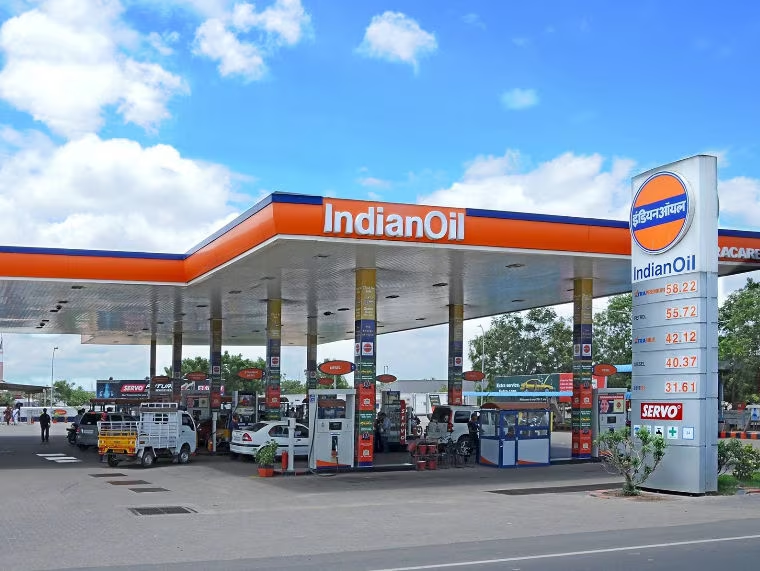
Indian Oil Corporation reported a ₹2,661 crore net loss for the June quarter, even as revenue rose 19% from the prior quarter. IOC Q1 results is the company’s quarterly report card on sales and profit. The loss came after fuel marketing margins narrowed, leaving less money from each litre sold.
Why did IOC Q1 results turn into a loss?
Indian Oil sells crude oil products through a huge network of refineries and fuel stations. A refinery turns crude oil into petrol, diesel, jet fuel and other products. The company also buys crude oil from abroad, so global oil prices matter a great deal.
IOC Q1 results show that higher revenue alone does not ensure a profit. The firm sold more in value terms, but its marketing margins shrank. A marketing margin is the money left after a fuel seller pays for the fuel and its selling costs.
Think of a shop that sells more cold drinks during summer. If each bottle brings in only a few paise of profit, busy sales may still fail to cover rent and wages. Indian Oil faced a much bigger version of that problem during the quarter.
Indian Oil: June-quarter snapshotNet result₹2,661 crore lossRevenue changeUp 19% QoQQoQ means compared with the previous quarter.
What do IOC Q1 results tell us about fuel sales?
The result shows a key fact about the fuel business. Revenue can rise when fuel prices or sales volumes rise. Yet a company can lose money if crude costs jump faster, or if its selling margin becomes too thin.
India’s large state-run fuel sellers often face this squeeze. They compete for customers, while petrol and diesel prices can stay steady for long periods. Meanwhile, the cost of imported crude can change every day.
The IOC Q1 results also matter because Indian Oil is one of India’s biggest fuel suppliers. Indian Oil says it runs 11 refineries. Those sites process crude oil on a very large scale, so changes in costs can quickly affect its accounts.
| June-quarter measure | Reported change | What it means |
|---|---|---|
| Net profit or loss | ₹2,661 crore loss | Costs and lower margins outweighed earnings. |
| Revenue | Up 19% quarter on quarter | Sales value increased from the prior quarter. |
| Marketing margin | Lower | Indian Oil kept less on fuel sales. |
Why are marketing margins so important?
Marketing margins are not the same as the price you see on a fuel board. They are the gap left for the seller after product costs and other expenses. A small change across millions of litres can become a very large number.
There is another part of the business too. Refining margins measure what a refiner earns by turning crude into fuels. Refining margin means the value of the fuel made minus the crude oil cost. Strong refining margins can soften a weak period at fuel stations, but they cannot fix every problem.
Readers can compare this with ITC’s quarterly profit fall, where sales and profit also moved in different directions. A company’s top line is revenue. Its bottom line is the profit left after costs.
What should investors watch after IOC Q1 results?
First, watch global crude prices. India imports much of its crude oil, so a rise in international prices can lift Indian Oil’s input bill. A fall in crude prices may help, although the effect is not always instant.
Next, watch retail fuel margins and refinery earnings. The next earnings report will show whether the June-quarter pressure eased. Investors should also look at fuel demand from cars, trucks, airlines and factories.
Indian Oil’s size makes the result useful beyond one company. Its performance can offer clues about the health of India’s transport and industrial fuel market. For official company updates, readers can check Indian Oil’s website and the Ministry of Petroleum and Natural Gas.
The clearest takeaway is simple: the ₹2,661 crore loss came despite revenue growth because Indian Oil made less on fuel marketing. That gap between sales and profit is the main story behind the quarter.
How does this compare with other quarterly reports?
Quarterly results often hold surprises because firms face very different cost pressures. For example, Sun Pharma’s Q1 profit rose 3.1%, showing how the same earnings season can produce very different outcomes across industries.
Oil marketing companies face a special challenge. Their biggest raw material has a global price that can move sharply. They also sell an everyday product that millions of people need, which makes pricing a sensitive issue.
FAQs
Why did IOC Q1 results show a loss?
IOC Q1 results showed a ₹2,661 crore loss because fuel marketing margins became smaller. Revenue rose, but weaker earnings per litre hurt the final profit number.
What does a 19% revenue rise mean?
It means Indian Oil’s sales value was 19% higher than the previous quarter. It does not mean profit rose by 19%.
How can Indian Oil return to profit?
Lower crude costs, better refining earnings and stronger fuel marketing margins could help. The company’s next quarterly report will give a clearer answer.
Get the day’s top stories in your inbox
One concise email. No spam, unsubscribe anytime.


