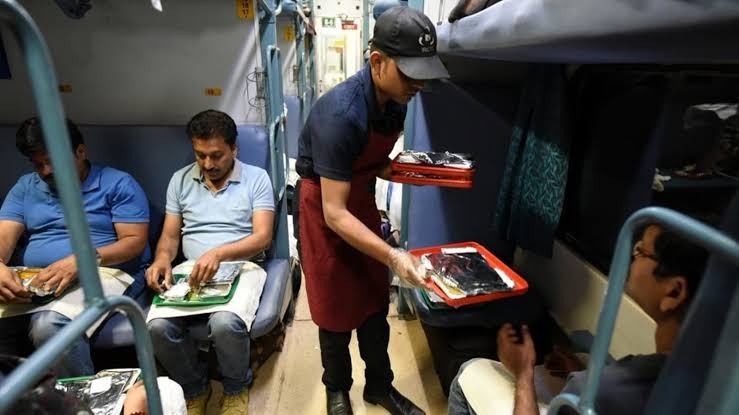
Up to 30% of passengers who have the option of booking prepaid catering with their train tickets may be choosing to opt out of meals to save on catering charges, according to IRCTC management. The estimate was disclosed during the company’s Q1 FY27 earnings call, although IRCTC Chairman and Managing Director Rahul Himalian cautioned that the figure is an offhand estimate and has not yet been formally confirmed.
The trend indicates that a growing number of passengers are actively choosing whether to pay for meals during their train journeys instead of automatically accepting prepaid catering. However, the shift has not translated into a decline in IRCTC’s overall catering business. Catering remained the company’s largest revenue segment during the June quarter, with revenue rising sharply year over year.
Up to 30% of Passengers May Be Opting Out
IRCTC management initially indicated that the share of passengers opting out of catering could range between 15% and 30%. When asked specifically about prepaid catering, Himalian estimated that around 25% to 30% of passengers could be choosing not to take the meals.
The company has emphasized that the figure should not be treated as a final or audited statistic.
What is clearer, however, is the direction of passenger behavior. More travelers are exercising the option to exclude catering from their bookings, with cost savings appearing to be a major reason.
| Key Metric | Details |
|---|---|
| Estimated prepaid meal opt-out rate | 25%-30% |
| Broader initial estimate | 15%-30% |
| Status of estimate | Yet to be confirmed |
| Q1 FY27 catering revenue | Rs 732.26 crore |
| Q1 FY26 catering revenue | Rs 546.78 crore |
| Catering revenue growth | 33.9% YoY |
| Overall Q1 FY27 revenue | Rs 1,369.53 crore |
| Overall revenue growth | 18.1% YoY |
| Meals supplied daily | Around 18 lakh |
The figures show that passengers are becoming more selective about prepaid meals even as the overall catering business continues to expand.
Why Passengers Are Skipping Prepaid Meals
For more context, see IRCTC Q1 results showed revenue rising 18%.
The primary reason cited by IRCTC management is the desire to save catering charges.
Passengers who do not want meals can choose to exclude catering during the booking process on eligible services. This gives travelers greater control over the final ticket cost.
For passengers traveling for shorter distances or at times when they do not need a meal, paying for prepaid catering may not appear worthwhile.
Passenger Choice
Train ticket booking
↓
Catering option displayed
↓
Passenger evaluates meal requirement
↓
Choose prepaid meal
OR
↓
Opt out of catering
↓
Lower ticket cost
The trend suggests that passengers are increasingly evaluating catering as an optional expense rather than an automatic component of their journey.
Catering Revenue Continues to Grow
Despite the reported increase in meal opt-outs, IRCTC’s catering business remains strong.
Catering revenue increased 33.9% year over year to Rs 732.26 crore in Q1 FY27, compared with Rs 546.78 crore during the same period a year earlier.
Catering remained IRCTC’s biggest revenue segment during the quarter.
The company’s overall revenue from operations rose 18.1% to Rs 1,369.53 crore.
IRCTC Q1 FY27 Performance
Catering revenue
↓
Rs 732.26 crore
↓
33.9% YoY growth
+
Overall revenue
↓
Rs 1,369.53 crore
↓
18.1% YoY growth
This means the prepaid meal opt-out trend should not be interpreted as evidence that IRCTC’s catering business is shrinking.
More Passengers Are Choosing Flexible Food Options
The changing behavior could instead indicate that passengers want greater flexibility over when and where they purchase food.
A traveler who opts out of prepaid catering can potentially purchase food separately during the journey, use IRCTC’s eCatering service or bring food from outside where permitted.
This creates a more flexible food ecosystem around train travel.
Traditional Model
Ticket booking
↓
Prepaid catering
↓
Meal served during journey
Flexible Model
Ticket booking
↓
No prepaid meal
↓
Passenger chooses later
↓
eCatering
OR
Station food
OR
Other permitted food options
The shift could therefore represent changing passenger preferences rather than a simple rejection of railway catering.
Food Quality Is Not the Only Factor
IRCTC management was also asked whether passengers were opting out because of concerns about food quality.
Himalian said the company receives around 300 to 500 catering-related complaints each day while supplying approximately 18 lakh meals daily.
However, those complaints cover a wide range of issues and are not limited to food quality.
They include requests for water or baby food, complaints about staff behavior and other catering-related matters.
This distinction is important because the estimated meal opt-out rate cannot automatically be attributed to dissatisfaction with food.
Railway Ministry Data Shows Low Share of Food-Quality Complaints
The Railway Ministry recently told Parliament that Indian Railways serves approximately 58 crore meals annually.
According to the ministry, food-quality-related complaints account for around 0.0008% of meals served.
The ministry also said IRCTC imposed Rs 5.13 crore in fines, issued 54 show-cause notices and terminated six contracts over food-quality and hygiene violations during the past three years.
The figures provide some context for the broader catering-quality debate.
However, IRCTC’s daily complaint figure and the ministry’s food-quality complaint figure measure different things and should not be directly compared.
IRCTC Is Expanding eCatering
As passengers seek more choice, IRCTC is expanding its digital food-ordering services.
The company said daily orders through its eCatering business have increased from roughly 1.25 lakh meals to more than 1.6 lakh meals.
The service allows passengers to order food from participating restaurants and vendors and have it delivered to their seats.
eCatering Model
Passenger boards train
↓
Opens eCatering service
↓
Selects restaurant or vendor
↓
Chooses meal
↓
Places order
↓
Food delivered to seat
The growth in eCatering suggests that passengers are increasingly willing to separate food purchases from the original train-ticket booking.
e-Pantry Is Also Being Expanded
IRCTC is also expanding its e-Pantry system, which allows passengers to order food from vendors serving their train through digital interfaces or QR codes.
The system is currently operating on more than 50 trains, with IRCTC planning to expand it to around 100 trains.
The initiative is designed to provide passengers with more visibility into available food options and pricing.
It is also part of efforts to improve transparency and reduce the possibility of overcharging.
Branded Food Chains Could Enter Railway Catering
IRCTC and the Railway Ministry are also exploring ways to bring branded catering companies into the railway food ecosystem.
The proposal is still at an early stage.
Bringing recognizable restaurant and food brands onto trains could increase competition and potentially improve food quality and consistency.
Potential Catering Model
IRCTC
+
Independent vendors
+
Branded restaurant chains
+
eCatering platforms
↓
More passenger choice
↓
Greater competition
↓
Potential improvement in food quality
The move could also give passengers more alternatives to traditional railway catering.
The Railway Food Business Is Becoming More Competitive
The expansion of eCatering, e-Pantry and potentially branded food providers suggests that railway catering is moving toward a more competitive and digitally enabled model.
Passengers are no longer limited to the meal automatically associated with a particular train or class of travel.
They can increasingly select what they want and when they want it.
Changing Railway Food Market
Traditional catering
↓
Fixed meal option
↓
Limited choice
VS
Digital catering
↓
Multiple vendors
+
Multiple food choices
+
Online ordering
+
Seat delivery
↓
Greater passenger control
This transformation could change the economics of railway catering over time.
Prepaid Meals Still Matter to IRCTC
Even with a significant number of passengers choosing to opt out, prepaid catering remains an important source of revenue.
The strong growth in catering revenue indicates that the number of passengers who continue to purchase meals is large enough to support substantial business growth.
The company can therefore pursue a two-track strategy: maintain prepaid catering while expanding optional digital food services.
Passenger Behavior Could Affect Catering Forecasts
If a significant share of passengers continues to avoid prepaid meals, IRCTC may need to adjust how it forecasts catering attachment rates.
The company may also need to focus more heavily on encouraging passengers to order meals later in their journeys through eCatering.
This could help compensate for lower prepaid attachment rates.
Potential Revenue Strategy
Lower prepaid meal attachment
↓
More passengers opt out
↓
Expand eCatering
↓
Increase digital food orders
↓
Add more vendors
↓
Increase food-order frequency
↓
Protect catering revenue
The growth of eCatering suggests that this strategy may already be developing.
Cost Sensitivity Is Becoming More Important
The willingness of passengers to remove catering charges also highlights the increasing importance of ticket affordability.
For many travelers, especially on long-distance journeys involving multiple family members, catering charges can add a noticeable amount to the total ticket price.
Opting out provides a straightforward way to reduce the upfront cost.
Passenger Calculation
Base ticket price
+
Catering charge
↓
Total booking cost
OR
Base ticket price
+
No prepaid catering
↓
Lower upfront cost
↓
Passenger buys food only if needed
This could be particularly relevant for passengers who already carry food or prefer to purchase meals separately.
IRCTC’s Challenge Is to Make Catering More Attractive
The opt-out trend creates an incentive for IRCTC to improve the value proposition of its catering services.
Better food quality, wider choice, competitive pricing and reliable delivery could encourage more passengers to purchase meals.
Digital ordering can also allow passengers to select meals based on their individual preferences rather than accepting a standard option.
Improving Catering
Better quality
+
More choices
+
Transparent pricing
+
Reliable delivery
+
Branded food options
↓
Higher passenger satisfaction
↓
Potentially higher catering attachment
What It Means for Passengers
For travelers, the development means greater flexibility.
Passengers who do not want a prepaid meal can save on catering charges where the opt-out option is available.
Those who want food during the journey can increasingly use eCatering and other digital options.
The result is a more flexible food system in which passengers have more control over their spending.
What It Means for IRCTC
For IRCTC, the challenge is balancing passenger choice with catering revenue.
The company does not necessarily need every passenger to purchase a prepaid meal if it can generate revenue through alternative channels such as eCatering.
The growth of digital food orders could therefore become increasingly important.
What It Means for Railway Catering Vendors
Catering vendors may face greater competition as IRCTC expands its digital ecosystem and considers partnerships with branded food companies.
At the same time, access to a large railway passenger base could create significant opportunities for vendors that offer competitive prices and reliable service.
What Investors Should Watch
Investors should monitor:
- Catering attachment rates
- Prepaid meal opt-out rates
- Catering revenue growth
- eCatering order volumes
- e-Pantry expansion
- Food-quality complaints
- Catering contract penalties
- Branded food partnerships
- Passenger satisfaction
- Overall revenue growth
The key question will be whether IRCTC can continue growing catering revenue even as more passengers choose flexible alternatives to prepaid meals.
Key Facts at a Glance
| Metric | Detail |
|---|---|
| Estimated prepaid meal opt-out | 25%-30% |
| Estimate status | Yet to be confirmed |
| Broader initial range | 15%-30% |
| Q1 FY27 catering revenue | Rs 732.26 crore |
| Q1 FY26 catering revenue | Rs 546.78 crore |
| Catering growth | 33.9% YoY |
| Q1 FY27 overall revenue | Rs 1,369.53 crore |
| Overall revenue growth | 18.1% |
| Daily meals supplied | Around 18 lakh |
| Daily catering complaints | Around 300-500 |
| eCatering daily orders | More than 1.6 lakh |
| e-Pantry coverage | More than 50 trains |
| Planned e-Pantry expansion | Around 100 trains |
| Food-quality fines over three years | Rs 5.13 crore |
| Show-cause notices | 54 |
| Contracts terminated | 6 |
Infographic: Why Passengers Are Opting Out
TRAIN TICKET BOOKING
↓
PREPAID CATERING OPTION
↓
PASSENGER CHECKS COST
↓
25%-30% MAY OPT OUT
↓
SAVE CATERING CHARGES
↓
FOOD OPTIONS DURING JOURNEY
↓
eCATERING
+
e-PANTRY
+
OTHER FOOD OPTIONS
↓
GREATER PASSENGER CHOICE
↓
IRCTC EXPANDS DIGITAL CATERING
↓
MORE VENDORS
+
POTENTIAL BRANDED FOOD PARTNERS
↓
COMPETITIVE RAILWAY FOOD MARKET
The Bigger Picture
IRCTC’s estimate that 25% to 30% of passengers with a prepaid catering option may be opting out highlights a change in how travelers approach food during train journeys. Passengers appear increasingly willing to remove catering from their bookings to reduce upfront costs, while choosing food separately when required. The estimate is not yet confirmed, but IRCTC management has acknowledged that the direction of the trend is clear. At the same time, the company’s catering revenue rose 33.9% year over year to Rs 732.26 crore in Q1 FY27, showing that overall demand for railway food remains strong.
The more important shift may therefore be toward choice rather than a decline in catering demand. IRCTC is expanding eCatering, with daily orders rising above 1.6 lakh, while e-Pantry is being expanded to more trains. The company and the Railway Ministry are also exploring the possibility of bringing branded food companies into railway catering. If these initiatives succeed, IRCTC could offset lower prepaid meal attachment by generating more revenue through flexible, digital and vendor-driven food services.
Looking Ahead
IRCTC’s immediate challenge will be to understand the actual scale of prepaid meal opt-outs and determine whether the trend remains stable. If a large share of passengers continues to avoid prepaid meals, the company may need to place greater emphasis on eCatering, e-Pantry and other flexible food services rather than relying primarily on meals attached to ticket bookings. Improving food quality, pricing transparency and the range of available options could also encourage more passengers to purchase railway catering.
Over the longer term, railway catering could evolve into a more open and competitive digital marketplace. Passengers may increasingly choose individual restaurants, meal types and delivery options instead of accepting standardized prepaid meals. For IRCTC, the ability to capture this shift while maintaining strong catering revenue will be crucial. The current data suggests that passengers are becoming more price-conscious and selective, but it also shows that demand for food services on trains remains substantial.
Frequently Asked Questions
How many passengers skip prepaid meals?
IRCTC estimates up to 30% of passengers who can book prepaid catering choose to opt out.
Why are passengers opting out?
Most are trying to save on catering charges, and many prefer more flexible food options during the journey.
Is IRCTC catering revenue falling?
No. Catering revenue has continued to grow despite more passengers choosing to opt out of prepaid meals.
Get the day’s top stories in your inbox
One concise email. No spam, unsubscribe anytime.


