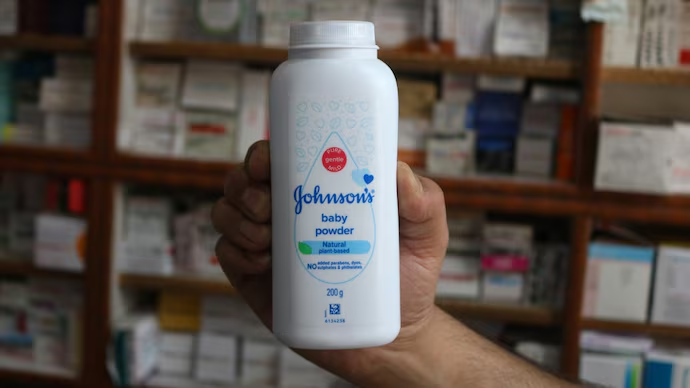
Johnson & Johnson (J&J) has agreed to pay $5.5 billion to resolve tens of thousands of lawsuits alleging that its talc-based baby powder and other talc products caused ovarian cancer. The proposed settlement is part of the healthcare giant’s latest effort to bring an end to years of litigation over claims that its talc products contained asbestos and led to serious health risks. The agreement, if approved by the court, would resolve the vast majority of current and future ovarian cancer claims while allowing the company to avoid prolonged individual trials.
The settlement follows multiple legal setbacks for J&J’s earlier attempts to resolve the litigation through bankruptcy proceedings involving its subsidiary, Red River Talc LLC (formerly LTL Management). Courts had previously rejected the company’s restructuring strategy, prompting J&J to pursue a broader settlement with claimants outside of its earlier legal framework.
Johnson & Johnson Agrees to $5.5 Billion Talc Settlement
The proposed settlement is designed to resolve claims brought by individuals who allege they developed ovarian cancer after prolonged use of the company’s talc-based products.
Settlement Snapshot
| Item | Details |
|---|---|
| Company | Johnson & Johnson |
| Settlement Value | $5.5 billion |
| Claims Covered | Talc-related ovarian cancer lawsuits |
| Payment Period | Multi-year payout, subject to court approval |
| Company Position | Continues to deny that its talc products caused cancer |
The settlement still requires approval through the legal process before payments can begin.
Background of the Talc Litigation
Johnson & Johnson has faced lawsuits for years from plaintiffs alleging that its talc-based products contained asbestos contamination or otherwise contributed to ovarian cancer after long-term use.
The litigation has become one of the largest product liability disputes in U.S. history, involving:
- Tens of thousands of individual lawsuits.
- Multi-billion-dollar jury verdicts in some cases.
- Years of appeals and settlement negotiations.
- Multiple bankruptcy-related legal proceedings.
Although the company has agreed to pursue a settlement, it continues to maintain that its talc products are safe and do not cause cancer.
Why the Company Chose to Settle
The agreement is intended to provide greater certainty for both the company and claimants while avoiding years of additional litigation.
Potential benefits include:
- Faster compensation for eligible claimants.
- Reduced legal uncertainty.
- Lower future litigation costs.
- Greater financial predictability for investors.
The settlement also allows Johnson & Johnson to shift management attention away from one of its largest legal challenges.
Potential Impact
| Stakeholder | Potential Effect |
|---|---|
| Claimants | Opportunity for compensation through settlement process |
| Johnson & Johnson | Reduced litigation exposure and legal uncertainty |
| Investors | Greater visibility into future legal liabilities |
| Courts | Fewer individual talc-related trials |
Company Continues to Deny Wrongdoing
Despite agreeing to the settlement, Johnson & Johnson has reiterated that:
- Its talc products are safe.
- Scientific evidence does not support claims that the products cause ovarian cancer.
- The settlement should not be interpreted as an admission of liability or wrongdoing.
The company has consistently defended the safety of its products while stating that resolving the litigation is in the best interests of shareholders and claimants.
Broader Implications
The proposed agreement could become one of the largest product liability settlements involving consumer healthcare products.
It may also:
- Reduce uncertainty surrounding one of the longest-running mass tort cases in the United States.
- Influence how other large corporations approach mass product liability litigation.
- Provide a framework for resolving complex consumer product lawsuits involving large numbers of claimants.
However, certain claims, including some related to mesothelioma and other asbestos-related diseases, may continue separately depending on the scope of the settlement and court rulings.
Looking Ahead
Johnson & Johnson’s proposed $5.5 billion settlement marks a significant step toward resolving years of litigation over its talc-based products. While the company continues to deny that its products caused cancer, the agreement reflects a pragmatic effort to reduce legal uncertainty, avoid prolonged courtroom battles, and provide a structured path for compensating eligible claimants. If approved, it would resolve a substantial portion of the ovarian cancer lawsuits that have weighed on the company for years.
Looking ahead, the court’s decision on the settlement will be closely watched by claimants, investors, and the broader healthcare industry. Approval could bring greater certainty to one of the largest mass tort cases in U.S. history, while also serving as an important precedent for how large-scale product liability disputes are resolved through negotiated settlements rather than years of continued litigation.
Get the day’s top stories in your inbox
One concise email. No spam, unsubscribe anytime.


