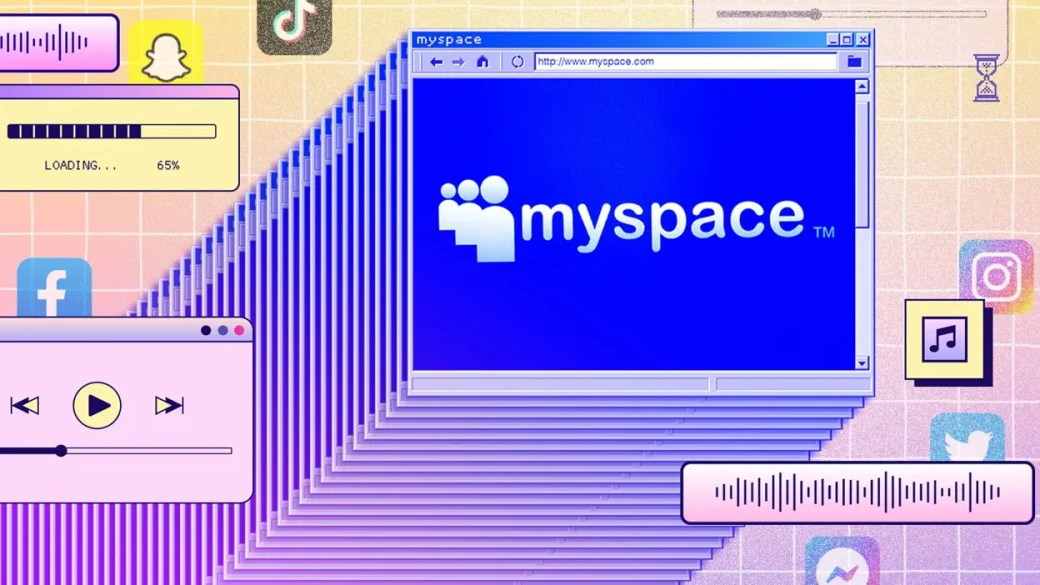
MySpace, once one of the defining social networks of the early internet, is preparing for another comeback as its owners look to relaunch the platform and position it as an alternative to today’s algorithm-driven social media giants.
Brothers Chris and Tim Vanderhook, who acquired MySpace through their company Specific Media in 2011, have confirmed that they intend to relaunch the platform. They say they are waiting for the right time and want to build something different from today’s social networks, which increasingly rely on recommendation algorithms, endless scrolling and engagement-driven feeds.
The proposed revival comes more than two decades after MySpace became one of the internet’s biggest social platforms before losing its dominance to Facebook. The company has attempted several revivals over the years, but the latest plan comes at a time when users are increasingly questioning algorithmic feeds and the highly curated nature of mainstream social media.
From social-media giant to internet nostalgia
MySpace launched in 2003 and quickly became one of the most popular destinations on the early web. Its success was built around customizable personal profiles, music discovery, direct connections between users and features such as the famous “Top Friends” list.
Unlike today’s highly standardized social profiles, MySpace gave users considerable control over how their pages looked. Users could customise layouts, backgrounds, music and other elements, creating a more personalised identity on the web.
MySpace’s rise and fall
| Period | MySpace milestone |
|---|---|
| 2003 | MySpace launches |
| 2005 | News Corp acquires MySpace |
| 2006-2008 | Platform becomes a dominant social network |
| 2008-09 | Facebook overtakes MySpace |
| 2011 | Specific Media acquires MySpace |
| 2011 onward | Multiple attempts to reposition the platform |
| 2026 | Owners confirm another planned relaunch |
MySpace’s decline accelerated as Facebook offered a simpler and more scalable social-networking experience. Facebook overtook MySpace in users and traffic around 2008-09, after which MySpace’s influence rapidly diminished.
The numbers behind MySpace’s collapse
The scale of MySpace’s decline illustrates just how difficult it will be to compete with today’s established social networks.
At its peak, MySpace reportedly attracted around 76 million monthly visitors. Today, estimates cited by TechRadar put the platform at roughly 1.7 million monthly visitors, highlighting the enormous gap between its historical popularity and its current reach.
MySpace then vs now
             MYSPACE'S TRAJECTORY

Peak era
~76M monthly visitors
        │
        │   Facebook rises
        ▼
Social-media leadership lost
        │
        ▼
Music-focused repositioning
        │
        ▼
Multiple revival attempts
        │
        ▼
2026
~1.7M monthly visitors*
        │
        ▼
     NEW RELAUNCH
*The current traffic figure is an external estimate cited by TechRadar, not an official MySpace user figure.
Why MySpace wants to come back now
Scrutiny of the incumbents is part of the opening — see our report on Meta facing a $1.4 trillion trial over alleged harm to children.
The timing of the proposed revival is particularly interesting.
The social-media market is now dominated by platforms such as Facebook, Instagram, TikTok and YouTube, where algorithms determine a significant portion of what users see.
MySpace’s owners believe there could be an opportunity for a platform that takes a different approach.
The argument is that today’s social media is heavily optimised around engagement, recommendation algorithms and keeping users scrolling, while early MySpace was more focused on personal expression, profiles, music and direct connections.
Former MySpace co-founder Chris DeWolfe has also criticised the addictive nature of algorithmic feeds, arguing that platforms increasingly personalise content to maximise the amount of time users spend on them.
The proposed positioning
| Traditional social media model | MySpace revival opportunity |
|---|---|
| Algorithm-driven feeds | More user-controlled discovery |
| Endless scrolling | More intentional sessions |
| Standardised profiles | Personal expression |
| Engagement optimisation | Community and creativity |
| Highly personalised recommendations | Potentially more direct connections |
| Influencer-heavy ecosystem | Music, creators and communities |
The exact features of the new platform have not yet been fully disclosed, so it would be premature to assume that every classic MySpace feature will return.
The “anti-algorithm” opportunity
One of the biggest potential differentiators could be the treatment of algorithms.
Modern social platforms use recommendation systems to decide which posts, videos and accounts users see. This has helped platforms increase engagement, but it has also created criticism around addictive scrolling, content bubbles and reduced control over feeds.
MySpace could attempt to turn that criticism into a competitive advantage.
Instead of asking:
“What content will keep you scrolling?”
the platform could potentially focus on:
“What do you actually want to see from your friends, artists and communities?”
That would represent a very different philosophy of social networking.
However, avoiding algorithms entirely would also create challenges. Recommendation systems help new creators reach audiences and help users discover content they would not otherwise find.
A successful MySpace revival would therefore have to balance user control with discovery.
Music could once again be MySpace’s biggest advantage
Music remains one of the strongest parts of MySpace’s historical identity.
Before Spotify, YouTube and today’s creator platforms became dominant, MySpace was an important online destination for musicians and fans. Artists could create profiles, share music and communicate directly with audiences.
The Vanderhooks originally acquired MySpace partly with a vision of repositioning it around music and artists. That earlier attempt, however, failed to restore the platform to its former prominence.
A new music strategy could look very different today.
MySpace could potentially focus on:
- Independent musicians
- Artist discovery
- Fan communities
- Music releases
- Live events
- Artist-owned profiles
- Direct fan communication
- Creator monetisation
The opportunity is particularly interesting because musicians today are spread across multiple platforms.
A social network built specifically around artists and fans could theoretically offer something different from general-purpose platforms.
But MySpace has tried this before
The biggest problem with the comeback story is simple: MySpace has already attempted to come back multiple times.
The current owners have acknowledged that previous attempts to modernise the platform did not work. They have attributed some of the problems to repeated changes in ownership and direction that fragmented the company’s strategy.
The 2011 acquisition was itself an attempt to reinvent MySpace, with the platform moving toward music and entertainment.
That strategy failed to restore MySpace’s former relevance.
Previous revival vs proposed revival
| Previous strategy | New opportunity |
|---|---|
| Music-centric repositioning | Broader social-network revival |
| Celebrity involvement | User and community focus |
| Platform redesign | Potentially different social model |
| Competing directly with Facebook | Positioning as an alternative |
| Entertainment destination | Creativity + community + music |
This history means the new owners face a much higher burden of proof than a typical startup.
They are not entering an empty market.
They are attempting to revive a brand that millions of people already know but that most of the world’s social-media users have abandoned.
The nostalgia factor could help — but only temporarily
Nostalgia is likely to be one of MySpace’s biggest initial advantages.
For millennials and older Gen Z users, MySpace represents a very different period of the internet: customised profiles, online friendships, music discovery and the early creator economy.
The current revival is already generating considerable online discussion, demonstrating that the brand still has cultural recognition.
Recent interest has also been amplified by a new documentary about MySpace and its rise and fall. The documentary features the Vanderhook brothers discussing their ownership of the platform and their plans for another revival.
But nostalgia can get people to visit a website once.
It cannot necessarily make them return every day.
That is the fundamental challenge.
The biggest challenge: network effects
Social networks are unusually difficult businesses to restart because their value depends on having other people on the platform.
Facebook is valuable because your friends are there.
Instagram is valuable because creators and brands are there.
TikTok is valuable because an enormous amount of content is generated every day.
MySpace needs to solve the same problem from scratch.
The social-network revival equation
NEW USERS
    │
    ▼
MORE CREATORS
    │
    ▼
MORE CONTENT
    │
    ▼
MORE REASONS TO RETURN
    │
    ▼
MORE USERS
    │
    └──────────────► NETWORK EFFECT
Without enough users, there is not enough content.
Without enough content, there is little reason for users to return.
Breaking this cycle is one of the hardest problems in social media.
MySpace would face enormous competition
The competitive environment today is dramatically different from the one MySpace entered in 2003.
| Platform | Core strength |
|---|---|
| Friends, groups and communities | |
| Visual content and creators | |
| TikTok | Short-form video discovery |
| YouTube | Video and creator ecosystem |
| Snapchat | Messaging and younger audiences |
| Communities and discussions | |
| X | Real-time conversation |
| MySpace revival | Personal expression, music and alternative social experience |
MySpace does not need to defeat every competitor.
Instead, it needs to create a category where users feel that existing platforms are not providing what they want.
That could mean becoming a smaller, more personal and user-controlled network rather than trying to become another TikTok or Instagram.
Social-media fatigue may create an opening
The comeback is also arriving amid growing criticism of mainstream social media.
Research and surveys increasingly point toward users becoming more selective about what they post and how much time they spend on major platforms. Vogue recently highlighted a broader shift toward smaller and more authentic online communities, noting that 55% of Americans surveyed post less than they did five years ago.
That does not mean people are abandoning social media.
Instead, it could mean that users are looking for different types of online experiences.
Platforms such as Reddit, Tumblr and newer community-focused services are benefiting from interest in less polished, less commercially dominated forms of online interaction.
MySpace could attempt to position itself within this broader movement.
Could MySpace bring back custom profiles?
One of the biggest questions for longtime users is whether the new platform will restore some of the features that made MySpace unique.
The original service allowed users to customise their pages extensively, including HTML-based modifications, music and lists of friends.
The famous Top 8 feature became an important part of MySpace culture because users publicly selected their closest friends.
The current version of MySpace still retains limited elements of its historical identity, but it remains primarily a music and culture destination rather than the social network it once was.
The owners have not yet confirmed exactly which classic features will return in the new relaunch.
The business model will be another major question
Even if MySpace attracts users, the company needs to determine how the new platform will make money.
Traditional social networks rely heavily on advertising, but aggressive advertising could undermine the very experience MySpace would be trying to sell.
If the platform positions itself as an alternative to engagement-driven social media, filling the service with intrusive advertising could create a contradiction.
Potential revenue models could include:
| Model | Potential advantage | Potential challenge |
|---|---|---|
| Advertising | Scales with users | Could recreate current social-media problems |
| Premium subscriptions | User-focused | Requires strong perceived value |
| Creator subscriptions | Supports artists | Needs large creator base |
| Music services | Fits MySpace heritage | Highly competitive market |
| Events/ticketing | Connects artists and fans | Operational complexity |
| Brand partnerships | Revenue from advertisers | Could affect authenticity |
The company has not publicly announced a final business model for the proposed relaunch.
What MySpace would need to succeed
A successful comeback would require much more than bringing back the old logo.
Five things MySpace would need
1. A clear identity
It cannot simply become another Instagram.
2. A reason to switch
Users need something they cannot easily get elsewhere.
3. Strong creator participation
Artists and creators could provide the content necessary to attract audiences.
4. User control
The platform would need to make its anti-algorithm positioning meaningful rather than simply marketing language.
5. A sustainable business model
The company needs to monetise users without destroying the experience that attracted them.
The timing could be better than expected
Ironically, MySpace’s biggest opportunity may come from the problems created by the success of its successors.
Social media has become more sophisticated, more personalised and more commercial.
That has created enormous value for companies such as Meta and ByteDance, but it has also created a segment of users who miss the simpler internet.
The renewed interest in older platforms such as MySpace, Vine and Friendster suggests that nostalgia is intersecting with a broader desire for different online experiences.
This does not guarantee that old platforms can become mass-market competitors.
But it does suggest that the internet’s social-media model may be entering another period of experimentation.
MySpace comeback: key numbers
             MYSPACE COMEBACK

2003
Launch
  │
  ▼
~76M
Peak monthly visitors*
  │
  ▼
2008-09
Facebook overtakes MySpace
  │
  ▼
2011
Specific Media acquisition
  │
  ▼
Multiple
Revival attempts
  │
  ▼
2026
New relaunch planned
  │
  ▼
~1.7M*
Estimated monthly visitors today
*Traffic figures cited by external reporting and not official MySpace user numbers.
What happens next?
There is currently no confirmed launch date for the new MySpace.
The Vanderhooks say they are waiting for the right time to relaunch the platform and have indicated that they remain committed even if another attempt does not immediately succeed.
That leaves several unanswered questions.
Will the new MySpace focus primarily on music? Will it restore extensive profile customisation? Will it eliminate algorithmic recommendations? Will creators receive new monetisation tools? And most importantly, can it attract enough users to create a new network effect?
Those questions will determine whether the comeback becomes a genuine technology story or simply another chapter in internet nostalgia.
The broader industry impact is nevertheless interesting. MySpace’s proposed return reflects a growing pushback against the highly algorithmic, engagement-driven model that has dominated social media for more than a decade. If the company can turn its historical strengths — personalisation, creativity, music and direct connections — into a modern product, it could carve out a niche among users looking for an alternative to mainstream platforms.
But rebuilding a social network is far harder than rebuilding a website.
MySpace already has the brand, the nostalgia and a history that few competitors can match. What it does not yet have is the active community needed to make the network valuable again.
The next MySpace therefore faces a simple but difficult test: can nostalgia bring people back — and can a genuinely different social experience make them stay?
Frequently Asked Questions
Is MySpace coming back?
Its owners are preparing a relaunch, positioning MySpace as an alternative to algorithm-driven social media. The article notes MySpace has attempted a comeback before.
Why does MySpace think there is an opening now?
The pitch is anti-algorithm: a feed users control rather than one ranked for them, at a time when the major platforms face growing scrutiny.
What is MySpace’s biggest advantage?
Music, which drove its original rise, could once again be its strongest differentiator against general-purpose social networks.
Get the day’s top stories in your inbox
One concise email. No spam, unsubscribe anytime.


