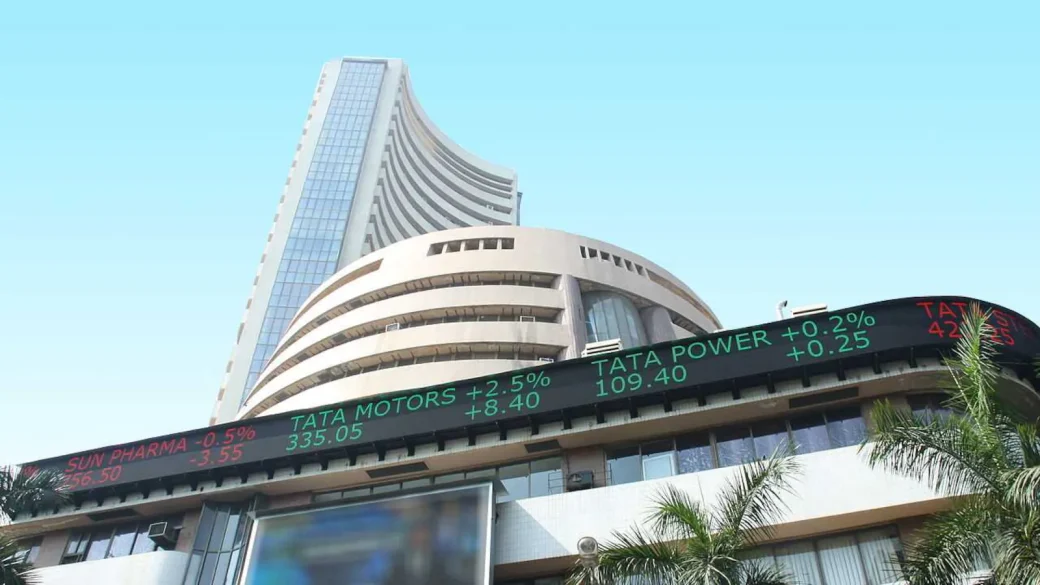
Nifty 50 companies delivered their strongest aggregate profit growth in 10 quarters during the June 2026 quarter, with profit after tax rising 18% year over year in Q1 FY27. The performance was significantly better than the 10% growth forecast by Motilal Oswal Financial Services and has strengthened expectations that corporate earnings could improve through the rest of fiscal 2027.
The earnings recovery was broad enough for 19 sectors to beat estimates, while the upgrade-to-downgrade ratio improved to 1.5, indicating that analysts are becoming more optimistic about the earnings outlook. However, the headline Nifty 50 growth was heavily influenced by five companies—ONGC, Hindalco Industries, Reliance Industries, JSW Steel and Bharti Airtel—which together accounted for 60% of incremental earnings.
Nifty 50 Profit Growth Hits 10-Quarter High
The 18% year-over-year profit growth in Q1 FY27 represents a significant improvement from the subdued earnings environment seen over several previous quarters. The result also exceeded Motilal Oswal’s forecast of 10% growth by eight percentage points.
The improvement was not limited to a handful of sectors. Large-, mid- and small-cap companies broadly delivered stronger results, although the magnitude of the earnings improvement varied considerably across companies and industries.
Nifty 50 Q1 FY27 Earnings At A Glance
| Metric | Q1 FY27 |
|---|---|
| Nifty 50 profit growth | 18% YoY |
| Previous forecast by Motilal Oswal | 10% |
| Outperformance vs forecast | +8 percentage points |
| Sectors beating estimates | 19 |
| Upgrade-to-downgrade ratio | 1.5x |
| Top five companies’ share of incremental earnings | 60% |
| FY27 Nifty EPS estimate | ₹1,232 |
| FY28 Nifty EPS estimate | ₹1,425 |
The stronger-than-expected quarter has given investors a reason to reassess the earnings outlook, although analysts continue to flag margin pressures and concentration risks.
Five Companies Drove 60% Of Incremental Earnings
Despite the broad-based improvement, much of the Nifty’s incremental profit growth came from five companies.
ONGC, Hindalco Industries, Reliance Industries, JSW Steel and Bharti Airtel together contributed 60% of the incremental earnings generated by Nifty 50 companies during the quarter.
Five Major Earnings Contributors
| Company | Key Q1 FY27 Trend |
|---|---|
| ONGC | Major contributor to incremental profit |
| Hindalco Industries | Profit increased 118% |
| Reliance Industries | Major contributor to earnings growth |
| JSW Steel | Profit increased 96% |
| Bharti Airtel | Major contributor to Nifty earnings beat |
The concentration means the 18% Nifty-wide growth should not automatically be interpreted as equally strong performance across all index constituents.
Hindalco’s profit increased 118%, while JSW Steel reported 96% growth. Vedanta, outside the five companies responsible for 60% of Nifty incremental earnings, posted an even larger 152% increase in profit.
Metals Delivered One Of The Biggest Turnarounds
Metals were among the strongest contributors to the June-quarter earnings recovery.
The sector moved from being among the bottom 10 contributors to profit growth a year earlier to becoming the second-largest contributor in Q1 FY27. Improved pricing helped lift profitability across the sector.
Hindalco’s 118% profit growth and JSW Steel’s 96% increase demonstrate the scale of the recovery. Vedanta’s 152% profit increase further underlined the strength of the metals earnings cycle.
Sector Contribution To Incremental Profit
| Sector | Incremental Profit Contribution |
|---|---|
| Oil & gas excluding OMCs | ₹16,900 crore |
| Metals | ₹15,700 crore |
| Non-bank lenders | ₹8,000 crore |
| Private-sector banks | ₹7,300 crore |
| State-run banks | ₹3,900 crore |
The five largest sector contributors together accounted for 73% of incremental profit in Motilal Oswal’s coverage universe, showing that earnings growth remained concentrated even though the number of sectors beating estimates was high.
Oil And Gas Companies Were A Major Earnings Driver
Oil and gas companies excluding oil marketing companies contributed ₹16,900 crore to the year-over-year increase in profit, making the sector the largest contributor to incremental earnings in the brokerage’s coverage universe.
The performance, however, differed sharply within the broader energy industry.
Oil marketing companies suffered substantial losses because elevated crude prices outweighed strong refining margins. The group reported a combined loss of ₹18,100 crore compared with a profit of ₹16,200 crore in the year-ago quarter.
Energy Sector Divergence
Oil & Gas ex-OMCs
₹16,900 crore incremental profit
██████████████████████████████████

Oil Marketing Companies
₹18,100 crore combined loss
████████████████████████████████████
The divergence highlights how crude prices can produce very different outcomes for upstream energy companies and fuel retailers.
Banks Benefit From Credit Growth
Lenders are raising capital to fund that growth — see ICICI Bank raising $750 million.
Financial companies also supported the earnings recovery.
Lenders benefited from faster loan growth, low credit costs and operating leverage, according to Jefferies. Non-bank lenders recorded strong growth in assets under management while asset quality remained broadly stable.
The contribution from non-bank lenders was estimated at ₹8,000 crore, while private-sector banks contributed ₹7,300 crore and state-run banks added ₹3,900 crore to incremental profit in Motilal Oswal’s coverage universe.
Financial Sector Contribution
| Financial Segment | Incremental Profit |
|---|---|
| Non-bank lenders | ₹8,000 crore |
| Private-sector banks | ₹7,300 crore |
| State-run banks | ₹3,900 crore |
| Combined | ₹19,200 crore |
The figures suggest that credit expansion and relatively low credit costs remain important supports for corporate earnings.
Retail And Consumer Companies Show Resilience
Consumer-oriented sectors also performed relatively well during the quarter.
Retail, jewellery, paints, selected internet companies and consumer staples benefited from resilient demand, premiumisation and, in some cases, price-led growth.
This suggests that domestic consumption remains an important source of earnings support even as companies contend with higher input and wage costs.
Festive demand is expected to provide another potential boost during the remainder of FY27, while GST-related consumption support could also improve demand conditions.
Mid And Small Caps Outperformed On Profit Growth
The earnings recovery extended beyond the Nifty 50.
Excluding oil marketing companies, large-cap companies in Motilal Oswal’s coverage universe recorded 21% profit growth compared with an expected 14%. Mid-cap profit rose 23%, reaching an 11-quarter high, while small-cap profit jumped 31% against an estimated 22%.
Profit Growth By Market-Cap Segment
| Segment | Actual Profit Growth | Estimate |
|---|---|---|
| Large caps | 21% | 14% |
| Mid caps | 23% | 17% |
| Small caps | 31% | 22% |
| Nifty 50 | 18% | 10% |
Small caps recorded the fastest growth, although the comparison benefited from a weak year-ago base, when small-cap profits had increased only 1%. Financial and oil-and-gas companies were the principal drivers of the small-cap improvement.
Not Every Company Benefited From The Earnings Recovery
The strong aggregate numbers conceal significant differences between companies.
InterGlobe Aviation, ITC, Dr. Reddy’s Laboratories, Tata Motors’ passenger vehicle business and Cipla weighed on Nifty profit growth. InterGlobe Aviation swung to a loss of ₹380 crore from a profit of ₹2,160 crore a year earlier.
The oil marketing companies were another major drag, reporting a combined ₹18,100 crore loss.
Companies Facing Earnings Pressure
| Company / Group | Key Issue |
|---|---|
| Oil marketing companies | Elevated crude prices |
| InterGlobe Aviation | Swung to loss |
| Dr. Reddy’s Laboratories | Earnings estimates cut |
| Tata Motors PV | Estimate pressure |
| Cipla | Drag on Nifty profit growth |
| IT services | AI-linked pricing pressure |
| Lenders | Net interest margin compression |
The mixed performance shows why the headline 18% Nifty profit growth needs to be viewed alongside company-level earnings dispersion.
Earnings Revisions Are Turning More Positive
One of the most encouraging signals from the June quarter was the improvement in analysts’ earnings revisions.
Motilal Oswal raised FY27 estimates by more than 3% for 130 companies and lowered them by a similar magnitude for 89 companies. That produced an upgrade-to-downgrade ratio of 1.5 times, the strongest in 22 quarters.
Earnings Revision Trend
130 companies
FY27 estimates raised >3%
████████████████████████████████████████

89 companies
FY27 estimates cut >3%
███████████████████████████

Upgrade / downgrade ratio
1.5x
Reuters similarly reported that 19 sectors beat estimates and that the 1.5 upgrade-to-downgrade ratio pointed to a broad-based improvement in the earnings outlook.
Nifty Earnings Estimates Rise Only Modestly
Despite the strong quarterly performance, analysts have not dramatically increased their full-year earnings forecasts.
Motilal Oswal raised its FY27 Nifty earnings-per-share estimate by just 0.6% to ₹1,232. Its FY28 estimate increased 0.3% to ₹1,425 from ₹1,422.
This suggests that analysts see the June-quarter earnings beat as encouraging but are not yet assuming that the improvement will translate into a dramatically higher earnings trajectory.
FY27 And FY28 Nifty EPS
| Fiscal Year | Earlier Estimate | Revised Estimate | Change |
|---|---|---|---|
| FY27 | Not specified | ₹1,232 | +0.6% |
| FY28 | ₹1,422 | ₹1,425 | +0.3% |
Reliance Industries, Hindalco, ONGC, ICICI Bank and State Bank of India drove the FY27 upgrade. Hindalco received the largest revision among Nifty companies, at 21.9%, followed by Tata Motors’ passenger vehicle business at 12.3%, SBI Life Insurance at 9.5%, ONGC at 7.8% and Reliance Industries at 7.4%.
Hindalco Leads Earnings Upgrades
Hindalco stood out not only for its 118% profit growth but also for the size of its earnings-estimate upgrade.
Motilal Oswal raised its FY27 earnings estimate for Hindalco by 21.9%, the largest revision among Nifty companies.
At the opposite end, InterGlobe Aviation saw its estimate cut by 32.8%, the steepest reduction in the index. Dr. Reddy’s estimate was lowered 19%, Tata Steel’s 13.4% and Wipro’s 11.8%.
This wide gap reinforces the uneven nature of the earnings recovery.
Margin Pressure Remains A Key Risk
The stronger profit numbers do not mean that corporate margins are free from pressure.
Brokerages flagged higher prices for metals, crude derivatives, palm oil, freight and wages as factors weighing on profitability. Autos, consumer goods and logistics were among the sectors affected.
IT services are also facing AI-linked pricing pressure, while lenders are dealing with compression in net interest margins.
Higher Input Costs
       │
       ├── Metals
       ├── Crude derivatives
       ├── Palm oil
       ├── Freight
       └── Wages
              │
              ▼
        Margin Pressure
              │
              ▼
     Limits Profit Growth
This creates an important test for the rest of FY27: whether demand growth and operating leverage can continue to offset rising costs.
What Could Drive Earnings In FY27?
Brokerages identified several factors that could support earnings during the remainder of the fiscal year.
Festive demand, GST-related consumption support, credit expansion and investment activity are expected to underpin FY27 earnings.
FY27 Earnings Drivers
| Driver | Potential Impact |
|---|---|
| Festive demand | Higher consumer spending |
| GST-related support | Potential consumption boost |
| Credit expansion | Stronger financial-sector earnings |
| Investment activity | Support for capital goods and industrial demand |
| Metals pricing | Potential support for commodity profits |
| Premiumisation | Higher consumer-company realization |
However, crude prices and geopolitical developments remain important risks, particularly for oil marketing companies, transportation businesses and other industries exposed to energy costs.
The Bigger Picture
The 18% profit growth posted by Nifty 50 companies in Q1 FY27 marks a meaningful earnings recovery and the strongest growth rate in 10 quarters. The quarter was stronger than expected, with 19 sectors beating estimates and analysts upgrading more companies than they downgraded.
Yet the headline number needs context. Five companies—ONGC, Hindalco, Reliance Industries, JSW Steel and Bharti Airtel—generated 60% of the incremental Nifty earnings, while the five largest sectors in Motilal Oswal’s broader coverage universe accounted for 73% of incremental profit. At the same time, oil marketing companies suffered a combined ₹18,100 crore loss, and several companies saw their earnings estimates reduced.
Looking Ahead
The key question for Indian equities is whether the June-quarter earnings recovery can broaden and remain durable through FY27. The positive upgrade-to-downgrade ratio, improving consumption outlook, credit growth and investment activity provide reasons for optimism. Stronger performance across large-, mid- and small-cap companies also suggests that the recovery is not confined entirely to the Nifty 50.
At the same time, investors will need to watch crude prices, input costs, wage inflation, AI-related pricing pressure in IT services and financial-sector margins. The modest 0.6% increase in the FY27 Nifty EPS estimate despite an 18% quarterly profit-growth rate suggests analysts remain cautious about extrapolating the latest earnings beat. Sustained upgrades and broader participation across companies will be needed to confirm that India’s corporate earnings cycle has entered a stronger phase.
Frequently Asked Questions
How much did Nifty 50 profits grow in Q1 FY27?
Profit after tax rose 18% year over year, the strongest aggregate growth in 10 quarters.
Which sectors drove the growth?
Metals delivered one of the biggest turnarounds, while oil and gas companies and banks were major earnings drivers.
Was the growth broad-based?
Not entirely. Five companies accounted for about 60% of the incremental earnings.
Get the day’s top stories in your inbox
One concise email. No spam, unsubscribe anytime.


