Key takeaways
- Nvidia AI drones may be using small Jetson computers made for robots and edge AI.
- A report says Russia may obtain the chips through Chinese traders and other indirect routes.
- These computers can help drones spot objects and make choices without constant human control.
- The case shows why chip export bans are hard to enforce once parts enter global supply chains.
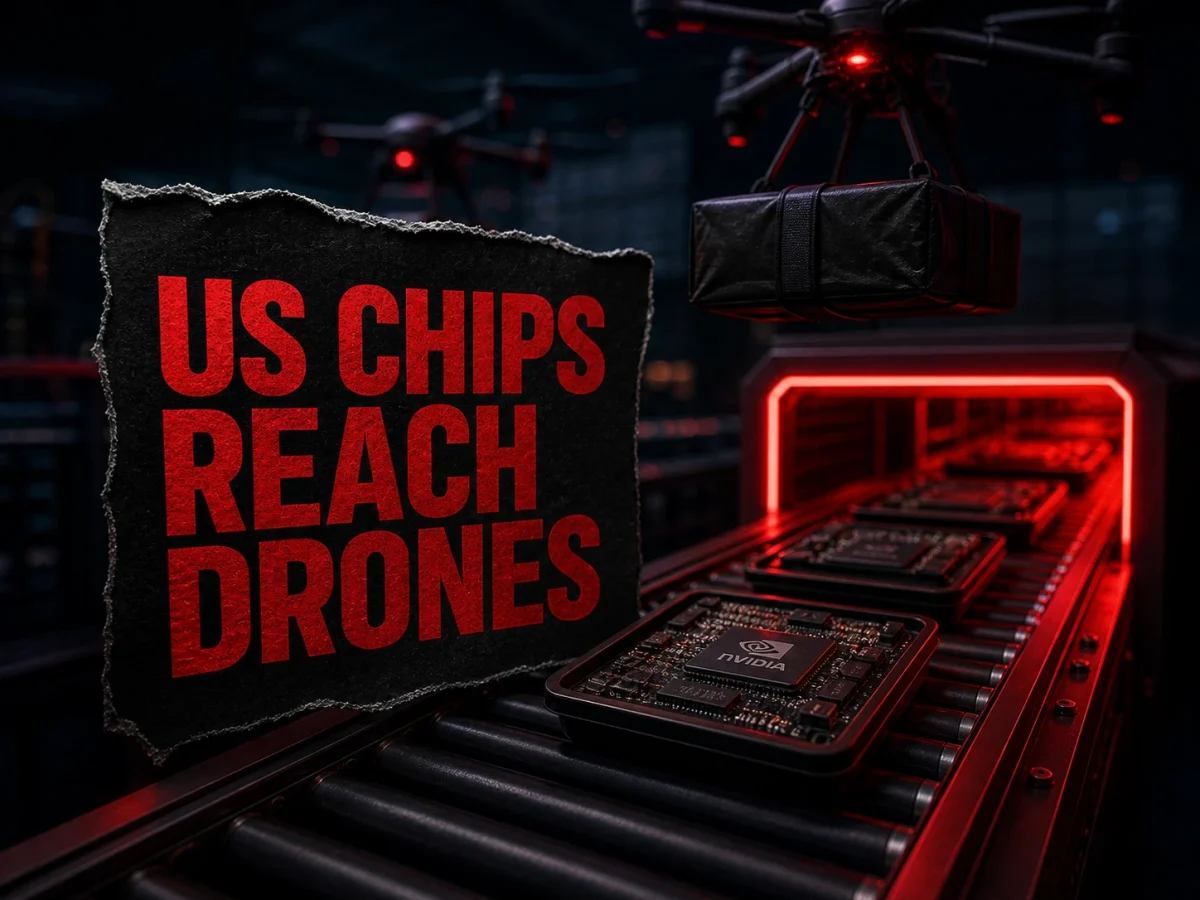
Nvidia AI drones means unmanned aircraft that use Nvidia computers to process images and make decisions. A new report says Russian drones may contain Nvidia’s small Jetson modules. Russia cannot legally buy many advanced US chips for military use, so the reported supply route matters. The findings also show how commercial technology can reach a battlefield.
The report does not prove that Nvidia sold the computers directly to Russia. Instead, it points to a chain of buyers, sellers and possible middlemen. That distinction matters because Nvidia sells many Jetson products for ordinary uses, such as robots, cameras and factory machines.
What are Nvidia AI drones used for?
A drone normally sends video to a person on the ground. The operator then decides where to fly and what to inspect. An AI computer can study the video inside the drone, so the aircraft can react faster when the radio link is weak.
Jetson is Nvidia’s family of small computers for “edge AI.” Edge AI means a machine processes data close to where it collects it, rather than sending every image to a faraway server. In a drone, that can mean quicker image checks and less need for a steady internet link.
The computer does not make a drone magically smart. Engineers must train software to identify objects, plan routes or keep the aircraft stable. Still, Nvidia AI drones could search for vehicles, follow a moving target or guide a strike with less help from an operator.
That creates a serious risk. A drone that keeps working after losing contact can be harder to stop. It may also make mistakes if smoke, darkness or unusual shapes confuse its software.
How could Russia get the Nvidia computers?
US export controls block or limit the sale of many advanced chips to Russia. Export controls are government rules that stop certain goods from reaching named countries, firms or military users.
But Jetson computers sit in a tricky part of the market. Some models are less powerful than the chips used in large AI data centres. They can also be sold for legal civilian work, which makes every shipment harder to judge.
According to the report, Russian buyers may rely on companies in China and other trading hubs. A middleman can buy a product for a permitted customer, then send it through another firm. That practice is often called diversion, meaning goods move away from their declared end user.
Russia has built wide networks for finding restricted electronics since its invasion of Ukraine. The networks can use shell companies, small distributors and repeated changes in shipping documents. A shell company is a business that may exist mainly to move money or goods for someone else.
Chinese traders have also become a major source of technology for Russia, although that does not mean the Chinese government approved every shipment. The exact route for each computer remains difficult to confirm from public records.
What does the report actually show?
The key evidence is the reported presence of Nvidia hardware in Russian-made drones and related systems. The report also examines how Russian firms may buy the modules despite US restrictions.
That evidence supports concern, but it does not show the total number of drones involved. It also does not prove that every Russian drone uses Nvidia hardware. A few recovered parts cannot tell us the size of the wider programme.
The technology may appear in more than one role. It could help a drone recognise a road or vehicle. It could also support navigation, camera control or testing before a military flight.
Nvidia AI drones do not mean Nvidia built Russia’s weapons. They show how chips made for civilian machines can be bought through global trade and adapted for war.
| Item | What it means |
|---|---|
| Nvidia Jetson | A small computer for robots and edge AI |
| AI processing | Software studies images or signals |
| Export control | A rule limiting sales to certain users |
| Reported route | Indirect buying through traders and distributors |
Why do the chip numbers matter?
Nvidia’s Jetson range includes several versions, so performance depends on the exact model. Some versions can handle around 40 trillion operations per second, a measure of how much AI work a computer can do.
For comparison, a large AI data-centre chip uses far more power and costs much more. A drone needs a light computer that can run from a battery. Small modules are therefore more useful in aircraft than giant server cards.
Even a small fleet can consume many computers. If a builder makes 1,000 drones and tests two computers per aircraft, it may need at least 2,000 modules. That simple example explains why trade records and stock checks matter.
Reported supply pathNvidiaDistributorMiddlemanDroneThe report describes a possible route, not proof of direct Nvidia sales to Russia.
Can export controls stop Nvidia AI drones?
Controls can make advanced parts harder and more costly to obtain. They cannot easily erase every legal sale of a commercial computer. That is why enforcement agencies track unusual orders, shipping routes and buyers.
The US Bureau of Industry and Security says companies must check end users and follow export rules. Nvidia has also said it follows applicable laws. Those steps help, but they depend on accurate paperwork and strong checks by distributors.
Governments may respond by tightening rules around smaller AI computers. They could also ask manufacturers to add stronger customer checks. Such moves may slow military use, but they could affect universities, startups and factories that use the same tools for peaceful work.
The battlefield lesson is clear: AI weapons do not always need a secret military chip. A small, legal computer can become part of a dangerous system after it changes hands. Readers can review the Bureau of Industry and Security’s export guidance and Nvidia’s Jetson product information for the primary details.
What happens next?
Investigators will likely focus on the companies that bought and shipped the modules. They may compare customs records with drone parts recovered from the war. That work could reveal whether the reported route is small or part of a larger flow.
Manufacturers also face pressure to understand where their products end up. Nvidia AI drones are one example of a wider problem: commercial AI tools can cross borders faster than new rules can follow them.
FAQs
What are Nvidia AI drones?
They are drones fitted with Nvidia computers that can process camera data and run AI software during flight.
How might Russia obtain Nvidia chips?
Reports suggest indirect purchases through traders and distributors outside Russia. The exact route and scale remain under investigation.
Why are these drones a concern?
Onboard AI can help a drone work with less radio contact. That may make it faster, harder to disrupt and more dangerous.
Get the day’s top stories in your inbox
One concise email. No spam, unsubscribe anytime.


