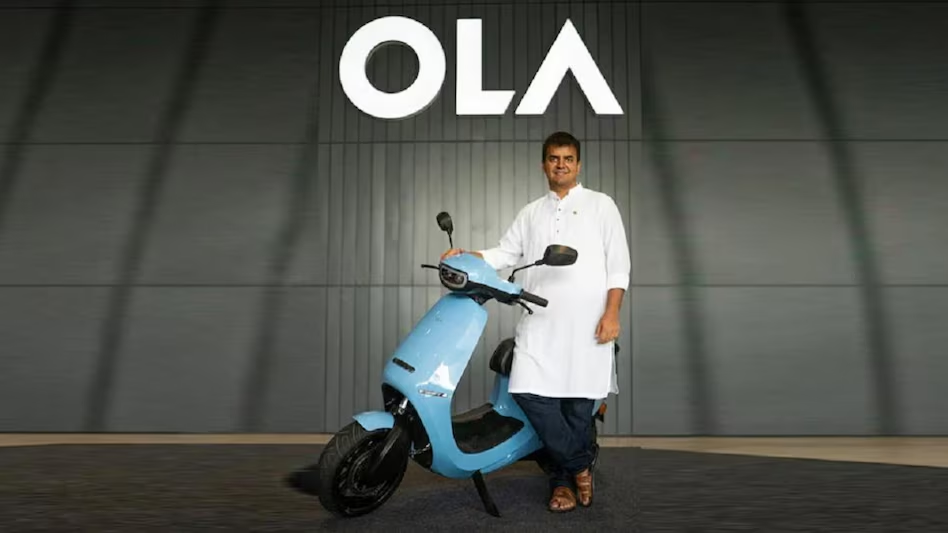
Ola Electric has secured a revised timeline under the government’s Production Linked Incentive (PLI) scheme for advanced chemistry cells (ACC), giving its battery manufacturing business a fresh five-year window to qualify for incentives of up to ₹7,240 crore. The Ministry of Heavy Industries (MHI) has revised the timelines for Ola Cell Technologies (OCT), the electric vehicle maker’s wholly owned battery-cell subsidiary.
The revised approval gives Ola Electric until December 2026 to achieve its first installed-capacity milestone of 6 GWh and allows it to access PLI incentives through calendar year 2031. The incentives are expected to be disbursed quarterly starting from the next quarter, potentially creating a recurring financial benefit as the company scales its cell manufacturing operations.
Ola Electric Gets Extended PLI Timeline
Under the revised schedule, Ola Electric has received effectively a two-year extension to meet the initial manufacturing milestones under the ACC PLI scheme.
The company currently has:
- 2.5 GWh of installed cell manufacturing capacity.
- Another 3.5 GWh under installation.
- A total allocation of 20 GWh under the ACC PLI scheme.
- A revised deadline of December 2026 to reach 6 GWh of installed capacity.
Ola said it expects to reach the 6 GWh milestone by the end of the current quarter, ahead of the revised deadline.
PLI Deal Snapshot
| Metric | Details |
|---|---|
| PLI Allocation | 20 GWh |
| Current Installed Capacity | 2.5 GWh |
| Capacity Under Installation | 3.5 GWh |
| Near-Term Target | 6 GWh |
| Revised Milestone Deadline | December 2026 |
| Incentive Window | Through CY2031 |
| Potential Incentives | Up to ₹7,240 crore |
| Disbursement | Quarterly, starting next quarter |
₹7,240 Crore Incentive Opportunity
The revised timeline is particularly significant because it restores Ola Electric’s access to the full five-year PLI window.
The company said it had not included PLI incentives in its business projections after missing the original timelines. The revised approval therefore improves the potential economics of its cell manufacturing business.
The incentives will be linked to the company’s progress under the ACC PLI framework rather than representing an upfront cash payment. Quarterly disbursements are expected to begin from the next quarter, subject to the applicable scheme conditions and performance requirements.
Battery Manufacturing Becomes Central to Ola’s Strategy
The PLI extension comes as Ola Electric attempts to expand beyond electric scooters into a broader energy and battery business.
The company is developing battery cells based on two chemistries:
- Nickel manganese cobalt (NMC)
- Lithium iron phosphate (LFP)
Ola also plans to increase localization of battery materials, improve manufacturing yields and recover materials through closed-loop processes.
The strategy is intended to reduce dependence on imported battery cells and components while creating a more integrated domestic EV supply chain.
Ola Targets 20 GWh Cell Capacity
Ola Electric has a much larger 20 GWh allocation under the ACC PLI scheme than its current installed capacity.
The company intends to progressively scale production toward the full allocation as it develops its cell manufacturing operations. Reaching higher capacity could allow Ola to supply batteries for its own electric vehicles while potentially supporting other applications in the energy-storage market.
Capacity Roadmap
| Stage | Capacity |
|---|---|
| Currently Installed | 2.5 GWh |
| Under Installation | 3.5 GWh |
| Near-Term Capacity | 6 GWh |
| PLI Allocation | 20 GWh |
Why the PLI Extension Matters
The incentive window strengthens Ola Electric as India’s electric mobility market expands, with Yulu raising $93 million for its EV fleet and Uber pushing bike taxis into 100 more cities.
The revised approval could improve Ola Electric’s financial position at a time when the company is investing heavily in manufacturing infrastructure.
The incentives could help:
- Reduce the effective cost of domestic battery production.
- Improve the economics of Ola’s cell business.
- Support expansion toward its 20 GWh allocation.
- Encourage greater localization of battery materials.
- Strengthen India’s domestic battery manufacturing ecosystem.
For Ola, the development also provides greater visibility over government support while it scales a capital-intensive new business.
Push Beyond Electric Scooters
Ola Electric is increasingly positioning itself as an energy technology company rather than only an electric scooter manufacturer.
The company is preparing to unveil a broader energy product roadmap, including products such as Shakti and Mahashakti, as it seeks to build businesses around batteries and energy storage.
This strategy could diversify Ola’s revenue opportunities while increasing the utilization of its battery technology and manufacturing infrastructure.
Looking Ahead
Ola Electric’s revised ACC PLI timeline gives the company an important second opportunity to scale its battery-cell manufacturing operations. With access to a full five-year incentive window through 2031 and potential cumulative incentives of up to ₹7,240 crore, the approval could materially improve the economics of the company’s cell business. The immediate challenge is reaching the revised 6 GWh milestone by December 2026, although Ola says it expects to achieve that target earlier.
Looking ahead, Ola’s ability to scale toward its 20 GWh allocation, improve manufacturing yields and localize battery materials will determine how much value it can extract from the PLI programme. If the company successfully builds a competitive domestic cell operation, the initiative could strengthen Ola’s position in India’s EV market while supporting the country’s broader goal of developing a localized battery and energy-storage supply chain.
Frequently Asked Questions
How much can Ola Electric earn under the PLI scheme?
Ola Electric is eligible for incentives of up to ₹7,240 crore under the advanced chemistry cell PLI scheme.
What has changed for Ola Electric?
The Ministry of Heavy Industries granted a revised timeline, giving its battery manufacturing business a fresh five-year window to qualify.
What is Ola Electric cell capacity target?
Ola Electric is targeting 20 GWh of cell manufacturing capacity as battery production becomes central to its strategy.
Get the day’s top stories in your inbox
One concise email. No spam, unsubscribe anytime.


