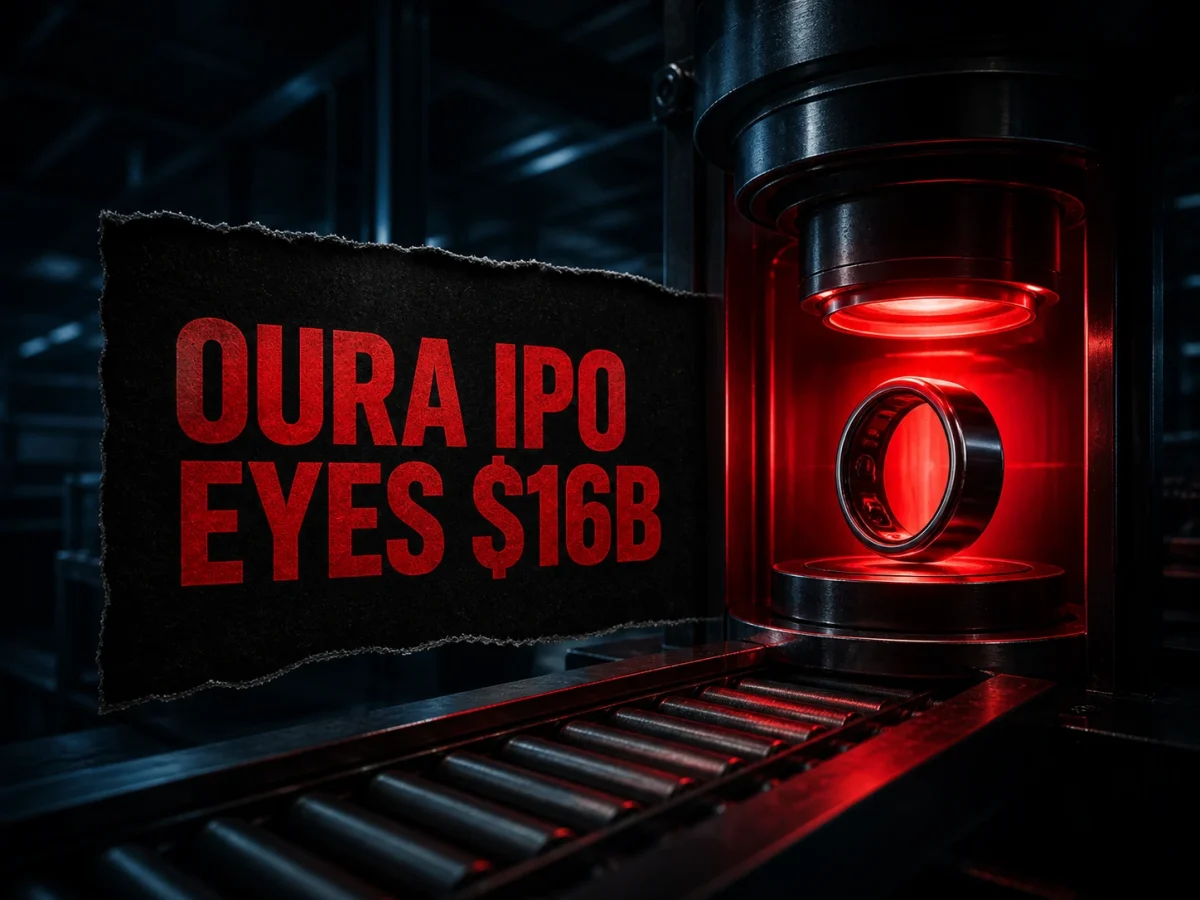
The Oura IPO means a possible stock-market listing for the smart-ring company. Oura is reportedly considering a September debut that could value it above $16 billion. TechCrunch reported the plan on August 24, citing people familiar with the matter. Oura hasn’t confirmed the timing or valuation.
Key takeaways
- Oura may seek a September IPO, according to a TechCrunch report.
- The possible listing could value the company at more than $16 billion.
- Oura sells smart rings that track sleep, heart rate and other health signals.
- The company still needs to file public documents before investors can judge the deal.
What is the Oura IPO plan?
Oura is exploring a public listing in September, TechCrunch reported. An IPO, or initial public offering, is the first sale of a company’s shares to the public.
The report does not say that Oura has picked a final date. It also doesn’t show that the company has filed its full IPO paperwork. Companies often test investor demand before they set a price and launch date.
That means the plan could change. Oura could delay the listing, reduce the number of shares it sells or seek a different valuation.
For now, the Oura IPO is a reported plan, not a completed transaction. Investors should wait for a filing from Oura or a regulator before treating the details as final.
Why could the Oura IPO value the company at $16 billion?
The reported target is a big jump from Oura’s last widely reported private valuation. Oura raised $200 million in late 2024 at a valuation of about $5.2 billion, according to reports at the time.
A valuation is the estimated worth of a company. A value above $16 billion would be more than three times that earlier figure.
The jump would reflect strong interest in health devices and subscription services. Oura earns money from ring sales and a membership plan that gives users deeper health data and advice.
Still, a target valuation isn’t the same as a market value. The final price depends on demand from investors, the company’s results and wider market conditions.
Reported private valuation vs possible IPO value2024 valuation$5.2BPossible IPO value>$16BFigures are reported estimates, not final market values.
How does Oura make money?
Oura’s main product is a small ring with sensors inside. These sensors can measure signals such as heart rate, body temperature changes and movement.
The ring turns those readings into scores for sleep, readiness and activity. In simple terms, it helps users see how their body may be recovering after rest or exercise.
Oura also charges for its membership service. The subscription gives users access to more reports, trends and coaching features.
This mix matters because subscription income can return each month. Hardware sales, by contrast, usually happen only when a customer buys a new device.
The company competes with smartwatches from Apple, Samsung and Garmin. It also faces smaller wearable brands that focus on sleep and health tracking.
What would investors check before buying?
Investors will first study Oura’s filing, known as an S-1. This document explains the company’s sales, costs, losses, risks, top owners and plans for the money raised.
They will want to know how many rings Oura has sold. They will also check how many members pay for its service and how quickly that number is growing.
| Question | Why it matters |
|---|---|
| How many devices are sold? | Shows demand for the core product. |
| How many users pay monthly? | Shows the strength of recurring income. |
| Is the company profitable? | Shows whether sales cover its costs. |
| Who owns shares? | Shows how much control founders and early investors keep. |
Profit is especially important. A company can grow sales and still lose money if it spends heavily on research, marketing and new staff.
The market may also question whether a $16 billion value is too high. Oura needs to show that smart rings can become a large, lasting business, rather than a short-lived trend.
What could the Oura IPO mean for the wearable market?
A successful Oura IPO could give health wearables a fresh boost. It would offer investors a public company focused on rings, rather than a small part of a much larger electronics group.
That visibility could help Oura win retail space, partnerships and new customers. It may also push Apple and other rivals to improve their health features.
But a weak debut could send the opposite message. If shares fall soon after listing, investors may become more careful about high-growth device companies.
The IPO market has its own weather. High interest rates can make fast-growing companies look less attractive because investors can earn more from safer assets.
Readers who want a simple example of how a public offering works can see our report on the Tempsens Instruments IPO. The US Securities and Exchange Commission also explains IPO filings and risks in its IPO investor guide.
What happens next?
Oura would normally file public documents before setting a final price. Underwriters, or banks that help sell the shares, would then speak with large investors and estimate demand.
The company could update its filing several times. It would usually set a price range first, then announce the final share price shortly before trading begins.
So the key date isn’t September alone. The key event will be the filing, because it will reveal whether Oura’s growth can support the reported valuation.
FAQs
When could the Oura IPO happen?
TechCrunch reported that Oura is considering a September listing. The company hasn’t confirmed a final date.
What could Oura be worth after an IPO?
The reported target is more than $16 billion. That figure could change before shares begin trading.
Why does Oura charge a membership fee?
The fee pays for extra health reports, trends and coaching features beyond the ring’s basic functions.
Get the day’s top stories in your inbox
One concise email. No spam, unsubscribe anytime.


