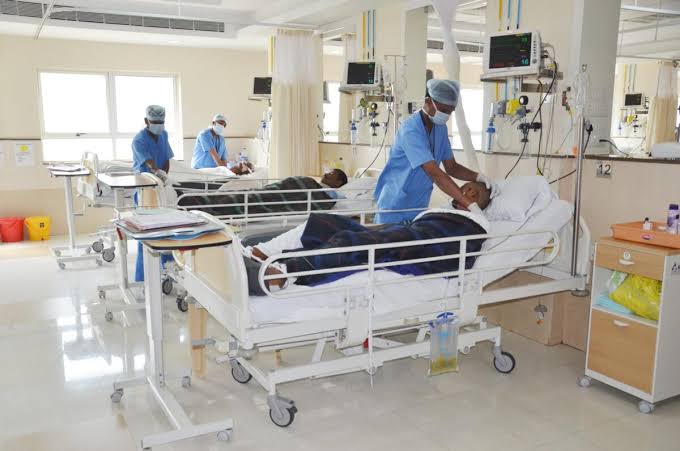
A Parliamentary Standing Committee on Health and Family Welfare has proposed that private hospital room charges should not exceed the average tariff of nearby three-star hotels, as part of a broader push to make healthcare more affordable and bring greater transparency to private hospital billing.
The recommendation applies specifically to private hospitals in large metropolitan cities and is part of the committee’s wider proposal to standardise and regulate healthcare costs, including treatment packages, diagnostics, medicines and medical devices.
Three-star hotel tariff to become the benchmark
The committee has recommended that hospital room charges should be benchmarked against the average room tariffs of three-star hotels in the peripheral area or vicinity of the hospital.
Importantly, the proposed benchmark relates to the basic room tariff. The committee said costs such as resident doctors, nursing, consumables, meals and laundry could be added separately.
PRIVATE HOSPITAL ROOM
        ↓
Nearby 3-star hotels
        ↓
Average room tariff
        ↓
Proposed maximum basic
hospital room charge
        +
Doctor / nursing costs
        +
Consumables
        +
Meals / laundry
The recommendation is not yet a nationwide legally enforceable price cap. It is a proposal from the Parliamentary committee that would require government action to become binding.
Why the committee wants prices controlled
Private healthcare keeps consolidating alongside the pricing debate — Redcliffe Labs just bought Megavision Diagnostics for ₹40 crore.
The panel cited a large gap between public and private healthcare costs.
According to data cited in the committee’s report, the average hospitalisation cost was:
| Facility | Average hospitalisation cost |
|---|---|
| Government hospitals | ₹6,631 |
| Private hospitals | ₹50,508 |
| Difference | ~7.6 times |
The committee said private treatment is often five to ten times more expensive than treatment in government facilities, with childbirth and serious illnesses such as cancer, heart disease and kidney failure among the areas showing particularly large differences.
AVERAGE HOSPITALISATION COST

Government
₹6,631
██████

Private
₹50,508
████████████████████████████████████████████
The panel described the situation as a growing healthcare affordability problem and raised concerns over excessive billing, unnecessary diagnostics and high costs for routine procedures.
Room rent is only one part of the proposed reform
The three-star benchmark is part of a much larger package of recommendations.
The committee has proposed:
| Area | Recommendation |
|---|---|
| Hospital rooms | Benchmark basic room rent against nearby three-star hotels |
| Surgery | Fixed and publicly displayed package rates |
| Diagnostics | Greater standardisation and price controls |
| Treatment estimates | Price transparency before admission |
| Medical devices | Stronger price regulation |
| Medicines | Controls on excessive markups |
| Billing | Greater transparency |
| Patient complaints | Fast-track grievance mechanism |
The committee also wants private hospitals to eliminate room-rent-linked pricing for standard procedures, where the price of the same procedure can increase depending on the category of room selected.
Same surgery, different room, different price
The panel has specifically criticised differential billing models in which the cost of clinical procedures rises when patients choose more expensive rooms.
CURRENT MODEL

Standard surgery
      ↓
General room → ₹X
Deluxe room  → ₹Y
Premium room → ₹Z

Same procedure
Different price


PROPOSED MODEL

Standard procedure
      ↓
Unified package price
      ↓
Surgeon + diagnostics
+ consumables + standard care
The committee cited Sankara Nethralaya as an example of an institution using defined package rates covering surgeon fees, investigations, consumables and post-operative care.
Private healthcare costs are putting pressure on households
The committee said high private healthcare costs can push vulnerable families into severe financial distress.
It cited average out-of-pocket spending of ₹34,064 per private hospitalisation episode and argued that simply expanding insurance coverage will not guarantee affordability if underlying private-sector prices remain high.
HEALTHCARE COST PRESSURE

High hospital prices
        ↓
Higher out-of-pocket spending
        ↓
Savings depleted
        ↓
Borrowing / asset sales
        ↓
Financial distress
Medical devices could also face stricter price controls
The committee has proposed a Medical Device Price Regulation Score (MDPRS) to identify devices that warrant price regulation.
Under the proposed framework:
| Score | Proposed treatment |
|---|---|
| 80+ | Priority I — immediate statutory price capping |
| 60–79 | Trade-margin regulation |
| Lower scores | Further assessment |
Devices such as coronary stents and knee implants could fall within the broader regulatory framework. The committee cited coronary stent price caps as having generated estimated annual consumer savings of ₹13,353 crore.
Medicine markups are also under scrutiny
The panel has recommended a permanent framework for trade-margin rationalisation and extending price controls to more high-cost, non-scheduled medicines, particularly those used for chronic diseases.
The objective is to prevent excessive markups while ensuring that price regulation does not make essential medicines commercially unviable.
The proposal could affect hospital companies
The recommendations have already attracted investor attention.
Shares of major hospital operators including Apollo Hospitals and Max Healthcare fell by around 1% after reports of the proposed three-star room-rent benchmark.
The potential financial impact would depend on how the government eventually implements the proposal.
POSSIBLE IMPACT

Room-price regulation
        ↓
Lower room revenue
        ↓
Potential margin pressure
        ↓
Hospital profitability
        ↓
Investor reaction
However, room charges represent only one part of hospital revenue, so it would be premature to estimate the impact on hospital earnings before the final regulatory framework is known.
The biggest implementation challenge
A hospital room is not the same as a hotel room.
Hospitals provide additional infrastructure and services, including:
- 24-hour nursing
- Medical monitoring
- Emergency support
- Infection control
- Medical equipment
- Clinical infrastructure
- Biomedical services
- Power backup
This means policymakers will need to determine how the three-star hotel benchmark should account for the additional costs associated with healthcare facilities.
The committee itself has proposed that certain costs, including doctors, nursing and consumables, can be added separately to the basic room tariff.
What happens next?
The proposal now requires government consideration.
Parliamentary Committee
        ↓
Recommendation
        ↓
Government consideration
        ↓
Regulatory framework
        ↓
Implementation rules
        ↓
Hospital compliance
The government would need to decide questions such as:
- Which three-star hotels should be included?
- How should average tariffs be calculated?
- How often should tariffs be updated?
- Which hospital rooms are covered?
- Are taxes included?
- How will compliance be monitored?
- What penalties would apply?
Hotel prices can fluctuate significantly depending on tourism, festivals, business events and seasonal demand, making the methodology particularly important.
What it could mean for patients
If implemented effectively, the proposed framework could give patients:
Lower and more predictable room costs
Greater visibility into treatment expenses
Less room-rent-linked inflation in procedure prices
More transparent package pricing
Greater protection against unexpected hospital bills
But the eventual impact will depend on whether the government also regulates other major components of hospital bills.
The bigger picture
The Parliamentary panel is effectively proposing a broader shift from opaque, hospital-specific pricing toward standardised and transparent healthcare pricing.
PRIVATE HEALTHCARE REFORM

Room rent
   ↓
3-star benchmark

Procedures
   ↓
Fixed package rates

Diagnostics
   ↓
Standardised pricing

Medicines
   ↓
Markup controls

Devices
   ↓
Price regulation

Billing
   ↓
Upfront transparency
        ↓
MORE PREDICTABLE
HEALTHCARE COSTS
The three-star hotel proposal is therefore only one part of a much wider attempt to address India’s private healthcare affordability problem.
Conclusion
The Parliamentary Standing Committee on Health and Family Welfare has proposed that private hospital room charges in large metropolitan cities should not exceed the average room tariff of nearby three-star hotels. The recommendation is aimed at reducing excessive hospitalisation costs and making private healthcare pricing more transparent.
The committee’s data shows the scale of the problem: average hospitalisation was estimated at ₹50,508 in private hospitals compared with ₹6,631 in government hospitals.
But the proposed three-star benchmark is not an immediate nationwide law. It is a Parliamentary recommendation, and the government would still need to determine whether and how to implement it.
The panel has also proposed fixed package rates for standard procedures, elimination of room-rent-linked pricing, greater upfront disclosure of treatment costs, and tighter controls on medicines and medical devices.
For patients, the reforms could make hospital bills more predictable. For private hospital operators, they could create pressure on pricing and potentially margins. Apollo Hospitals and Max Healthcare shares already came under pressure after the recommendations were reported.
The biggest test will be implementation. If only room rent is controlled while other hospital charges remain unrestricted, the overall cost burden on patients may not fall significantly. The committee’s broader package of pricing, transparency and standardisation measures will therefore be critical.
At its core, the proposal represents an attempt to address a fundamental question in Indian healthcare: how to make private medical treatment more affordable without undermining hospitals’ ability to invest in infrastructure, technology and quality care.
Frequently Asked Questions
What has the Parliamentary panel proposed?
The Standing Committee on Health and Family Welfare proposed that private hospital room charges should not exceed the average tariff of nearby three-star hotels.
Why link hospital rooms to hotel tariffs?
It gives a simple, local, verifiable benchmark for what a room itself should cost, separating accommodation from medical care in hospital bills.
Is room rent the only thing being looked at?
No. The committee flagged that the same surgery can be billed differently based on room category, and it also wants stricter price controls on medical devices and scrutiny of medicine markups.
Get the day’s top stories in your inbox
One concise email. No spam, unsubscribe anytime.


