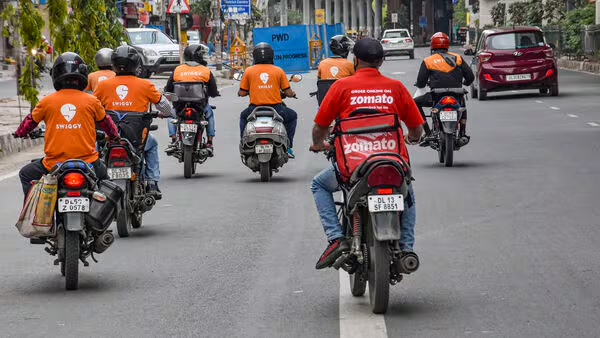
India’s parliamentary scrutiny of quick-commerce and delivery platforms is turning toward the algorithms that determine how quickly orders must reach customers. A parliamentary panel has urged tighter regulation of platform algorithms that can set delivery targets and influence the pace at which gig workers operate, raising concerns about road safety, working conditions and the pressure created by increasingly automated delivery systems.
The recommendations come as quick-commerce companies such as Blinkit, Zepto and Swiggy Instamart continue to compete on delivery speed. Although major platforms have moved away from explicitly marketing 10-minute delivery promises, algorithmic systems can still influence how orders are assigned, how routes are calculated and how quickly workers are expected to complete deliveries. The panel’s recommendations could therefore bring greater scrutiny to the technology behind India’s rapidly expanding delivery economy. :contentReference[oaicite:0]{index=0}
Why Is the Government Looking at Delivery Algorithms?
Delivery platforms rely heavily on algorithms to manage thousands of orders and workers simultaneously.
These systems can determine which delivery partner receives an order, estimate travel times, calculate routes and establish expected delivery windows. The technology allows companies to coordinate large networks of workers and customers without manually managing every delivery.
However, the same systems can create pressure when delivery targets are based on highly aggressive time estimates.
A parliamentary panel has therefore called for curbs on algorithms that establish unsafe speed targets for delivery workers. :contentReference[oaicite:1]{index=1}
How Do Delivery Algorithms Affect Workers?
For more context, see Blinkit, Zepto and Instamart Face Scrutiny Over MRP, Discounts and.
For delivery workers, an algorithm can effectively function as a digital manager.
The system can determine when an order is assigned, how long a worker has to complete it and how performance is measured. Workers may also receive incentives or face changes in their access to orders depending on their performance.
This can encourage workers to prioritize speed, particularly during periods of high demand.
The concern is that workers may feel compelled to take risks on roads in order to meet targets or maintain access to incentives and future orders.
The parliamentary panel’s recommendation reflects a growing debate over how much control automated systems should have over the working conditions of gig workers.
Quick-Commerce Companies Face Greater Scrutiny
The issue is particularly relevant to India’s quick-commerce sector.
Companies such as Blinkit, Zepto and Swiggy Instamart have built their businesses around rapid delivery from networks of dark stores and local fulfilment centres.
Their competitive advantage depends partly on minimizing the time between an order being placed and the product reaching the customer.
This requires algorithms to optimize inventory, assign workers, calculate routes and estimate delivery times.
As the industry expands, the pressure to maintain fast delivery could create a tension between customer expectations and worker safety.
The End of 10-Minute Delivery Did Not End the Algorithm Debate
Several quick-commerce companies have moved away from prominently advertising 10-minute delivery promises.
However, removing the marketing claim does not necessarily eliminate the underlying technology used to optimize delivery times.
Algorithms can still calculate expected arrival times and optimize the movement of delivery workers.
This means regulators can focus on the actual operating systems rather than simply examining the language used in advertising.
The parliamentary panel’s recommendations suggest that algorithmic management itself is becoming a policy issue.
What Could Regulation Look Like?
The panel’s recommendations could eventually lead to greater oversight of how delivery platforms design and operate their algorithms.
Potential areas of regulation could include minimum safety standards for delivery targets, restrictions on unrealistic delivery deadlines and greater transparency around how worker performance is evaluated.
Platforms could also be required to ensure that delivery estimates account for real-world factors such as traffic, weather and road conditions rather than relying solely on theoretical travel times.
The objective would be to prevent algorithms from creating incentives for unsafe behaviour.
Algorithms Also Affect Customers
The impact of delivery algorithms is not limited to workers.
Customers also interact with algorithmically generated delivery estimates every time they place an order.
The promised delivery time can influence purchasing decisions, while delays can affect customer satisfaction and platform ratings.
Platforms therefore have an incentive to make delivery estimates as attractive as possible while maintaining operational efficiency.
Regulation could require companies to balance these commercial incentives against realistic delivery conditions.
India’s Gig Economy Is Growing Rapidly
The debate comes as India’s gig economy continues to expand.
Food delivery, e-commerce and quick-commerce platforms have created large networks of workers who depend on digital platforms for income.
A parliamentary panel has previously recommended stronger protections for gig workers, including registration on a national database and clearer social-security measures. :contentReference[oaicite:2]{index=2}
The latest recommendations indicate that policymakers are increasingly looking beyond traditional employment protections and examining the role of technology in determining working conditions.
Algorithmic Management Is Becoming a Labour Issue
Traditional labour regulation generally focuses on employers, contracts, wages and working hours.
Platform work complicates that framework because workers are often classified differently from conventional employees, while algorithms determine many aspects of their daily work.
A delivery worker may not receive instructions from a human supervisor but can still be managed through automated assignments, ratings, incentives and deadlines.
This has led to growing calls for greater transparency around algorithmic management.
Workers may want to know why certain orders are assigned to them, how performance scores are calculated and what factors affect their earnings.
Safety Could Become a Key Regulatory Requirement
Road safety is likely to be one of the most important areas of concern.
Delivery workers spend long periods on motorcycles and scooters, often navigating congested urban roads.
An aggressive delivery target can create pressure to speed, take shortcuts or make risky decisions.
A regulatory framework could therefore require platforms to ensure that delivery targets are compatible with legal speed limits and realistic travel conditions.
The panel’s focus on safer algorithmic delivery targets reflects this concern. :contentReference[oaicite:3]{index=3}
Platforms Already Use Algorithms for More Than Delivery Times
The technology behind delivery platforms extends far beyond calculating arrival times.
Algorithms can influence pricing, discounts, order batching, worker allocation, customer recommendations and the positioning of products within an app.
For example, a platform can decide which products appear first when a customer searches for an item or which delivery worker receives a particular order.
This makes algorithms central to how the entire marketplace operates.
As a result, greater government scrutiny could eventually extend beyond delivery speeds to other algorithmic decisions affecting workers, restaurants, retailers and consumers.
Competition Could Make the Issue More Important
India’s quick-commerce market is highly competitive.
Companies are racing to expand their dark-store networks, increase product selection and reduce delivery times.
When companies compete primarily on speed, algorithmic efficiency becomes an important competitive advantage.
This creates a potential regulatory challenge.
A platform that voluntarily adopts slower but safer delivery targets could potentially face pressure from competitors offering faster delivery.
Common industry standards could therefore prevent safety-focused companies from being disadvantaged by the market.
Delivery Platforms May Need to Change Their Technology
If stronger regulation is introduced, companies could have to modify the algorithms that calculate delivery targets.
Systems may need to incorporate additional safety factors and avoid setting deadlines that effectively require workers to exceed reasonable speeds.
Companies could also need stronger monitoring systems to identify whether workers are repeatedly operating under unsafe conditions.
This could increase technology and compliance costs, but it could also reduce accidents and improve the long-term sustainability of platform-based delivery work.
What It Means for Blinkit, Zepto and Swiggy Instamart
For India’s leading quick-commerce companies, the recommendations could increase scrutiny of the systems that underpin their delivery networks.
Blinkit, Zepto and Swiggy Instamart rely on speed and operational efficiency to differentiate themselves.
Any regulation that limits the ability to aggressively optimize delivery times could affect how companies design their logistics networks.
However, the impact may be manageable if platforms shift their focus from extreme speed to predictable and reliable delivery.
The industry could ultimately compete more on availability, assortment, pricing and service quality rather than simply on minutes saved.
The CCI Has Already Examined Platform Algorithms
Algorithmic and platform-related issues are not entirely new to Indian regulators.
The Competition Commission of India has previously examined the business models of food-delivery platforms such as Zomato and Swiggy, including their control over delivery, relationships with restaurants and the use of platform data.
The CCI has recognized that delivery time and service quality are important parameters of competition between food-delivery platforms. :contentReference[oaicite:4]{index=4}
The latest parliamentary recommendations add another dimension by focusing specifically on how algorithmic systems can affect workers and safety.
The Bigger Question Is Algorithmic Transparency
The debate ultimately raises a broader question about how much control technology companies should have over automated decisions.
Algorithms can improve efficiency and reduce costs, but workers and consumers may have limited visibility into how those systems operate.
Greater transparency could give workers more information about how their performance is assessed and how delivery targets are created.
For regulators, the challenge will be to improve accountability without forcing companies to disclose commercially sensitive algorithms or undermining the efficiency benefits of automation.
Looking Ahead
India’s parliamentary panel is pushing the delivery and quick-commerce industry toward greater scrutiny of the algorithms that determine delivery targets and influence the work of gig workers. The recommendations come as platforms continue to rely heavily on automated systems to manage orders, routes and delivery networks, making algorithmic management an increasingly important part of the labour and consumer-protection debate. :contentReference[oaicite:5]{index=5}
The next challenge will be translating the recommendations into practical rules. India will need to balance worker safety and transparency with the efficiency that makes quick-commerce platforms viable. If regulators succeed, the industry could move toward a model where algorithms optimize logistics without creating unsafe pressure on workers, potentially establishing new standards for how technology manages India’s rapidly growing gig economy.
Frequently Asked Questions
What is the panel recommending?
That the government regulate the algorithms delivery platforms use to assign and time work.
How do the algorithms affect workers?
They set delivery targets and routing that shape pay and pace of work, often without transparency.
Did ending 10-minute delivery settle the issue?
No. The end of 10-minute delivery did not end the debate over algorithmic pressure.
Get the day’s top stories in your inbox
One concise email. No spam, unsubscribe anytime.


