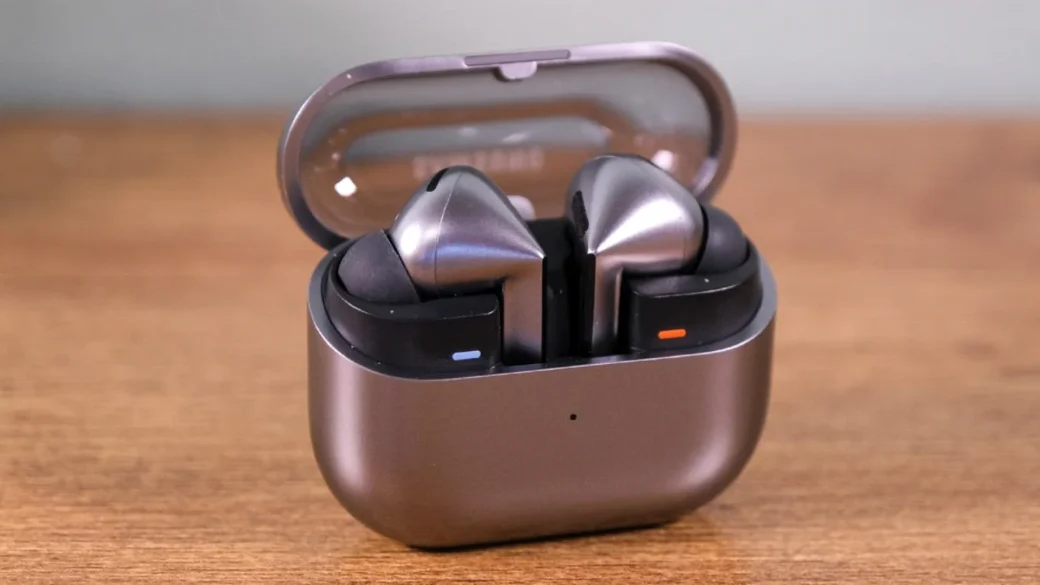
Samsung is preparing to turn its premium Galaxy Buds into over-the-counter hearing aids after receiving clearance from the U.S. Food and Drug Administration (FDA) for a new Hearing Aid feature. The functionality will allow compatible Galaxy Buds to amplify sounds for adults with perceived mild to moderate hearing loss, bringing hearing assistance directly into a pair of everyday wireless earbuds.
The feature will initially arrive on the Galaxy Buds3 Pro and Galaxy Buds4 Pro in the U.S. and select approved markets during the fourth quarter of 2026. Samsung is combining the hearing-aid functionality with a built-in Hearing Test that can assess each ear and personalize sound amplification according to the user’s hearing profile.
Samsung Galaxy Buds Get FDA Clearance for Hearing Aids
Samsung’s new Hearing Aid feature has received FDA clearance, allowing compatible Galaxy Buds to function as over-the-counter hearing aids for adults aged 18 and older with perceived mild to moderate hearing loss.
The move brings Samsung into a market that has increasingly connected consumer earbuds with health and accessibility features.
Instead of purchasing a dedicated hearing device, eligible users will be able to use compatible Galaxy Buds to amplify sounds they have difficulty hearing.
| Feature | Details |
|---|---|
| Company | Samsung |
| Feature | Galaxy Buds Hearing Aid |
| Regulatory clearance | U.S. FDA |
| Supported models | Galaxy Buds3 Pro and Galaxy Buds4 Pro |
| Target users | Adults aged 18+ |
| Intended hearing loss | Mild to moderate |
| Rollout | Q4 2026 |
| Initial markets | U.S. and select approved markets |
| Hearing test | Built-in, approximately five minutes |
| Required phone | Compatible Galaxy device |
| Software requirement | One UI 8 or later |
Samsung says the feature is not intended to replace professional diagnosis or treatment by a qualified clinician.
How the Galaxy Buds Hearing Aid Feature Works
For more context, see Samsung Chip Verification Report Says Claude Cut Checks to Days.
The system combines two main features: Hearing Test and Hearing Aid.
Users can first complete a hearing assessment using their Galaxy Buds. The test examines each ear separately and identifies differences in hearing sensitivity across frequencies.
The results are then used to personalize amplification.
From Hearing Test to Hearing Assistance
Put on Galaxy Buds → Complete Hearing Test → Each ear is assessed → Hearing profile is generated → Hearing Aid is activated → Sound amplification is personalized → Sounds become easier to hear
The process is designed to make basic hearing support accessible without requiring a separate hearing-aid fitting appointment.
The Hearing Test Takes About Five Minutes
Samsung says its Hearing Test can be completed in around five minutes.
The test uses pure-tone audiometry to assess hearing sensitivity in each ear.
Users respond to sounds at different frequencies, allowing the software to identify where they may have difficulty hearing.
The system then generates an audiogram and categorizes hearing as normal or across different levels of hearing loss.
Hearing Assessment
Sound played → User responds → Frequency tested → Both ears evaluated → Hearing profile created → Personalized settings generated
The company says the Hearing Test is registered as Software as a Medical Device and is designed to provide clinical-grade results.
Galaxy Buds Can Personalize Amplification
After the hearing test, the Hearing Aid feature adjusts amplification based on the individual’s hearing profile.
This means the earbuds do not simply increase the volume of everything equally.
Instead, the system can emphasize frequencies that the user has difficulty hearing.
Personalized Sound
Hearing profile → Identify weaker frequencies → Adjust amplification → Improve speech and environmental sounds → Personalized listening experience
Samsung says the system can help amplify high-frequency sounds, nearby whispers and distant voices.
Noise Reduction Can Help in Busy Environments
Hearing loss can make conversations particularly difficult in environments with significant background noise.
Samsung’s Hearing Aid feature includes technologies designed to reduce unwanted background sounds.
Noise elimination can help suppress distracting sounds, while beamforming can focus the microphones toward sounds coming from in front of the user.
Hearing in Noisy Places
Conversation
+
Background noise
Galaxy Buds microphones → Noise elimination
+
Beamforming
Focus on important sounds → Improved speech audibility
The goal is to make conversations easier to follow without simply increasing the volume of every sound around the user.
Beamforming Helps Focus on the Speaker
Beamforming uses multiple microphones to determine the direction of incoming sound.
Samsung says this technology can help focus on sounds in front of the user while reducing some surrounding noise.
This can be particularly useful during conversations where the speaker is directly in front of the listener.
Directional Audio
Speaker in front → Microphones detect sound direction → Beamforming → Focus on speaker → Reduce surrounding distractions
This type of processing is already used in many premium earbuds for calls and noise management, but Samsung is applying it as part of the hearing-aid experience.
Samsung Uses the NAL-NL2 Fitting Formula
Samsung says its Hearing Aid feature uses NAL-NL2, a recognized formula used for fitting prescription hearing aids.
The system uses the user’s hearing profile to determine how sound should be amplified.
This allows the Galaxy Buds to provide a more personalized amplification profile instead of relying on a single preset.
Personalized Hearing Profile
Hearing test → Audiogram → NAL-NL2 fitting approach → Individual amplification settings → Galaxy Buds Hearing Aid
The technology is intended to make the hearing experience more closely matched to each user’s hearing characteristics.
Galaxy Buds Will Not Become a Replacement for Every Hearing Aid
Despite the FDA clearance, Samsung’s Galaxy Buds feature is aimed at a specific group of users.
The Hearing Aid feature is intended for adults with perceived mild to moderate hearing loss.
People with more significant hearing difficulties may still require professional evaluation and dedicated hearing devices.
Who It Is Designed For
Adults 18+ → Perceived mild to moderate hearing loss → Galaxy Buds Hearing Aid
But:
Severe or profound hearing loss → Professional assessment recommended
The feature should therefore be viewed as an accessible hearing-support option rather than a universal replacement for clinical hearing care.
Samsung Is Following Apple’s Lead
Samsung’s move comes after Apple introduced hearing-aid functionality for compatible AirPods.
Apple’s AirPods Pro lineup helped demonstrate that wireless earbuds could combine traditional consumer audio features with regulated hearing assistance.
Samsung’s entry gives Android users a similar option within the Galaxy ecosystem.
Consumer Earbuds Become Health Devices
Traditional earbuds → Music
+
Calls
+
Noise cancellation
↓
Health monitoring
+
Hearing tests
+
Hearing assistance
↓
Medical-device functionality
The competition could encourage both companies to improve hearing-related technology in future generations of wireless earbuds.
The Feature Requires a Compatible Galaxy Device
The Hearing Aid functionality is not simply a firmware feature that can be used independently with any smartphone.
Samsung says full support requires a compatible Galaxy device running One UI 8 or later.
This means the functionality remains closely integrated with Samsung’s hardware and software ecosystem.
Samsung Ecosystem
Galaxy Buds3 Pro
OR
Galaxy Buds4 Pro → Compatible Galaxy phone → One UI 8+ → Hearing Test → Hearing Aid → Samsung Health
This ecosystem approach could encourage users to remain within Samsung’s broader device platform.
Hearing Information Can Be Viewed in Samsung Health
Samsung is also integrating hearing-related information into its Samsung Health platform.
Users can access information such as hearing-test results and environmental noise exposure.
This connects hearing assistance with Samsung’s broader health-monitoring strategy.
Hearing Health Ecosystem
Galaxy Buds → Hearing Test
+
Noise exposure
Samsung Health → Long-term hearing insights
The approach could eventually allow Samsung to provide users with a broader picture of their hearing health.
Samsung Has Been Working on Hearing Technology for Years
The Hearing Aid feature builds on Samsung’s earlier efforts in hearing support.
The company introduced a Personal Sound Amplification Product feature with Galaxy Buds+ in 2020.
Samsung later conducted clinical research into the effectiveness of Galaxy Buds’ Ambient Sound feature for people with mild to moderate hearing loss.
The latest FDA-cleared system represents a more advanced step toward regulated hearing assistance.
Samsung’s Hearing Technology
2020 → PSAP feature → Clinical research → Hearing support improvements → Hearing Test
+
Hearing Aid
↓
FDA clearance
The progression shows how Samsung has gradually moved hearing-related features from general accessibility functions toward regulated medical-device capabilities.
Availability Begins in Q4 2026
Samsung says the Hearing Aid and Hearing Test features will become available during the fourth quarter of 2026.
The initial rollout covers the Galaxy Buds3 Pro and Galaxy Buds4 Pro.
The feature will initially be available in the U.S. and select markets where Samsung has received the necessary regulatory approvals.
Availability in other countries will therefore depend on local regulatory requirements.
India Availability Has Not Been Confirmed
Samsung’s U.S. FDA clearance does not automatically mean the feature will be available in India.
Medical-device regulations differ between countries, and Samsung has not announced a complete global rollout.
Indian Galaxy Buds owners may therefore have to wait for Samsung to confirm regulatory approval and availability in the country.
Market Rollout
U.S. → Q4 2026 → Select approved markets → Additional regulatory approvals → Potential expansion → India availability to be confirmed
This distinction is important for Galaxy Buds users outside the United States.
Why the Feature Matters
Hearing aids can be expensive, and some people with mild hearing loss may delay seeking assistance because they do not want to purchase or wear a traditional hearing device.
Integrating hearing assistance into wireless earbuds could lower some of the barriers to trying hearing support.
Users who already own compatible Galaxy Buds may also find the concept more familiar and less intimidating than dedicated medical hardware.
Traditional Model
Hearing concern → Medical evaluation → Hearing-aid fitting → Dedicated device
VS
Galaxy Buds Model
Hearing concern → Hearing Test → Personalized settings → Compatible earbuds
The two approaches serve different needs, but consumer earbuds could make basic hearing assistance more accessible.
Battery Life Remains a Practical Limitation
One challenge is battery life.
Wireless earbuds need to be charged regularly, while dedicated hearing aids are specifically designed for extended daily use.
The Galaxy Buds therefore may not provide the same continuous-use experience as purpose-built hearing aids.
Everyday Use
Morning → Galaxy Buds → Hearing assistance → Battery consumption → Charging required → Resume use
For users who need hearing support throughout an entire day, battery management could be an important consideration.
Earbuds Also Have a Different Physical Design
Dedicated hearing aids are designed primarily around hearing correction.
Wireless earbuds are designed to balance audio quality, comfort, battery life, microphones, connectivity and other consumer features.
This means Galaxy Buds may offer convenience but may not provide the same level of customization or long-term comfort as specialized hearing devices for every user.
The Technology Could Make Hearing Support Less Noticeable
One advantage of using wireless earbuds as hearing aids is that they do not necessarily look like traditional medical devices.
Galaxy Buds are already common consumer electronics products.
For some users, this could reduce the social stigma associated with wearing a conventional hearing aid.
Consumer Device Advantage
Traditional hearing aid → Clearly designed as medical device
VS
Galaxy Buds → Wireless earbuds → Music
+
Calls
+
AI features
+
Hearing assistance
The combination could make hearing support feel more like an ordinary technology upgrade.
Samsung Is Combining Accessibility With AI and Health
The Hearing Aid feature is part of a wider movement in consumer electronics toward health-related functionality.
Modern earbuds can already perform tasks involving noise monitoring, fitness information, translation and voice processing.
Hearing assistance adds another medical and accessibility dimension.
Smart Earbuds Evolution
Music → Calls → Noise cancellation → AI assistants → Translation → Health monitoring → Hearing testing → Hearing assistance
The development suggests that earbuds could become increasingly important personal-health devices.
What It Means for Samsung
For Samsung, the feature strengthens the Galaxy ecosystem while giving the company another way to differentiate its premium earbuds.
The Galaxy Buds3 Pro and Buds4 Pro will be able to offer a capability that goes beyond entertainment and communication.
The feature could also increase the value of Samsung’s health platform by connecting hearing information with other health data.
What It Means for Consumers
Consumers with mild to moderate hearing difficulties will have another option to consider when looking for hearing support.
The biggest advantage is convenience.
Users can perform a hearing test using compatible Galaxy Buds and then use the same earbuds for personalized amplification.
However, consumers should still seek professional evaluation when hearing problems are significant, sudden or worsening.
What It Means for the Earbud Market
Samsung’s entry could accelerate competition in the hearing-health segment.
Other earbud manufacturers may increasingly explore regulatory approval for hearing-related functions.
Competitive Market
Apple
+
Samsung
+
Other earbud makers
Hearing technology → FDA and other regulatory approvals → Consumer adoption → More advanced hearing features
This could turn hearing assistance into an increasingly important premium-earbud feature.
What It Means for Traditional Hearing-Aid Companies
Traditional hearing-aid manufacturers could face additional competition from consumer electronics companies.
However, dedicated hearing aids still offer specialized hardware, longer-term wearability and professional fitting options that consumer earbuds may not fully replicate.
The two categories could therefore increasingly coexist rather than one immediately replacing the other.
Two Market Segments
Consumer earbuds → Accessible hearing support → Mild to moderate hearing loss
VS
Dedicated hearing aids → Specialized hearing correction → Broader clinical applications → Professional fitting and support
The overlap between the two markets is likely to grow.
Key Facts at a Glance
| Metric | Detail |
|---|---|
| Company | Samsung |
| Feature | Hearing Aid |
| FDA status | Cleared |
| Supported earbuds | Galaxy Buds3 Pro and Galaxy Buds4 Pro |
| Target age | 18 years and older |
| Intended hearing loss | Mild to moderate |
| Hearing test | About five minutes |
| Hearing assessment | Each ear individually |
| Sound technologies | Noise elimination and beamforming |
| Fitting approach | NAL-NL2 |
| Rollout | Q4 2026 |
| Initial markets | U.S. and select approved markets |
| Phone requirement | Compatible Galaxy device |
| Software | One UI 8 or later |
Infographic: How Galaxy Buds Become Hearing Aids
GALAXY BUDS → HEARING TEST → 5-MINUTE AUDIO ASSESSMENT → LEFT EAR + RIGHT EAR → AUDIOGRAM → PERSONALIZED HEARING PROFILE → NAL-NL2 FITTING → HEARING AID MODE → TARGETED AMPLIFICATION
+
NOISE ELIMINATION
+
BEAMFORMING
↓
CLEARER EVERYDAY SOUNDS
What Investors Should Watch
Investors should watch how quickly Samsung expands the feature beyond its initial markets and whether consumers adopt earbuds as a form of hearing assistance.
Important indicators include:
- Q4 2026 rollout
- Regulatory approvals in additional markets
- Adoption among Galaxy Buds users
- Hearing-health feature usage
- Future Galaxy Buds models
- Samsung Health integration
- Competition from Apple
- Battery-life improvements
- Expansion to additional levels of hearing support
The success of the feature could influence how Samsung positions its earbuds within the broader health-technology market.
The Bigger Picture
Samsung’s FDA-cleared Hearing Aid feature marks an important expansion of what wireless earbuds can do. The Galaxy Buds3 Pro and Galaxy Buds4 Pro will be able to provide personalized sound amplification for adults with perceived mild to moderate hearing loss, using a built-in hearing test to create an individual hearing profile. Technologies such as noise elimination, beamforming and the NAL-NL2 fitting approach are designed to make the experience more targeted than simply increasing overall audio volume.
The development also shows how consumer electronics and healthcare technology are increasingly converging. Samsung is following Apple’s lead in bringing regulated hearing assistance to mainstream wireless earbuds, potentially making hearing support more accessible and less noticeable for some consumers. However, the feature is not a universal replacement for professional hearing care or dedicated hearing aids. Its initial availability is also limited to specific Galaxy Buds models and approved markets, meaning users will need to check local regulatory availability before relying on the functionality.
Looking Ahead
Samsung’s move could make hearing assistance a more common feature in premium wireless earbuds. The combination of a five-minute hearing test and personalized amplification gives Galaxy Buds a practical health function beyond music and calls, while integration with Samsung Health could allow the company to build a broader hearing-health ecosystem. As regulatory approvals expand, Samsung could potentially bring the feature to additional markets and future generations of Galaxy Buds.
The bigger competition will be between consumer electronics companies and traditional hearing-aid manufacturers. Apple has already demonstrated demand for hearing-related AirPods features, while Samsung’s FDA clearance gives Android users a comparable option. The technology still has limitations around battery life, device compatibility and the range of hearing loss it is designed to address. But if consumers respond positively, hearing assistance could become a standard capability of premium earbuds, further blurring the line between everyday electronics and personal health devices.
Frequently Asked Questions
Can Galaxy Buds work as hearing aids?
Yes. After FDA clearance, the earbuds can provide hearing assistance.
How long does the hearing test take?
About five minutes.
Does the feature adapt to the individual?
Yes. Results from the hearing test are used to personalise how sound is amplified.
Get the day’s top stories in your inbox
One concise email. No spam, unsubscribe anytime.


