
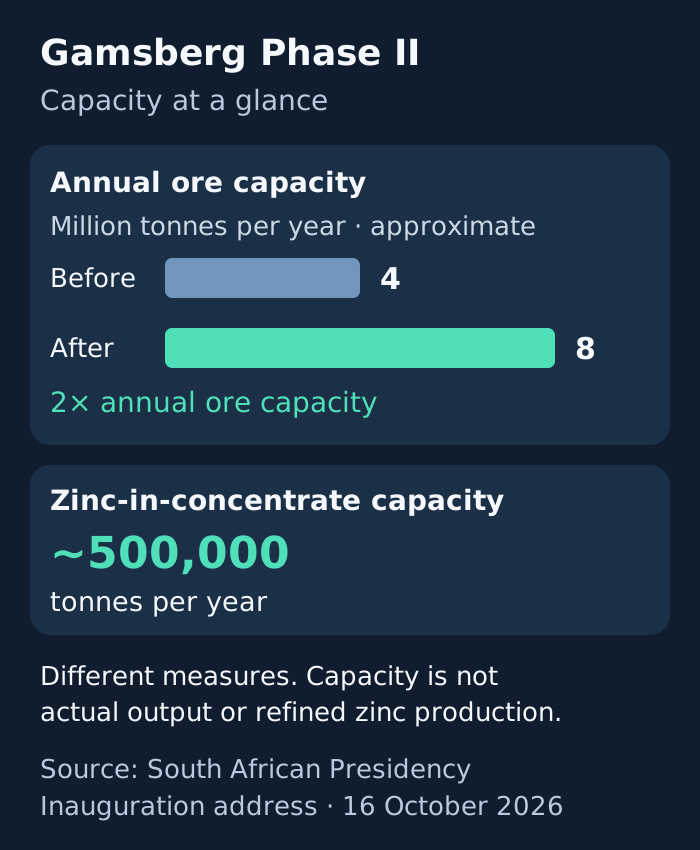
Vedanta Limited has invested nearly $600 million to double the annual zinc-in-concentrate production capacity of its Gamsberg mine in South Africa to approximately 500,000 tonnes. The expansion, known as Gamsberg Phase II, was inaugurated by South African President Cyril Ramaphosa on October 16, 2026, alongside Vedanta director Priya Agarwal-Hebbar. The project also doubles the mine’s annual ore-processing capacity from approximately 4 million tonnes to 8 million tonnes, strengthening Vedanta’s position in the global zinc industry.
The investment forms part of Vedanta’s broader commitment of approximately $1.5 billion to South Africa and supports its target of producing 3 million tonnes of zinc annually across India and South Africa. The expansion is also expected to sustain between 800 and 1,000 jobs during operations, predominantly in the Northern Cape province. Beyond increasing output, the project could support South Africa’s efforts to develop more local mineral-processing capacity and capture greater value from its natural resources.
Key Takeaways
- Investment: Vedanta has invested nearly $600 million in the second phase of its Gamsberg mine expansion.
- Production capacity: Annual zinc-in-concentrate capacity has doubled to approximately 500,000 tonnes.
- Ore processing: Annual ore-processing capacity has increased from 4 million to 8 million tonnes.
- Global target: Vedanta aims to produce 3 million tonnes of zinc annually across India and South Africa.
- Employment: The expanded operation is expected to sustain 800–1,000 jobs during operations.
- Broader commitment: Gamsberg Phase II forms part of Vedanta’s approximately $1.5 billion investment commitment in South Africa.
- Industrial development: The expansion could support future zinc smelting and downstream manufacturing in the Northern Cape.
What Is Vedanta’s Gamsberg Expansion?
The Gamsberg mine is a major zinc operation located in South Africa’s Northern Cape province. It is operated by Vedanta Zinc International, part of the Vedanta group, which has been developing the asset as a long-term source of zinc concentrate.
The latest investment completes the second phase of the mine’s development. The new concentrator infrastructure increases the amount of ore the operation can process and raises its annual zinc-in-concentrate production capacity to approximately 500,000 tonnes.
A concentrator processes mined ore to separate and concentrate valuable minerals from waste material. Zinc concentrate is an intermediate product that can subsequently be processed to produce refined zinc metal.
This distinction matters because the expanded capacity does not mean the mine will immediately produce 500,000 tonnes of finished zinc metal. Actual output will depend on ore grades, recovery rates, operating performance and the availability of downstream processing capacity.
The expansion represents a substantial increase in the scale of Gamsberg’s operations. By raising both ore-processing and concentrate-production capacity, Vedanta can pursue higher output from the resource while improving the infrastructure available for future development.
Gamsberg Phase II at a glance
| Indicator | Before expansion | After expansion |
|---|---|---|
| Annual ore-processing capacity | Approximately 4 million tonnes | Approximately 8 million tonnes |
| Annual zinc-in-concentrate capacity | Approximately 250,000 tonnes | Approximately 500,000 tonnes |
| Investment in Phase II | — | Nearly $600 million |
| Expected operational employment | — | 800–1,000 jobs |
Figures are based on company disclosures and South African government reporting. Production capacity represents potential annual capacity, not guaranteed actual output.
Why Is Vedanta Investing in South Africa?
South Africa offers Vedanta access to zinc resources, mining infrastructure and an established industrial ecosystem. The Gamsberg expansion also fits into the group’s broader strategy of increasing production across its international operations.
The company has committed approximately 21 billion South African rand, equivalent to nearly $1.5 billion, to investment in South Africa. That commitment was announced at the country’s 2018 South Africa Investment Conference and includes the wider development of Vedanta’s operations.
Gamsberg Phase II is an important part of that programme because it adds productive capacity to an existing mining asset. Expanding an established operation can allow a company to build on existing infrastructure, technical expertise and local supplier relationships instead of developing an entirely new mine from scratch.
The project also gives Vedanta a larger potential contribution to the global zinc supply chain. Zinc is widely used in galvanising steel, a process that protects steel from corrosion and extends its useful life.
Demand for galvanised steel comes from construction, automotive manufacturing, infrastructure projects, machinery and other industrial applications. As a result, zinc production is connected to broader trends in industrial activity and investment.
However, higher production capacity does not automatically translate into higher profits. The project’s financial performance will depend on zinc prices, operating costs, production efficiency, transport expenses and the amount of concentrate the company can sell at commercially attractive terms.
Vedanta’s Target of 3 Million Tonnes of Zinc Annually
The South African expansion supports Vedanta’s ambition to produce 3 million tonnes of zinc annually across India and South Africa.
Under the company’s stated plan, Hindustan Zinc is targeting annual production of 2 million tonnes, while Vedanta Zinc International is expected to contribute 1 million tonnes.
| Business | Annual zinc production ambition |
|---|---|
| Hindustan Zinc, India | 2 million tonnes |
| Vedanta Zinc International, South Africa | 1 million tonnes |
| Combined target | 3 million tonnes |
These are company targets, not a statement of current achieved production.
The expansion at Gamsberg is an important step toward increasing South African capacity. However, the new 500,000-tonne zinc-in-concentrate capacity should not be confused with the group’s entire 1-million-tonne production ambition for South Africa.
Reaching the wider target will depend on additional operating improvements, the development of other assets and potential downstream investments. The distinction between concentrate and refined metal also matters when comparing production figures across different stages of the zinc value chain.
For Vedanta, the strategy offers the possibility of building a larger international zinc business with production spread across more than one country. Geographic diversification can provide operational flexibility, although it also exposes the company to different regulatory frameworks, currencies, infrastructure conditions and country-specific risks.
Zinc’s Role in Global Industry
Zinc is an essential industrial metal, particularly because of its use in galvanising steel. Applying a protective zinc coating helps prevent corrosion, making the metal important for steel products used in buildings, bridges, vehicles, electrical infrastructure and industrial equipment.
Zinc is also used in alloys, die-casting applications and certain chemical products. Its demand therefore depends on a range of industries rather than a single end market.
Mining companies must balance the need to increase production with the possibility that commodity prices will fluctuate. If demand grows faster than supply, producers may benefit from stronger prices. If new capacity enters the market during a period of weak industrial demand, prices may face pressure.
Vedanta’s investment adds capacity to the global zinc supply chain, but its commercial effect will depend on broader market conditions. Production increases at one mine are only one part of a much larger market shaped by mining output, smelting capacity, inventories, trade flows and industrial consumption.
For investors, the important questions will include how quickly Gamsberg reaches its expanded capacity, whether operating costs remain competitive and how the additional production contributes to Vedanta’s financial performance.
South Africa Sees an Opportunity for Industrial Development
The project is significant for South Africa because it supports mining activity in the Northern Cape, a region where large industrial investments can influence employment, local suppliers and infrastructure demand.
South African President Cyril Ramaphosa has described the expansion as an example of turning investment commitments into productive assets, jobs and economic activity. Government officials have also emphasised the importance of moving beyond exporting raw and semi-processed minerals toward developing more domestic processing and manufacturing.
Mining investment can generate economic activity through direct employment, procurement of equipment and services, transport and demand for local businesses. The extent of the benefit depends on how much spending reaches domestic suppliers, how many jobs are sustained and whether local communities can access the skills needed for the work.
The expanded Gamsberg operation is expected to sustain between 800 and 1,000 jobs during operations, with recruitment focused predominantly on the Northern Cape. That estimate should not be interpreted as a guarantee that every position will be newly created; operational employment can include existing workers as well as roles associated with the expansion.
The project also requires reliable infrastructure. Mines and concentrator plants depend on electricity, water, roads and logistics systems. Government officials have stressed the importance of improving these services to support industrial growth and make large investments more productive.
Vedanta’s Plans for Zinc Smelting
One of the longer-term opportunities associated with the Gamsberg expansion is the development of zinc smelting capacity in the Northern Cape.
Smelting and refining convert zinc concentrate into more finished metal products. Developing such capacity locally could allow South Africa to capture more value from its mineral resources instead of relying as heavily on external processing facilities.
The potential benefits include industrial jobs, local procurement, technical skills development and new opportunities for manufacturers that use refined zinc.
However, a smelting project would require its own investment decisions, approvals, energy supply, water availability and commercial assessment. The Gamsberg expansion provides a stronger upstream foundation, but it does not mean a new smelter has already been built or that its economics are assured.
The next stage would require Vedanta and its partners to establish whether the proposed processing facilities can operate competitively and support demand from downstream industries.
What the Investment Means for Vedanta Investors
For investors following Vedanta Limited, the $600 million expansion is a material strategic development because it increases the capacity of an important overseas zinc asset.
Higher capacity can create opportunities to increase sales volumes and spread some fixed operating costs across greater production. It can also support the company’s longer-term production targets and strengthen its exposure to the zinc market.
But the investment also involves substantial capital expenditure. Investors will want to assess how the project is financed, when the expanded plant reaches stable operations and whether the additional production generates returns that justify the spending.
Other factors include global zinc prices, mining costs, energy availability, transportation and the performance of the wider Vedanta group. Currency movements and local regulatory conditions can also influence the value of earnings generated in South Africa when reported by an Indian parent company.
The announcement by itself does not establish that Vedanta’s shares will rise or that the project will deliver a particular level of profit. Those outcomes depend on the market’s expectations, the company’s financial position and actual operating results over time.
The Bigger Picture
Vedanta’s Gamsberg Phase II investment combines a production expansion with a broader industrial-development ambition. Doubling annual zinc-in-concentrate capacity to approximately 500,000 tonnes gives the group a larger operating base in South Africa and supports its target of producing 3 million tonnes of zinc annually across India and South Africa.
The project also highlights the opportunity for resource-rich countries to capture more value from mining through local processing, supplier development and technical employment. Whether those benefits are fully realised will depend on reliable infrastructure, future investment in smelting, competitive operating costs and sustained demand for zinc.
Looking Ahead
The immediate priority for Vedanta will be to bring the expanded Gamsberg facility to stable operating performance and convert its additional capacity into commercially viable production. Investors will monitor actual output, costs and sales as the new infrastructure is integrated into the mine’s operations. The company will also need to manage commodity-price volatility and the practical challenges of operating in South Africa’s mining environment.
Over the longer term, the next major development to watch is whether Vedanta advances its plans for local zinc smelting and other downstream industrial investments. Such projects could extend the value chain beyond mining and concentrate production, but they will require separate investment decisions and infrastructure. Gamsberg Phase II establishes a larger production base; its long-term economic impact will depend on how effectively Vedanta and its partners build on that foundation.
Frequently Asked Questions
1. How much has Vedanta invested in South Africa’s Gamsberg mine?
Vedanta has invested nearly $600 million in the second phase of the Gamsberg mine expansion.
2. What is Gamsberg’s new zinc production capacity?
The mine’s annual zinc-in-concentrate capacity has increased to approximately 500,000 tonnes, up from around 250,000 tonnes before the expansion.
3. Does the 500,000-tonne figure represent refined zinc metal?
No. It refers to zinc-in-concentrate production capacity. Concentrate is an intermediate product that can be processed further to produce refined zinc metal.
4. What is Vedanta’s annual zinc production target?
Vedanta aims to produce 3 million tonnes of zinc annually across India and South Africa, with a stated ambition of 2 million tonnes from Hindustan Zinc and 1 million tonnes from Vedanta Zinc International.
5. How many jobs will the Gamsberg expansion support?
The expanded operation is expected to sustain between 800 and 1,000 jobs during operations, predominantly in South Africa’s Northern Cape province.
6. Why is zinc important to industry?
Zinc is widely used to galvanise steel and protect it from corrosion. It is therefore important for construction, automotive manufacturing, infrastructure, machinery and other industrial applications.
Source and context — October 18, 2026: In his October 16 inauguration address, President Cyril Ramaphosa said Gamsberg Phase II would double annual ore capacity from about 4 million to 8 million tonnes and raise zinc-in-concentrate capacity to approximately 500,000 tonnes. These figures describe capacity, not actual annual output. President Ramaphosa’s Gamsberg Phase II inauguration address.
Get the day’s top stories in your inbox
One concise email. No spam, unsubscribe anytime.


