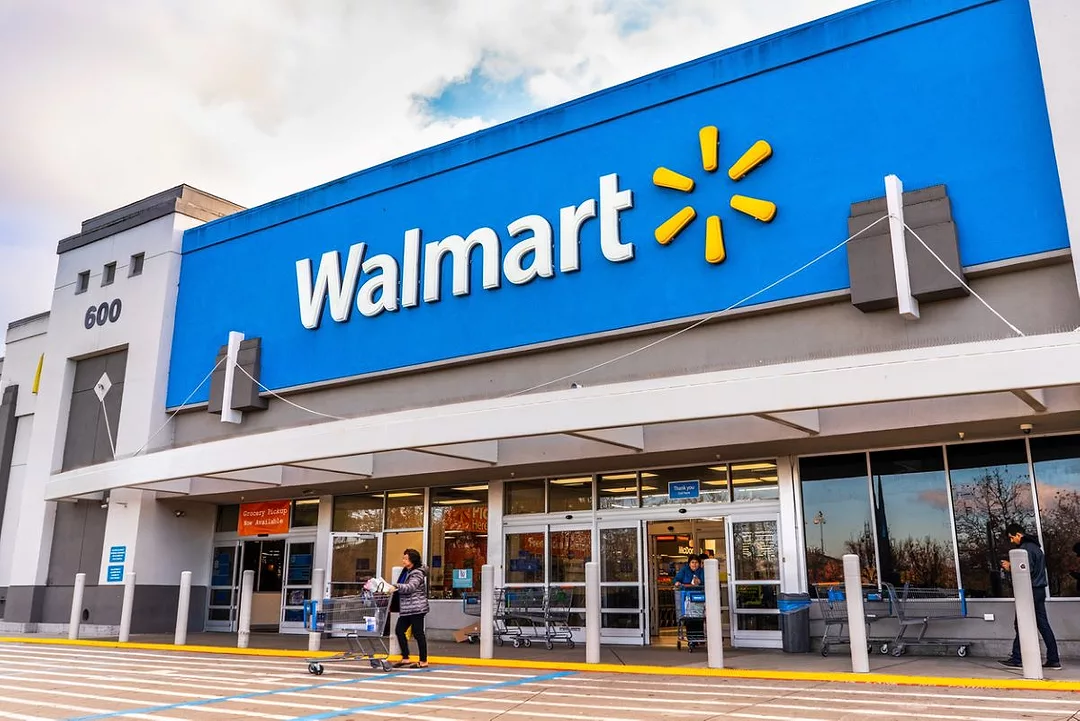
Walmart shares plunged about 9% on August 20 after the retail giant reported its second-quarter fiscal 2027 results, with investors focusing on weaker-than-expected U.S. comparable sales and a cautious near-term outlook. The decline came even though Walmart beat expectations on revenue and adjusted earnings and raised its full-year sales and operating-income guidance. The stock’s selloff erased more than $80 billion in market value and marked the company’s steepest one-day decline in more than four years.
Separately, Walmart announced that it will finally begin accepting Apple Pay and Google Pay at select U.S. stores and Sam’s Club locations from August 24. The rollout will expand to all U.S. stores and clubs by the end of 2026, while fuel stations are expected to receive tap-to-pay functionality by mid-2027. The payment change ends Walmart’s long-standing resistance to NFC-based payments, but it was not the reason for the 9% stock decline; the market reaction was primarily driven by concerns about slowing U.S. sales and consumer spending.
Walmart Stock Drops 9% After Q2 Earnings
Walmart’s shares fell sharply after the company’s fiscal second-quarter results revealed a slowdown in its core U.S. retail business.
U.S. comparable sales excluding fuel increased 2.6% during the quarter, significantly below the 3.8% growth expected by analysts. It was Walmart’s weakest U.S. comparable-sales performance in more than six years, raising concerns about whether American consumers are becoming more cautious amid elevated fuel and household costs.
The decline was particularly notable because Walmart had delivered relatively consistent growth and gained market share across income groups in recent quarters.
Walmart Q2 FY27 Key Numbers
| Metric | Q2 FY27 | Comparison |
|---|---|---|
| Total revenue | $187.9 billion | +5.9% YoY |
| U.S. comparable sales | +2.6% | Below 3.8% estimate |
| Adjusted EPS | $0.81 | Above $0.74 estimate |
| Operating income | $9.38 billion | Strong growth |
| Global e-commerce | +23%-24% | Strong growth |
| U.S. e-commerce | +24% | Strong growth |
| Net income | $6.37 billion | -9.4% YoY |
| Stock reaction | About -9% | Largest drop in years |
Walmart’s official results showed total revenue growth of 5.9%, while operating income increased 28.8%. Global e-commerce remained one of the strongest parts of the business.
Why Walmart Stock Fell Despite Strong Earnings
The sharp market reaction illustrates the difference between beating quarterly earnings expectations and meeting investors’ expectations for future growth.
Walmart delivered $187.9 billion in revenue and adjusted earnings of $0.81 per share, both better than analysts had expected. However, investors were more concerned about the slowdown in U.S. comparable sales and the company’s outlook for the next quarter.
Walmart’s third-quarter adjusted EPS guidance of 62-64 cents came in below the approximately 68 cents expected by analysts, adding to concerns about near-term earnings pressure.
What Investors Liked vs What Worried Them
| Positive | Concern |
|---|---|
| Revenue beat expectations | U.S. comp sales missed expectations |
| Adjusted EPS beat expectations | Weakest U.S. comp growth in six years |
| E-commerce grew strongly | Consumers becoming more cautious |
| Full-year outlook raised | Q3 EPS outlook below estimates |
| Advertising business growing | Higher fuel costs |
| Market-share gains | Pharmacy pricing pressure |
This combination explains why Walmart could post a solid quarter on paper while still experiencing a major stock-market selloff.
U.S. Comparable Sales Are The Biggest Concern
Walmart’s U.S. comparable sales increased 2.6%, excluding fuel.
That was substantially below the 3.8% growth expected by Wall Street and down from 4.1% in the previous quarter. The slowdown matters because Walmart is often viewed as a real-time indicator of the health of the American consumer.
The company said customer behavior changed during the quarter, particularly in June, as consumers faced higher fuel prices and other cost pressures.
Walmart U.S. Comparable Sales Trend
Q1 FY27     +4.1%
████████████████████████████████████

Q2 FY27     +2.6%
█████████████████████

Analyst est. +3.8%
██████████████████████████████
The slowdown does not necessarily mean Walmart is losing customers. Rather, it indicates that consumers may be spending more cautiously or shifting the timing and composition of their purchases.
Higher Fuel Prices Are Hurting Consumers
One of the major issues identified by Walmart is the impact of higher fuel prices on household budgets.
When gasoline becomes more expensive, consumers have less discretionary money available for other purchases. This can be particularly important for lower-income households, which account for a significant portion of Walmart’s customer base.
Walmart executives said they observed more cautious consumer behavior during the quarter.
How Higher Fuel Costs Can Affect Walmart
Higher Gasoline Prices
          ↓
Higher Household Expenses
          ↓
Less Discretionary Income
          ↓
More Selective Shopping
          ↓
Slower General Merchandise Demand
          ↓
Pressure On Walmart's Sales Growth
The development is being closely watched because consumer spending accounts for a large share of the U.S. economy.
Walmart Still Raised Its Full-Year Outlook
Despite the weaker U.S. sales performance, Walmart raised its full-year fiscal 2027 outlook.
The company now expects net sales to grow between 4% and 5%, while adjusted operating income is expected to increase by 7% to 8.5%. Adjusted EPS is expected to be between $2.80 and $2.87.
Walmart FY27 Guidance
| Metric | FY27 Outlook |
|---|---|
| Net sales growth | 4%-5% |
| Adjusted operating income growth | 7%-8.5% |
| Adjusted EPS | $2.80-$2.87 |
| Q3 adjusted EPS | $0.62-$0.64 |
| Q3 market expectation | About $0.68 |
The raised full-year guidance suggests Walmart’s management remains confident in the company’s broader business model despite the near-term slowdown.
E-Commerce Remains A Major Growth Engine
One of the clearest positives from Walmart’s results was digital commerce.
Global e-commerce sales increased about 23%, while U.S. e-commerce sales grew 24%. Store-fulfilled delivery increased 40%, demonstrating that Walmart is increasingly using its physical store network as part of its digital fulfillment infrastructure.
This is strategically important because Walmart does not need to build a completely separate warehouse network to compete with online retailers.
Walmart’s Digital Growth
| Digital Metric | Q2 FY27 Growth |
|---|---|
| Global e-commerce | +23% |
| U.S. e-commerce | +24% |
| Store-fulfilled delivery | +40% |
| Marketplace net sales | +50%+ |
| Global advertising revenue | +38% |
Walmart’s ability to combine stores with online ordering is becoming increasingly important as shopping behavior shifts toward digital channels.
Walmart’s $2.9 Billion Tariff Refund Is Being Used For Price Cuts
Another unusual factor affecting Walmart’s results is the company’s $2.9 billion tariff refund.
The retailer said it plans to use the money to reduce prices on thousands of products and improve value for customers. Walmart has already begun price reductions, including on grocery products such as beef.
The strategy could help Walmart attract price-sensitive consumers at a time when household budgets are under pressure.
However, price cuts can also put pressure on margins.
Walmart’s Tariff Refund Strategy
$2.9 Billion Tariff Refund
          ↓
     Price Investment
          ↓
  Lower Prices On Products
          ↓
 More Competitive Value
          ↓
 Customer Retention
          ↓
 Potentially Higher Sales
The company is effectively choosing to reinvest part of the unexpected benefit into customer prices rather than simply allowing the refund to flow directly into earnings.
Pharmacy Business Creates Another Headwind
Walmart’s health and wellness business also faced pressure during the quarter.
Changes related to drug pricing, including government policy affecting Medicare-related drug prices, weighed on comparable sales. Walmart’s U.S. comparable-sales growth would have been stronger without the impact from the wellness category, according to company and media reports.
Excluding the wellness impact, U.S. comparable sales growth was around 3.4%, much closer to the market expectation.
U.S. Sales Growth Breakdown
| Measure | Growth |
|---|---|
| Reported U.S. comp sales | +2.6% |
| Excluding wellness impact | About +3.4% |
| Analyst expectation | +3.8% |
| Q1 FY27 comp sales | +4.1% |
This suggests that not all of Walmart’s slowdown was caused by weaker consumer demand.
Higher-Income Consumers Continue To Spend
Despite the broader slowdown, Walmart continues to gain market share among higher-income households.
The retailer has increasingly attracted customers earning more than $100,000 a year, particularly in groceries and private-label products.
This is strategically important because Walmart has historically been strongly associated with lower-income consumers.
Its ability to attract wealthier households could help the retailer diversify its customer base and increase spending per customer.
Walmart’s Customer Strategy
| Customer Group | Recent Trend |
|---|---|
| Lower-income households | Greater pressure from fuel and living costs |
| Middle-income households | More selective spending |
| Higher-income households | Continued market-share gains |
| Digital shoppers | Strong growth |
| Grocery customers | Relatively resilient |
The challenge will be maintaining this momentum if consumer confidence weakens further.
Walmart Finally Adds Apple Pay And Google Pay
Against this earnings backdrop, Walmart also announced a major change to its checkout strategy.
Starting August 24, selected Walmart and Sam’s Club locations in the U.S. will begin accepting tap-to-pay methods including Apple Pay and Google Pay. The rollout will expand to all U.S. stores and clubs by the end of 2026. Fuel stations are expected to receive the functionality by mid-2027.
The move ends Walmart’s years-long resistance to mainstream NFC-based payments.
Walmart’s Tap-To-Pay Rollout
| Stage | Timing |
|---|---|
| Select Walmart stores | August 24, 2026 |
| Select Sam’s Club locations | August 24, 2026 |
| All U.S. Walmart stores/clubs | By end of 2026 |
| Fuel stations | By mid-2027 |
| Apple Pay | Supported |
| Google Pay | Supported |
| Contactless cards | Supported |
| Walmart Pay | Remains available |
Walmart said the change is intended to give customers and members more choice and convenience at checkout.
Why Walmart Resisted Apple Pay For So Long
Apple Pay launched in 2014, but Walmart remained one of the biggest U.S. retailers to reject the technology.
Instead, the company promoted Walmart Pay, which uses a QR-code-based system through the Walmart app.
Walmart had also been associated with CurrentC, an alternative payment system backed by several large retailers that ultimately failed to gain widespread adoption.
The company’s decision to embrace Apple Pay and Google Pay therefore represents a significant strategic reversal.
Walmart’s Payment Evolution
2014
Apple Pay Launches
        ↓
Walmart Rejects NFC
        ↓
CurrentC / Walmart Pay Strategy
        ↓
Walmart Pay QR System
        ↓
Years Of Customer Demand
        ↓
August 2026
Apple Pay + Google Pay
        ↓
Full U.S. Rollout By End-2026
The company will continue supporting Walmart Pay alongside the new payment methods.
Apple Pay Decision Is Not Why The Stock Fell
It is important to separate the two developments.
Walmart’s announcement about Apple Pay and Google Pay was broadly welcomed by consumers, but the stock’s 9% decline occurred after the company’s quarterly earnings report and was primarily connected to the weaker U.S. sales performance and cautious near-term outlook.
In fact, Walmart’s decision to introduce tap-to-pay is potentially positive for customer convenience.
The market’s concern is much broader: whether Walmart’s sales growth can remain strong enough to justify its valuation while American consumers face higher costs.
What Apple Pay Could Mean For Walmart
Adding Apple Pay and Google Pay could make checkout faster and more convenient for customers who already use digital wallets.
The move could also reduce friction for younger and digitally oriented consumers who increasingly expect contactless payments at major retailers.
However, the change is unlikely to materially transform Walmart’s financial results by itself.
Its more important strategic impact could be customer experience and payment flexibility.
Potential Benefits Of Tap-To-Pay
| Benefit | Potential Impact |
|---|---|
| Faster checkout | Less payment friction |
| Apple Pay support | Greater convenience for iPhone users |
| Google Pay support | More Android compatibility |
| Contactless cards | More payment choices |
| Digital wallet integration | Modernized checkout experience |
| Customer convenience | Potentially stronger satisfaction |
| Wider adoption | Better alignment with retail industry |
Walmart is therefore adding the technology as a complement to its existing payment options rather than completely replacing Walmart Pay.
Walmart’s Stock Valuation Is Under Pressure
The 9% decline also reflects a broader reassessment of Walmart’s valuation.
The company’s shares had risen substantially over the preceding period, meaning investors had been pricing in strong and consistent growth.
A slowdown in comparable sales therefore has a larger impact when expectations are already elevated.
The latest decline pushed the stock to roughly a nine-month low, while the one-day drop represented one of Walmart’s largest declines in years.
Key Investor Questions
Can Walmart maintain 4%-5% sales growth?
                │
                ▼
Can U.S. consumers keep spending?
                │
                ▼
Will e-commerce remain above 20% growth?
                │
                ▼
Can price cuts protect market share?
                │
                ▼
Can margins remain healthy?
                │
                ▼
Can Walmart justify its valuation?
These questions are likely to matter more to investors than the company’s new payment options.
Walmart’s Business Is Still Growing
Despite the stock decline, Walmart’s underlying business remains large and expanding.
Revenue increased 5.9% in the second quarter, operating income rose sharply and e-commerce continued to grow at a double-digit rate. The company also raised its full-year guidance.
The issue is therefore not that Walmart suddenly became a weak business.
Instead, investors are increasingly focused on whether growth can remain strong enough in a more challenging consumer environment.
The Bigger Picture
Walmart’s 9% stock decline highlights growing concerns about the strength of the U.S. consumer even as the world’s largest retailer continues to expand revenue, e-commerce and operating income. The company’s 2.6% U.S. comparable-sales growth was its weakest in more than six years and fell well below the 3.8% Wall Street expected. The slowdown, combined with weaker-than-expected third-quarter earnings guidance, outweighed Walmart’s revenue and adjusted-EPS beats and its decision to raise full-year guidance.
At the same time, Walmart is finally changing a long-standing part of its customer experience by adding Apple Pay and Google Pay. The tap-to-pay rollout begins at selected U.S. stores and Sam’s Club locations on August 24 and is expected to reach all U.S. stores and clubs by the end of 2026. The payment change is unlikely to be a major earnings driver, but it represents an important shift in Walmart’s strategy as the retailer adapts to changing consumer expectations.
Looking Ahead
The biggest test for Walmart will be whether the recent slowdown in U.S. comparable sales proves temporary or becomes a longer-term indication of weaker household spending. Higher fuel prices, food inflation and cautious consumer behavior could continue to pressure discretionary purchases, while Walmart’s price investments and market-share gains among higher-income households may help offset some of the weakness. The company will also need to balance aggressive price cuts with profitability as it reinvests its $2.9 billion tariff refund into lower prices.
Meanwhile, the Apple Pay and Google Pay rollout will modernize Walmart’s checkout experience and bring the retailer closer to competitors that have already embraced contactless payments. E-commerce, advertising, membership revenue and store-fulfilled delivery remain important growth engines. If Walmart can maintain those high-growth businesses while stabilizing U.S. store sales and protecting margins, the recent stock selloff could eventually prove to be more about resetting investor expectations than a fundamental deterioration in the company’s long-term business
Get the day’s top stories in your inbox
One concise email. No spam, unsubscribe anytime.


