AI-Generated Books Are Flooding Amazon and Hurting Sales for Human Authors
Amazon’s self-publishing marketplace is facing a new challenge as AI-generated books rapidly increase the number of titles competing for readers’ attention. A new research study examining more than 14,000 self-published fiction ebooks found that books containing substantial amounts of AI-generated text now represent about 20% of the catalog studied, but account for only 12.1% of sales and 11.3% of revenue.
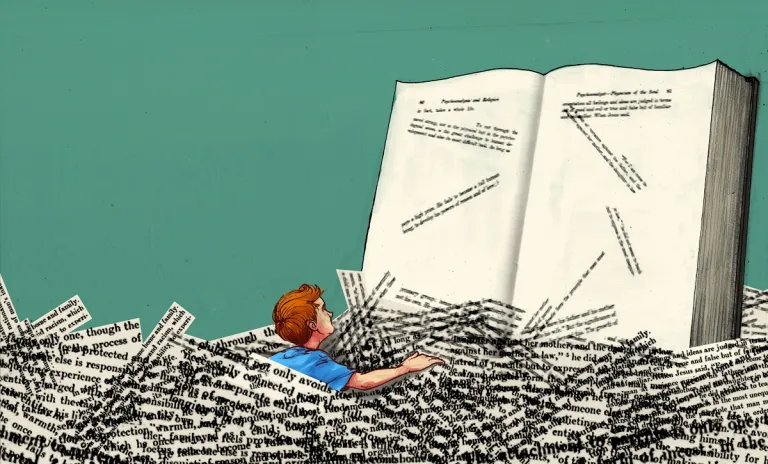
The findings suggest that the biggest problem for human authors may not simply be that AI-written books are outselling them. Instead, the rapid expansion of AI-generated titles is increasing competition for a relatively limited pool of reader attention and spending. Between the first quarter of 2023 and the first quarter of 2026, the catalog expanded 38.3 times, while the number of books selling during a quarter grew 19.2 times and quarterly revenue grew only 8.9 times. The result is a marketplace with dramatically more books but much slower growth in the money available to individual authors. :contentReference[oaicite:0]{index=0}
AI-Generated Books Now Represent a Large Share of the Catalog
The research analyzed a sample of 14,419 self-published fiction ebooks sold on Amazon between 2023 and March 2026.
Rather than relying only on book descriptions or short excerpts, researchers examined the full text of the books and used an AI-detection system to classify them according to the amount of text likely generated by AI.
Books were divided into three categories:
- No detected AI text
- Light AI use, involving up to 25% AI-generated text
- Substantial AI use, involving more than 25% AI-generated text
The study found that books with substantial AI content represented roughly one-fifth of the catalog.
| Category | Share of Catalog | Share of Sales | Share of Revenue |
|---|---|---|---|
| Substantial AI content | 20% | 12.1% | 11.3% |
| No detected AI content | 62.9% | — | 72.5% |
| Other/light AI content | Remaining share | — | — |
The figures show that AI-generated books have established a significant presence, even though they generate less revenue per title than books without detected AI content. :contentReference[oaicite:1]{index=1}
Human Authors Still Dominate Revenue
The study does not show that AI-generated books have overtaken human-written books in terms of total sales.
In fact, books with no detected AI content still account for the majority of revenue.
Titles without detected AI text represented 62.9% of the catalog and generated 72.5% of revenue.
This suggests that readers continue to spend more money on books that appear to be primarily written by humans.
However, the overall market is changing rapidly.
The problem for authors is that even if AI-generated books have lower sales per title, the sheer number of new titles can make it harder for individual books to attract attention.
The Bigger Problem Is Market Dilution
The same flood of machine-made output is reshaping other creative fields. AI creation tools are scaling everywhere, with Canva users in India making 1 billion designs in a year, even as Oracle bans AI-generated code from OpenJDK.
The researchers argue that the key issue is dilution.
AI makes it possible to produce books much faster than traditional writing allows.
A human author may spend months or years writing, editing and publishing a novel.
Generative AI can dramatically reduce the time required to produce a manuscript.
Traditional Publishing Workflow
Idea
↓
Writing
↓
Editing
↓
Revisions
↓
Formatting
↓
Publishing
↓
Marketing
AI-Assisted Production
Idea
↓
AI generation
↓
Editing
↓
Formatting
↓
Publishing
↓
Repeat
The ability to create books quickly means the number of titles entering the marketplace can grow much faster than the number of readers or the amount of money readers spend.
Amazon’s Book Catalog Has Exploded
The study found that the cumulative catalog increased 38.3 times between Q1 2023 and Q1 2026.
That is an extraordinary increase in supply.
But the number of titles actually selling during a quarter increased only 19.2 times.
Quarterly revenue grew just 8.9 times.
Growth Comparison
Catalog size
↓
38.3x
Selling titles
↓
19.2x
Quarterly revenue
↓
8.9x
The imbalance means supply is expanding much faster than demand.
That creates intense competition between authors.
More Books Are Competing for the Same Readers
Readers have limited time.
Even if the number of people buying ebooks increases, they cannot consume an unlimited number of books.
When thousands of new titles enter the marketplace, each individual book has a smaller opportunity to attract attention.
This creates an economic problem similar to what has happened with other forms of AI-generated digital content.
Attention Economy
More AI-generated books
↓
More available titles
↓
More competition
↓
Harder discovery
↓
Fewer readers per title
↓
Lower revenue per book
The issue therefore extends beyond the quality of individual AI books.
Revenue Per Book Is Falling
One of the study’s most important findings is that revenue per book has declined in most genres.
Researchers compared books released in 2023 and 2025 over the same post-release period.
Revenue per title fell in six of the eight genres examined.
When researchers looked only at books with no detected AI text, revenue per book declined in seven of the eight genres.
This suggests that human authors are being affected by broader marketplace changes, even when their own books do not contain AI-generated material. :contentReference[oaicite:2]{index=2}
Human Authors Are Not Necessarily Losing Because AI Books Are Better
The findings challenge a simple explanation that AI books are taking readers away because they are outperforming human writing.
The research indicates something different.
AI-generated books generally account for a smaller share of sales and revenue than their share of the catalog.
The bigger effect may be that they increase the total number of competing products.
What Is Happening
AI books enter marketplace
↓
Catalog becomes larger
↓
Reader attention remains limited
↓
More titles compete for visibility
↓
Revenue becomes distributed across more books
↓
Average revenue declines
This is a supply-side problem rather than simply a quality competition.
AI Makes Publishing Much Cheaper
The economics of AI-generated books are fundamentally different from traditional publishing.
A human author may spend hundreds of hours writing a manuscript.
An AI system can generate a draft in a fraction of that time.
That dramatically reduces the marginal cost of producing another book.
Traditional Cost Structure
Author time
+
Editing
+
Formatting
+
Cover design
+
Marketing
↓
Book
AI-Assisted Cost Structure
AI subscription
+
Human editing
+
Formatting
+
Cover
↓
Book
The lower cost makes it economically possible to produce many more titles.
High-Volume Publishing Can Change the Marketplace
If producing another book is cheap, some publishers or individuals may adopt a high-volume strategy.
Instead of spending months perfecting one title, they can publish numerous books targeting different genres, keywords and reader interests.
Even if only a small percentage of those books succeed, the strategy can potentially generate returns.
Volume Strategy
Generate many titles
↓
Publish quickly
↓
Test market response
↓
Promote successful titles
↓
Continue producing
This model is fundamentally different from the traditional author model, where each book represents a major investment of time.
Discovery Becomes More Difficult
Amazon’s marketplace relies heavily on search, recommendations, rankings and customer reviews.
When the number of books increases dramatically, authors have to compete harder for visibility.
A good book can therefore struggle to reach readers simply because there are so many alternatives.
Discovery Funnel
Millions of titles
↓
Search results
↓
Recommendations
↓
Book rankings
↓
Reader clicks
↓
Purchases
As the number of titles grows, getting through each stage becomes more difficult.
Bestseller Rankings May Also Become More Competitive
A rapidly expanding catalog can make bestseller rankings more volatile.
AI-generated books may enter rankings quickly if they receive concentrated bursts of sales or benefit from aggressive marketing.
The research found that AI-generated titles are increasingly visible among new entrants to bestseller lists.
This does not necessarily mean AI books dominate the market, but it demonstrates that they can influence discovery systems.
The Study Found AI Books Are Entering Bestseller Lists
According to analysis associated with the research, books with substantial AI content accounted for around 31% of new entrants into the Top 25 rankings during the period studied.
That figure is particularly significant because it shows that AI-generated books are not confined entirely to the bottom of the marketplace.
Some are reaching highly visible positions.
However, bestseller-list entry is not the same as sustained sales or long-term revenue.
Amazon Faces a Moderation Challenge
Amazon has policies governing content published through its Kindle Direct Publishing platform.
The company requires authors to disclose AI-generated content in certain circumstances.
However, identifying AI-generated material at scale remains difficult.
A book can be partly written by AI and heavily edited by a human.
Another can be generated entirely by AI and then presented as human-authored.
Detection Challenge
AI-generated manuscript
↓
Human editing
↓
Formatting
↓
Publication
↓
AI detection becomes harder
This makes enforcement a complicated problem.
AI Detection Is Not Perfect
AI detection systems attempt to identify statistical and linguistic patterns associated with machine-generated text.
But detection technology can produce false positives and false negatives.
Researchers in the study used a full-text detection approach rather than analyzing only short samples.
The tool used in the research was Pangram’s detector, whose developers report a very low false-positive rate.
Even so, AI detection should not be treated as absolute proof of authorship.
Full-Text Analysis Provides a Better Signal
Earlier attempts to measure AI-generated books often relied on descriptions, previews or limited text samples.
The new study analyzed entire books.
That allows researchers to identify AI use that may not be obvious from a short excerpt.
Short-Sample Detection
Book preview
↓
AI detector
↓
Possible classification
VS
Full-Text Detection
Entire book
↓
AI detector
↓
More comprehensive assessment
The second approach can provide a stronger estimate of AI involvement across a large catalog.
The Impact Differs Across Genres
The research found that revenue per book did not decline equally across all genres.
Six of the eight genres studied showed declines when comparing books released in 2023 and 2025.
The decline among books without detected AI text appeared in seven of eight genres.
This suggests that the effects of market saturation may vary depending on genre, audience behavior and the amount of competition.
Romance and Other High-Volume Genres Could Be Vulnerable
Genres with large self-publishing ecosystems can be particularly attractive targets for high-volume AI publishing.
A large existing audience creates an opportunity to sell many titles.
At the same time, those genres can become saturated quickly.
The more books enter a popular category, the harder it becomes for individual authors to stand out.
AI Books May Not Need to Be Good to Affect the Market
This is one of the most important economic implications of the research.
AI-generated books do not necessarily need to outperform human-written books to create pressure.
If they are cheap to produce and occupy marketplace space, they can still increase competition.
Low-Cost Competition
Low production cost
↓
Large number of titles
↓
Some titles attract buyers
↓
More catalog competition
↓
Human books lose visibility
↓
Average revenue declines
This is similar to other digital markets where cheap content can overwhelm high-quality material.
The Problem Resembles Social Media Content Saturation
Social media has already experienced a similar transformation.
Generative AI allows users to create huge volumes of images, videos and posts.
The result is an abundance of content competing for limited attention.
Books may now be experiencing a similar process.
Content Saturation
AI images
+
AI videos
+
AI articles
+
AI music
+
AI books
↓
Massive content supply
↓
Limited human attention
↓
Attention becomes scarce
The book market demonstrates how this dynamic can affect direct consumer spending.
The Economics of Attention Are Changing
Readers do not simply buy books.
They discover them.
That discovery process is valuable.
If AI increases the number of books available, discovery becomes more difficult.
Authors may consequently have to spend more on advertising, social media promotion and audience building.
New Author Economics
Writing
+
Editing
+
Publishing
+
Marketing
+
Audience building
+
Advertising
↓
Book sales
The cost of acquiring a reader could rise even if the cost of producing a book falls.
Human Authors Could Become More Valuable
There is another possible outcome.
As AI-generated books become more common, readers may place greater value on authenticity.
Human authors could differentiate themselves by emphasizing their identity, personal experiences, reputation and connection with readers.
Human Differentiation
Human author
+
Authentic voice
+
Personal experience
+
Established reputation
+
Reader community
↓
Trust
↓
Potential pricing advantage
This could create a premium market for demonstrably human-created books.
Author Brands Could Become More Important
In an overcrowded marketplace, readers may rely more heavily on authors they already know.
Established writers with loyal audiences could be less vulnerable to catalog dilution.
New writers may face greater challenges because they have to build trust from scratch.
Established Author
Existing readers
↓
New book
↓
Immediate audience
↓
Sales
New Author
New book
↓
Unknown author
↓
Discovery challenge
↓
Marketing needed
The AI boom could therefore widen the gap between established and emerging writers.
Publishers May Increase Their Role as Curators
Traditional publishers could benefit if readers become overwhelmed by low-quality digital content.
Publishers provide editorial selection, professional editing, marketing and brand credibility.
In an environment filled with AI-generated books, those functions may become more valuable.
Curation Could Become a Competitive Advantage
When supply is enormous, filtering becomes valuable.
Readers may increasingly depend on:
- Trusted publishers
- Author reputation
- Professional reviews
- Literary awards
- Book clubs
- Influencers
- Curated recommendation services
Information Overload
Too many books
↓
Reader uncertainty
↓
Need for trusted signals
↓
Curation
↓
Discovery
↓
Purchase
The future of publishing could therefore involve more emphasis on trust and filtering.
Amazon Has an Incentive to Control AI Book Flooding
Amazon benefits from having a large selection of books.
More titles can mean more potential transactions.
But excessive low-quality content can damage the customer experience.
If readers cannot easily find useful books, they may become less confident in the marketplace.
This creates a balancing act for Amazon.
Amazon’s Challenge
More titles
↓
More selection
BUT
↓
More low-quality content
↓
Poorer discovery
↓
Customer frustration
↓
Potential platform damage
Amazon therefore has an incentive to improve content quality and transparency.
Disclosure Could Become More Important
Clear disclosure of AI-generated content could help readers make informed choices.
Some readers may not care whether AI was involved.
Others may strongly prefer books written entirely by humans.
Giving consumers more information could reduce uncertainty.
Potential Disclosure Model
AI-generated
↓
AI-assisted
↓
Human-written
↓
Reader chooses
This could become a more important part of publishing platforms.
Copyright Questions Are Also Emerging
The market impact of AI-generated books adds another dimension to the wider copyright debate.
If AI systems are trained on copyrighted works and then used to generate competing content, authors may argue that the economic harm extends beyond direct copying.
The issue is complicated because AI-generated text may not reproduce specific copyrighted passages.
Instead, it may compete with human-created works at scale.
Market Harm Could Become Important in Legal Disputes
The study provides quantitative evidence that the expansion of AI-generated books coincides with falling revenue per book for human-authored titles.
That type of market data could become relevant in ongoing debates over copyright, fair use and AI training.
However, correlation alone does not establish legal liability.
Courts would need to examine the specific facts and legal standards involved.
The Research Does Not Prove Every Revenue Decline Was Caused by AI
This distinction is important.
The publishing market has many forces affecting revenue.
Changes in consumer behavior, advertising costs, subscription services, economic conditions and Amazon’s recommendation systems can all influence author income.
The study identifies a strong relationship between the rapid growth of AI-generated titles and market dilution, but that does not mean AI is the only reason revenues are declining.
The Market Is Growing, But Not Fast Enough for Everyone
The central economic imbalance is simple.
The number of books is growing much faster than the money being spent on books.
Supply vs Demand
Book supply
↓
38.3x
↓
Revenue
↓
8.9x
When supply expands more quickly than demand, average revenue tends to fall.
Human authors can therefore experience declining earnings even while the overall market continues growing.
AI Could Reshape Self-Publishing
Self-publishing originally lowered the barriers to becoming an author.
AI lowers them even further.
A person can now potentially generate, edit, format and publish a book with relatively little technical knowledge.
This could democratize publishing.
But it could also produce an enormous increase in low-cost content.
The New Barrier May Be Attention
The old barrier to publishing was production.
The new barrier may be discovery.
Creating a book is becoming easier.
Getting someone to read it is not.
Publishing Economics
Old model:
Writing was difficult
↓
Publishing was difficult
↓
Fewer books
↓
Discovery easier
New model:
Writing easier
↓
Publishing easier
↓
More books
↓
Discovery harder
This represents a major structural change.
What It Means for Human Authors
Human writers may need to focus increasingly on differentiation.
A unique voice, strong storytelling, direct reader relationships and recognizable author brands could become more valuable.
Authors may also need to spend more time building communities outside Amazon.
What It Means for Amazon
Amazon will need to balance openness with quality control.
The platform’s self-publishing model depends on allowing large numbers of authors to publish quickly.
But an uncontrolled flood of AI-generated content could make discovery harder and reduce trust in the marketplace.
Better AI-content disclosure, detection and ranking systems could become increasingly important.
What It Means for Publishers
Traditional publishers may gain an unexpected advantage from the AI era.
Their editorial processes can act as a quality filter.
Publisher brands could become more valuable if readers begin seeking trusted signals in an overcrowded marketplace.
What It Means for AI Companies
The findings also raise questions for AI companies whose models are used to generate commercial content.
If AI-generated books reduce revenue for human authors at scale, policymakers and courts may face growing pressure to examine the economic consequences of generative AI.
What Investors Should Watch
Key developments include:
- Growth of AI-generated books on Amazon
- Changes to Kindle Direct Publishing policies
- AI-content disclosure requirements
- Improvements in AI-content detection
- Revenue per self-published book
- Bestseller-list composition
- Author advertising costs
- Reader behavior
- Copyright litigation
- Publisher responses to AI content
- Growth of human-authored premium publishing
These factors will help determine how the economics of digital publishing evolve.
Key Facts at a Glance
| Metric | Finding |
|---|---|
| Books analyzed | 14,419 |
| Period studied | 2023 to March 2026 |
| Substantial-AI share of catalog | About 20% |
| Substantial-AI share of sales | 12.1% |
| Substantial-AI share of revenue | 11.3% |
| No detected AI share of catalog | 62.9% |
| No detected AI share of revenue | 72.5% |
| Catalog growth | 38.3x |
| Growth in titles selling per quarter | 19.2x |
| Quarterly revenue growth | 8.9x |
| Genres with falling revenue per book | 6 of 8 |
| Genres with falling revenue per book among no-AI titles | 7 of 8 |
Infographic: How AI Books Are Diluting Amazon’s Market
AI TOOLS
↓
LOWER COST OF BOOK PRODUCTION
↓
MORE AI-GENERATED TITLES
↓
AMAZON SELF-PUBLISHING CATALOG
↓
38.3X CATALOG GROWTH
↓
BUT
↓
REVENUE GROWS ONLY 8.9X
↓
MORE BOOKS
+
LIMITED READER ATTENTION
↓
MORE COMPETITION
↓
LOWER REVENUE PER BOOK
↓
HUMAN AUTHORS FEEL PRESSURE
↓
POTENTIAL RESPONSE
↓
STRONGER CURATION
+
AI DISCLOSURE
+
AUTHOR BRANDS
+
TRUSTED PUBLISHERS
The Bigger Picture
The rise of AI-generated books on Amazon illustrates a broader economic effect of generative AI: the technology can increase supply far faster than demand. A study of 14,419 self-published fiction ebooks found that books with substantial AI-generated content represented about 20% of the catalog but accounted for only 12.1% of sales and 11.3% of revenue. Human-authored books therefore continue to dominate the money being spent, but the rapid increase in AI-generated titles is making the marketplace considerably more crowded. :contentReference[oaicite:3]{index=3}
The more significant finding is that revenue per book is falling even among titles with no detected AI text. Researchers found declines in seven of eight genres when comparing human-authored books released in different years. This suggests that AI-generated content may be creating a dilution effect rather than simply replacing human-written books with better-selling machine-generated alternatives. As the number of titles grows faster than the total pool of reader spending, individual authors have to compete for a smaller share of attention and revenue. :contentReference[oaicite:4]{index=4}
Looking Ahead
The publishing industry is likely to move toward a combination of stronger AI-content disclosure, improved detection, better marketplace curation and greater emphasis on author identity. Amazon will have to determine how to preserve the openness of self-publishing while preventing an explosion of low-value content from overwhelming readers and making legitimate books harder to discover. Publishers and established authors may benefit from their reputations as trusted filters in an increasingly crowded market.
Over the longer term, the biggest question may not be whether AI-generated books can write better than humans, but how many books the market can economically support. If AI continues making production dramatically cheaper while reader attention and spending grow much more slowly, revenue per title could continue declining. Human authors may therefore need to compete less on the cost of producing a book and more on authenticity, reputation, community and distinctive creative value.
Frequently Asked Questions
How many books on Amazon are AI-generated?
AI-generated books now represent a large share of Amazon’s catalog, though human authors still account for most revenue.
Why are human authors earning less?
The catalog has exploded, so more books compete for the same readers and revenue per book falls, a dilution effect rather than a quality one.
Are AI-generated books outselling human ones?
No. Human authors still dominate revenue. The problem is market dilution, not AI books being better.
Get the day’s top stories in your inbox
One concise email. No spam, unsubscribe anytime.


