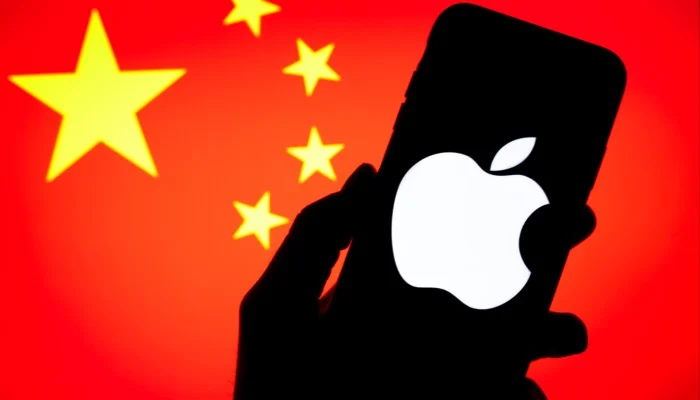
The Trump administration is pushing Apple to avoid sourcing memory chips from Chinese manufacturers as the company looks for ways to manage a global memory shortage and rapidly rising component costs. US Commerce Secretary Howard Lutnick has directly told Apple that the administration does not support the use of Chinese memory chips, adding another layer of pressure to the iPhone maker’s already complex supply-chain strategy.
Apple has reportedly been exploring memory chips from Chinese companies ChangXin Memory Technologies (CXMT) and Yangtze Memory Technologies (YMTC) as prices rise amid strong demand from artificial intelligence data centers. The move has drawn bipartisan opposition in Washington, with concerns over national security, China’s semiconductor industry and the impact of Chinese competition on US chipmakers. (wsj.com)
US Commerce Secretary Warns Apple
Commerce Secretary Howard Lutnick said the Trump administration is not in favor of Apple buying memory chips from China.
Lutnick made the comments after visiting an Apple manufacturing facility in Houston. He said he had communicated the administration’s position directly to Apple.
The intervention is significant because Apple is one of the world’s largest technology companies and relies on a highly diversified global supply chain.
| Key Detail | Information |
|---|---|
| Company | Apple |
| US official | Commerce Secretary Howard Lutnick |
| Issue | Chinese memory-chip sourcing |
| Chinese suppliers being considered | CXMT and YMTC |
| Main reason for Apple’s search | Global memory shortage and higher prices |
| US position | Opposes Apple using Chinese memory |
| Main concerns | National security and supply-chain dependence |
| Other suppliers | Micron, Samsung, SK hynix and others |
Lutnick’s comments indicate that Washington wants Apple to find alternatives rather than use Chinese memory components. (9to5mac.com)
Why Apple Is Looking at Chinese Memory
Component supply is now a political question as much as a commercial one. Apple is also facing consumer pressure in India, ordered to refund ₹45,500 over a defective iPhone 15, while global compute scarcity keeps even NVIDIA’s six-year-old A100 in demand.
Apple’s interest in Chinese memory suppliers comes at a difficult time for the global semiconductor industry.
AI data centers are consuming enormous quantities of memory chips, creating a supply shortage and pushing prices higher.
The surge in demand is particularly strong for high-bandwidth memory and other components used in AI infrastructure.
AI Data Center Demand
AI models
↓
More data centers
↓
More AI servers
↓
More memory required
↓
Higher demand
↓
Supply shortage
↓
Memory prices rise
Consumer electronics companies such as Apple are therefore facing higher costs for components that are essential to their devices.
Apple Is Exploring CXMT and YMTC
Apple has reportedly been considering memory chips from two Chinese companies: CXMT and YMTC.
CXMT is one of China’s leading DRAM manufacturers.
YMTC specializes in NAND flash memory.
Apple has reportedly tested or explored Chinese memory components for possible use in products sold in China.
The discussions are not necessarily a finalized supply agreement.
Why Chinese Memory Is Attractive to Apple
The primary attraction is cost and supply availability.
If Chinese manufacturers can provide memory at competitive prices during a global shortage, Apple could potentially reduce component costs and secure additional supply.
Apple’s enormous purchasing volumes also give it strong incentives to diversify its supplier base.
Apple’s Supply Challenge
Global memory shortage
↓
Higher prices
↓
Higher device production costs
↓
Pressure on product margins
↓
Apple seeks additional suppliers
↓
Chinese memory becomes an option
However, geopolitical considerations make the decision considerably more complicated.
Washington Has National Security Concerns
The US government has increasingly restricted China’s access to advanced semiconductor technology.
Washington argues that certain Chinese technology companies have links to China’s military or could contribute to China’s strategic capabilities.
The Trump administration therefore does not want major US technology companies increasing dependence on Chinese semiconductor manufacturers.
US Concern
Apple
↓
Uses Chinese memory
↓
More demand for Chinese chipmakers
↓
Chinese semiconductor companies gain revenue
↓
Greater investment in domestic chip capacity
↓
US strategic concerns
The administration wants US companies to strengthen alternative supply chains instead.
YMTC Is on the Commerce Department’s Entity List
Yangtze Memory Technologies has been placed on the US Commerce Department’s Entity List.
Companies on the list face restrictions on receiving certain US-origin technologies and products.
YMTC’s presence on the list makes any potential relationship with Apple particularly sensitive.
The restrictions do not necessarily mean Apple is automatically prohibited from buying every standard memory component from a listed company, but they can create significant regulatory and compliance complications.
CXMT Faces US Security Scrutiny
CXMT has also attracted attention from US authorities.
The Pentagon has designated CXMT as a Chinese military company under its relevant list.
The designation has intensified concerns among US lawmakers about American companies using components supplied by the manufacturer.
Two Chinese Suppliers
CXMT
↓
DRAM
↓
US security scrutiny
+
YMTC
↓
NAND
↓
Commerce Department Entity List
↓
Political and regulatory pressure
This makes Apple’s potential sourcing strategy particularly sensitive.
Apple Faces Bipartisan Pressure
The opposition is not limited to the Trump administration.
US lawmakers from both political parties have urged Apple to avoid purchasing memory from Chinese companies.
Their argument is that Apple should support US and allied semiconductor manufacturers rather than increase demand for Chinese suppliers.
This adds political pressure to the company’s supply-chain decisions.
Micron Has a Direct Interest
Idaho-based Micron Technology is one of the world’s major memory-chip manufacturers.
The company has invested heavily in expanding US semiconductor manufacturing.
Micron and supporters of domestic semiconductor production argue that American companies should not face additional competition from Chinese manufacturers that benefit from government support.
Apple’s potential move toward Chinese memory could therefore affect a major US semiconductor company.
The Memory Shortage Is Being Driven by AI
The broader issue is the rapid expansion of AI infrastructure.
AI data centers require enormous amounts of memory alongside GPUs and other processors.
As companies build larger AI clusters, demand for memory has increased sharply.
AI Hardware Stack
AI accelerator
+
CPU
+
High-bandwidth memory
+
DRAM
+
Storage
+
Networking
↓
AI server
↓
Data center
The growth of AI has therefore created competition between data-center operators and consumer electronics companies for semiconductor capacity.
Consumer Electronics Companies Are Feeling the Pressure
Apple is not the only company affected.
Smartphone, PC and other electronics manufacturers face rising memory costs as semiconductor producers prioritize higher-margin AI-related demand.
Higher component prices can eventually translate into higher retail prices.
Higher Memory Costs
Memory demand rises
↓
Prices increase
↓
Device manufacturing costs rise
↓
Manufacturers absorb some costs
OR
↓
Higher consumer prices
Apple has already been dealing with increasing component costs across its supply chain.
Apple Wants Supply Security
Apple’s interest in additional memory suppliers is not only about price.
Supply security is also important.
Relying on a small number of suppliers can create risks if factories experience disruptions, geopolitical restrictions or sudden demand spikes.
Adding another supplier can increase flexibility.
Diversified Supply Chain
Samsung
+
SK hynix
+
Micron
+
Other suppliers
+
Potential Chinese suppliers
↓
More supply options
↓
Greater flexibility
But geopolitical tensions can make diversification more complicated.
Apple’s Supply Chain Remains Deeply Linked to Asia
Apple has spent years developing a massive manufacturing and supplier ecosystem across Asia.
China remains an important part of that network despite Apple’s efforts to expand manufacturing in India, Vietnam and other countries.
This makes complete separation from Chinese suppliers difficult.
Apple Supply Chain
Design
↓
US
↓
Components
↓
Asia
↓
Assembly
↓
China + India + Vietnam + Other regions
↓
Global sales
The memory-chip issue illustrates the broader challenge Apple faces as it tries to balance cost, efficiency and geopolitical risk.
Apple Is Expanding Manufacturing in the US
Apple has also made significant commitments to increase manufacturing and investment in the United States.
The company has announced major domestic investment plans under pressure from the Trump administration.
Apple has emphasized its efforts to bring more manufacturing and supply-chain activity to the US.
The memory-chip dispute shows that Washington wants those commitments to extend beyond final assembly into semiconductor components.
Domestic Memory Supply Is Limited
The US does not currently have enough domestic memory production to satisfy the enormous requirements of major technology companies.
Micron is expanding US capacity, but semiconductor factories take years and billions of dollars to build.
This creates a gap between the government’s desire for domestic sourcing and the industry’s immediate component requirements.
Long-Term Strategy
US investment
↓
New semiconductor factories
↓
More domestic memory capacity
↓
Reduced dependence on Asia
↓
Greater supply-chain security
But:
↓
Factories take years to build
↓
Short-term shortage remains
This is one reason Apple is still considering global alternatives.
Apple Says It Is Evaluating All Options
Apple Chief Operating Officer Sabih Khan has indicated that the company needs to consider all options because of the scale of the current memory shortage.
He also said that while Apple customizes many components, memory has relatively limited customization requirements.
That could make standard memory chips easier to source from alternative suppliers.
Memory Is Different From Apple’s Custom Chips
Apple designs several of its most important processors internally, including its A-series and M-series chips.
Memory is different.
Apple generally purchases memory components from specialized semiconductor manufacturers.
This means supplier decisions can be changed more easily than for highly customized components.
Apple Chip Strategy
Apple-designed processors
↓
A-series
+
M-series
↓
Highly customized
VS
Memory
↓
Standardized components
↓
Multiple suppliers possible
That flexibility gives Apple more options but also makes the supply-chain decision politically sensitive.
The US Wants Apple to Find Other Solutions
Lutnick said there need to be other solutions to the memory shortage rather than major American companies using Chinese memory.
This suggests Washington may prefer Apple to increase purchases from US and allied suppliers.
Potential alternatives include Micron, Samsung and SK hynix.
However, these companies are also facing strong demand.
Samsung and SK hynix Face Strong Demand
South Korea’s Samsung Electronics and SK hynix are among the world’s largest memory manufacturers.
Both companies have benefited from the AI-driven memory boom.
Their high-bandwidth memory products are particularly important for AI accelerators.
Global Memory Leaders
Samsung
+
SK hynix
+
Micron
↓
Major memory suppliers
↓
AI demand
+
Consumer electronics demand
↓
Limited capacity
Apple therefore cannot simply switch suppliers without considering availability and pricing.
China Is Trying to Build Its Own Memory Industry
CXMT and YMTC are part of China’s broader effort to reduce dependence on foreign semiconductor technology.
China has invested heavily in developing domestic memory production.
If Chinese companies successfully expand their market share, they could become increasingly important suppliers for smartphones and other consumer electronics.
The US government is concerned that American companies purchasing from them could indirectly accelerate that development.
The Dispute Is Part of the Larger US-China Chip Rivalry
The Apple memory issue is another example of the broader technology competition between Washington and Beijing.
The two countries have imposed restrictions on advanced semiconductors, semiconductor equipment and related technologies.
The US wants to limit China’s ability to develop cutting-edge computing capabilities.
China is simultaneously investing in domestic semiconductor production.
US-China Semiconductor Competition
US
↓
Export controls
+
Investment incentives
+
Domestic manufacturing
VS
China
↓
Domestic subsidies
+
Local semiconductor development
+
Supply-chain localization
↓
Global chip competition
Apple sits directly in the middle of this geopolitical competition.
Apple Must Balance Cost and Geopolitics
From Apple’s perspective, the cheapest available component is not necessarily the best option.
The company has to consider:
- Price
- Supply availability
- Quality
- Reliability
- US regulations
- Chinese regulations
- Geopolitical risk
- Customer expectations
- Long-term supply security
This makes the memory decision considerably more complex than a normal procurement exercise.
The Decision Could Affect Apple’s Margins
Memory is an important component in Apple’s products.
If prices remain elevated, Apple could face pressure on gross margins.
The company has several options.
Apple’s Options
Absorb higher costs
OR
↓
Raise product prices
OR
↓
Use cheaper suppliers
OR
↓
Reduce memory configurations
OR
↓
Negotiate longer-term contracts
Each option has potential consequences.
Chinese Memory Could Lower Costs
If Apple were able to source reliable memory from Chinese manufacturers at lower prices, the company could potentially reduce some of its component expenses.
That could protect margins during a period of elevated memory prices.
But the savings would have to be weighed against regulatory and geopolitical risks.
US Restrictions Could Limit Apple’s Choices
If Washington introduces additional restrictions or licensing requirements, Apple’s ability to source from Chinese companies could become even more limited.
That could force Apple to rely more heavily on Samsung, SK hynix and Micron.
Higher supplier concentration could potentially increase costs.
The Issue Could Influence Future iPhone Pricing
If memory prices remain elevated for a prolonged period, Apple and other smartphone makers may eventually pass some costs on to consumers.
Higher memory configurations could become more expensive.
This could affect the pricing strategy of future iPhone models.
AI Could Make Smartphones More Expensive
AI features increasingly require more memory.
On-device AI models need additional RAM and storage capacity.
At the same time, AI data centers are consuming enormous amounts of memory.
This creates pressure from both sides.
AI Memory Demand
Cloud AI
↓
Data centers
↓
Massive memory demand
+
On-device AI
↓
More smartphone memory
↓
Consumer demand
↓
Memory shortage
↓
Higher prices
The result could be a structural increase in memory demand.
Apple Could Prioritize Memory for Premium Devices
If memory remains scarce, Apple could prioritize available high-end components for premium products.
This could create greater differentiation between iPhone models.
More expensive devices may receive higher memory capacities while entry-level products use lower configurations.
The Supply Crisis Could Last
Memory markets are cyclical.
Manufacturers increase production when prices rise, eventually creating additional supply.
But building new semiconductor factories takes years.
AI demand is also growing rapidly.
This could make the current shortage longer-lasting than typical memory cycles.
The Geopolitical Cost of Diversification Is Rising
Apple has spent years diversifying its manufacturing footprint.
But the latest dispute shows that diversification can create new complications.
Moving away from one country may increase exposure to another.
The company must therefore optimize not just for cost but also for geopolitical resilience.
What It Means for Apple
Apple faces a difficult choice between short-term supply economics and long-term geopolitical considerations.
Chinese memory could potentially provide additional supply at a time of high prices.
But using suppliers targeted by US policymakers could create regulatory and political complications.
What It Means for US Chipmakers
For Micron and other US semiconductor manufacturers, Washington’s position could help protect their competitive position.
If Apple avoids Chinese memory, more demand could flow toward US and allied suppliers.
That could strengthen the business case for expanding domestic memory production.
What It Means for Chinese Chipmakers
CXMT and YMTC could lose a major potential customer if Apple abandons plans to source from them.
However, China’s enormous domestic electronics market provides alternative customers.
The companies are also likely to continue expanding their technology and production capacity.
What It Means for Consumers
Consumers could ultimately feel the impact through higher device prices.
If memory costs remain elevated and Apple cannot access lower-cost alternatives, some of the additional cost could be passed through to customers.
The impact could extend beyond Apple to smartphones, PCs and other electronics.
What It Means for the Global Chip Industry
The dispute highlights how semiconductor supply chains are becoming increasingly politicized.
Companies can no longer make sourcing decisions based purely on cost and technical specifications.
National security, trade policy and industrial strategy are becoming equally important.
What Investors Should Watch
Key developments include:
- Whether Apple proceeds with CXMT testing
- Any Apple agreement with YMTC
- US licensing decisions
- New Commerce Department restrictions
- Micron’s US memory expansion
- Samsung and SK hynix production plans
- Global DRAM and NAND prices
- AI data-center memory demand
- Apple’s future product pricing
- US-China semiconductor policy
These factors will determine how Apple’s memory supply strategy develops.
Key Facts at a Glance
| Metric | Detail |
|---|---|
| Company | Apple |
| US official | Commerce Secretary Howard Lutnick |
| Chinese suppliers under consideration | CXMT and YMTC |
| CXMT | Chinese DRAM manufacturer |
| YMTC | Chinese NAND manufacturer |
| Main reason for sourcing search | Global memory shortage |
| Key demand driver | AI data centers |
| US position | Opposes Apple buying Chinese memory |
| YMTC status | Commerce Department Entity List |
| CXMT status | Pentagon Chinese military-company designation |
| Major alternative US supplier | Micron |
| Major alternative Asian suppliers | Samsung, SK hynix |
Infographic: Why Washington Is Pressuring Apple
AI BOOM
↓
MORE DATA CENTERS
↓
MORE MEMORY DEMAND
↓
GLOBAL SHORTAGE
↓
MEMORY PRICES RISE
↓
APPLE SEEKS MORE SUPPLY
↓
CXMT + YMTC
↓
POTENTIAL LOWER-COST MEMORY
BUT
↓
US NATIONAL SECURITY CONCERNS
+
YMTC ENTITY LIST
+
CXMT MILITARY-COMPANY DESIGNATION
↓
WASHINGTON PRESSURES APPLE
↓
“FIND OTHER SOLUTIONS”
↓
APPLE’S CHOICES
↓
MICRON
+
SAMSUNG
+
SK HYNIX
OR
↓
CHINESE MEMORY
↓
COST VS GEOPOLITICS
The Bigger Picture
The US government’s opposition to Apple’s potential use of Chinese memory chips highlights the increasingly difficult trade-offs facing global technology companies. Apple is reportedly considering memory from CXMT and YMTC as an AI-driven shortage pushes component prices higher, but Commerce Secretary Howard Lutnick has directly told the company that the Trump administration does not support major US companies sourcing memory from China. (wsj.com)
The dispute goes beyond Apple’s procurement strategy. It reflects the broader US-China semiconductor competition, in which Washington is attempting to reduce American dependence on Chinese technology while encouraging domestic and allied chip production. For Apple, however, replacing Chinese suppliers is not simply a political decision: Samsung, SK hynix and Micron are also facing intense demand, particularly from AI data centers. The company therefore has to balance cost, availability, supply-chain resilience and geopolitical risk at a time when memory is becoming an increasingly important component of both cloud and on-device AI.
Looking Ahead
Apple’s next steps will depend on the availability and pricing of alternative memory supplies as well as the regulatory position of the US government. If Washington continues to oppose Chinese sourcing, Apple may have to rely more heavily on Micron, Samsung and SK hynix, potentially increasing its component costs. If the global memory shortage persists, those higher costs could eventually affect Apple’s margins or consumer prices.
Over the longer term, the dispute could accelerate efforts by Apple and other technology companies to diversify memory sourcing across the US and allied markets. It could also encourage greater investment in domestic semiconductor production, although new factories will take years to add meaningful capacity. The episode demonstrates that the future of consumer electronics supply chains will increasingly be shaped not only by economics and technology, but also by national-security policy and geopolitical competition.
Frequently Asked Questions
Why does the US oppose Apple buying Chinese memory chips?
Washington cites national security concerns. YMTC is on the Commerce Department’s Entity List and CXMT faces US security scrutiny.
Who told Apple about the memory chips?
US Commerce Secretary Howard Lutnick directly told Apple the administration does not support using Chinese memory chips.
Why was Apple considering Chinese memory suppliers?
A global memory shortage and rapidly rising component costs made Chinese memory chips commercially attractive.
Get the day’s top stories in your inbox
One concise email. No spam, unsubscribe anytime.


