Key takeaways
- American Airlines is adding its newest business-class cabin to redesigned Boeing 777 planes.
- The American Flagship Suite gives each business-class passenger a private seat with a sliding door.
- The change helps American compete for long-haul travellers who pay more for space.
- American is also putting the new suite on Boeing 787-9 aircraft.
American Airlines is rolling out the American Flagship Suite on redesigned Boeing 777 aircraft. American Flagship Suite is a business-class seat with a sliding privacy door. It gives long-haul flyers more personal space. The move is part of American’s push for customers willing to pay extra.
What does American Flagship Suite add to a Boeing 777 flight?
The American Flagship Suite replaces the older open business-class layout on upgraded planes. Each suite has a door, a flat bed, storage space, and charging points. That matters on flights lasting 10 hours or more, because sleep and quiet can make a big difference.
The cabin also aims to feel less crowded. A closed door cannot remove engine noise, but it can block light and movement. American has said its premium seats will offer wireless charging and more room for personal items.
The Boeing 777 is a wide-body jet. A wide-body jet has two passenger aisles and is built for long routes. American uses its 777s on major international trips, including routes across the Atlantic and Pacific.
Why is American Flagship Suite important now?
Airlines make more money from premium seats than standard economy seats. Those fares can cost several times more, so carriers are redesigning cabins around them. American Flagship Suite gives American a clearer answer to suites already sold by many global rivals.
American has 20 Boeing 777-300ER jets, its largest 777 model. The airline’s new Boeing 787-9 configuration has 51 Flagship Suites and 32 Premium Economy seats. Premium Economy costs less than business class, but gives wider seats and more legroom.
That 83-seat premium total shows the strategy clearly. American wants more choices between a basic economy ticket and a private business suite. Airlines call this cabin mix a configuration. It simply means how many seats of each type fit inside a plane.
| Aircraft or cabin | Key figure | What it tells travellers |
|---|---|---|
| American Boeing 777-300ER | 20 aircraft | These planes serve key long-haul routes. |
| New Boeing 787-9 | 51 Flagship Suites | American’s new business-class design. |
| New Boeing 787-9 | 32 Premium Economy seats | A middle-priced option with added comfort. |
Which travellers will notice the Boeing 777 redesign?
Business travellers and people on very long holidays will notice it first. A door and flat bed can matter most on overnight flights. Families may care more about price, but some will value the extra space on a special trip.
Still, a better cabin does not mean every ticket gets better. Economy seats remain a separate part of the aircraft. Travellers should check the seat map before booking, since different 777s may have different interiors during the rollout.
The airline has been moving toward a larger premium offering across its network. It is similar to the way carriers refresh planes rather than buy new ones immediately. A cabin refit changes the seats, lighting, and fittings inside an existing aircraft.
How does the American Flagship Suite rollout work?
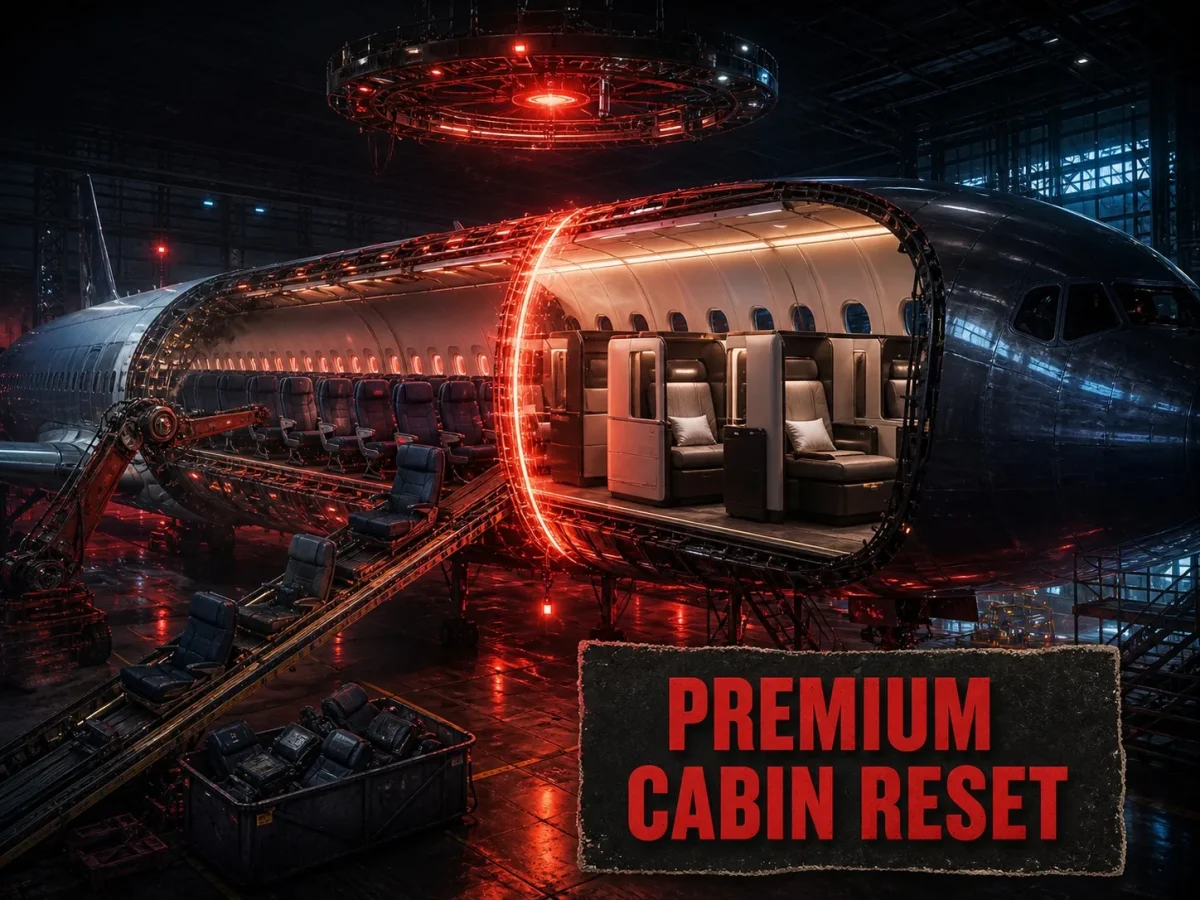
American must take each 777 out of service for the cabin work. Crews then remove old seats and install the new layout. That takes planning, so the fleet will not change overnight.
American has not made every route a permanent promise during the transition. A booked aircraft can change because of weather, repairs, or schedule needs. Check American’s booking page close to departure for the latest seat plan.
The airline’s official newsroom is the best place for confirmed fleet updates. Boeing also explains the aircraft family’s long-range role on its 777 programme page. Those sources are more reliable than an old seat-map screenshot.
What should flyers do before they book?
First, look for the suite name in the booking details. Then open the seat map and check whether the business cabin has private doors. The American Flagship Suite label is the clearest sign that you are booking the updated product.
Don’t assume a 777 flight always has the new cabin. American operates more than one 777 version, and upgrades take time. If comfort matters most, compare the aircraft type and fare before you pay.
American’s plan also fits a wider race for higher-paying flyers. Other airlines are adding similar enclosed seats, while aircraft makers support more cabin choices. The contest is no longer only about where a plane flies.
FAQs
What is American Flagship Suite?
American Flagship Suite is American Airlines’ newest business-class seat. It includes a lie-flat bed and a sliding door for privacy.
Why is American redesigning Boeing 777 cabins?
American wants more premium seats for long-distance passengers. Those travellers often pay more for sleep, space, and privacy.
When will all Boeing 777s have the new suites?
Cabin work happens plane by plane, so timing can change. Check the aircraft seat map when you book and again before travel.
What the verified rollout means for American and flyers
The important point is not simply that American has designed another premium seat. The airline is moving an already announced suite onto an existing long-haul fleet. That lets American refresh a major aircraft type without waiting for every new 787 delivery. It also creates a mixed-fleet period in which the aircraft name alone will not tell a customer which cabin is installed.
The CEO and airline materials are the primary account of the plan. CNBC, Forbes and AirlineGeeks independently reported the rollout and its commercial context. Those reports confirm the direction, but route assignment and aircraft swaps can still change after a customer books.
For American, a refit is a capacity decision as much as a design decision. Every enclosed suite consumes floor area, so adding premium space affects how many seats the plane can sell in other cabins. The calculation works only if higher fares and stronger loyalty demand offset the lost density and the time each aircraft spends out of service.
For travellers, the practical risk is product inconsistency. A flight may be marketed as a Boeing 777 service while an older cabin remains scheduled. Even after a suite appears in the seat map, an operational swap can replace the aircraft. The safest buying process is to confirm the seat map, aircraft subtype and cabin label before payment, then check them again near departure.
The upgrade also puts pressure on rivals that already sell door-equipped business-class products. Privacy doors are becoming a visible comparison point, but service reliability, lounge access, bedding, catering and schedule convenience still shape the full premium proposition. A door is easy to photograph; consistent operations are harder to deliver.
Readers following asset-led strategy can compare this programme with our report on VinFast’s India production planning. Our coverage of the GoPro–Starman merger explains another effort to change the economics of an established product base.
A practical verification checklist
Use these checks to separate the confirmed event from outcomes that still need evidence. They make the story easier to revisit as the rollout, restructuring or product matures.
The central lesson is simple: an announcement establishes direction, while execution establishes value. Return to measurable results, official updates and consistent third-party reporting before treating early claims as settled outcomes.
What evidence should readers watch next?
Premium-cabin projects also have a long lead time. Seat certification, supplier capacity, maintenance scheduling and crew preparation must align before an aircraft returns to service. A delay in one component can move the entire refit sequence, which is why a fleet-wide completion date should be treated as a programme target rather than a promise for a particular flight.
American will also need to communicate the difference between a named suite and the broader Flagship service. Customers may compare a seat photo with the experience on the day, including check-in, irregular operations and onboard consistency. The commercial upside comes when those pieces support the premium fare together.
The next useful evidence will be tail numbers returning from modification, the routes on which they operate, and seat maps that remain stable over time. Those observations are stronger than a single launch flight. They show whether American can scale the cabin rather than display it once.
Investors can watch premium-seat growth alongside unit revenue and aircraft utilisation. More premium capacity is not automatically better if refits reduce available flying or if demand weakens. The programme succeeds when upgraded aircraft return reliably and customers pay enough to justify the space.
Flyers should keep screenshots of the booked cabin and understand the airline’s aircraft-change rules. That will not prevent a swap, but it makes the purchased product clear. The final choice still depends on schedule, price and flexibility, not the door alone.
Get the day’s top stories in your inbox
One concise email. No spam, unsubscribe anytime.


