
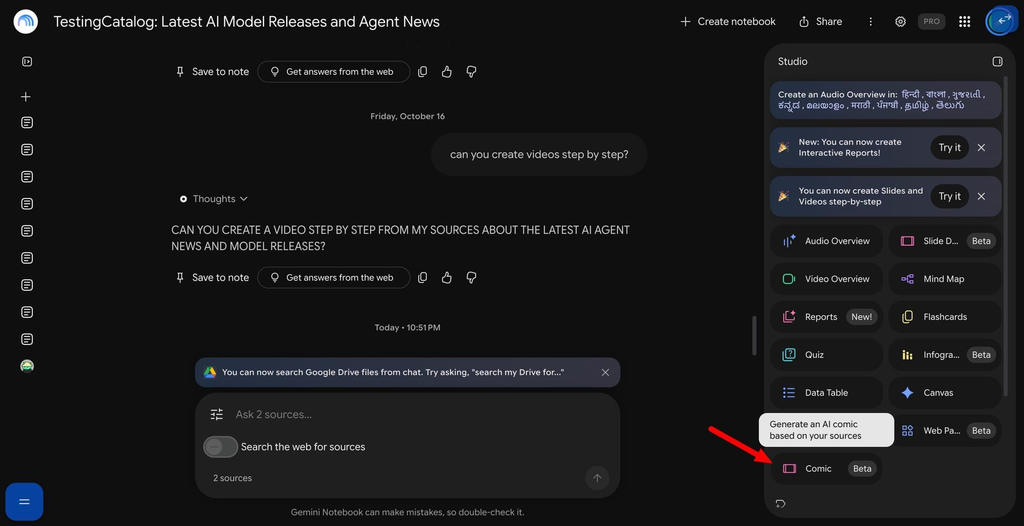
Google is reportedly developing a new Comics artifact for Gemini Notebook, a feature that could turn uploaded research materials, documents, and other sources into illustrated comic-style content. The capability has reportedly appeared as a hidden beta tile inside the platform’s Artifacts Studio, suggesting that Google is exploring another way to make information easier to understand and present.
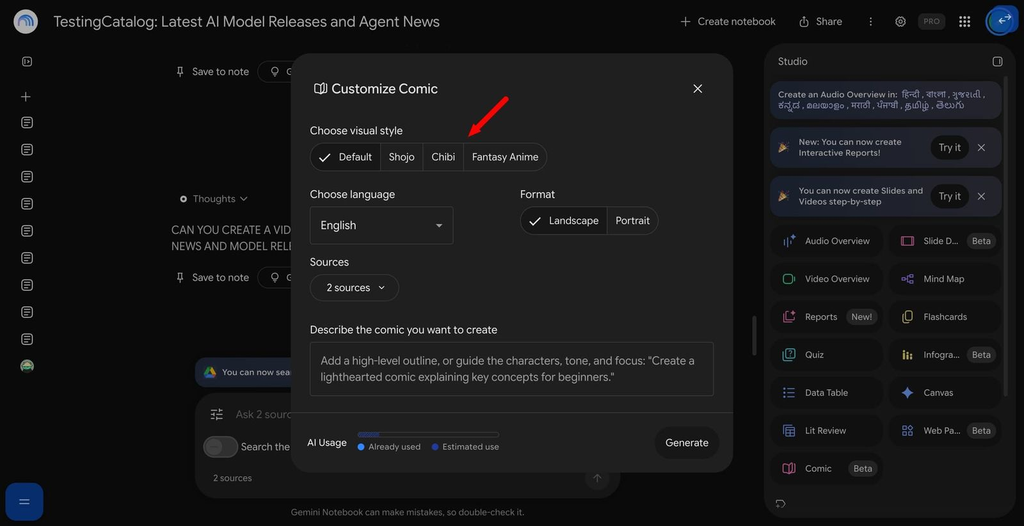
The feature has not been publicly released, and Google has not announced an official launch date. According to a report by TestingCatalog published on November 1, 2026, the experimental interface includes four visual styles, language selection, and portrait or landscape orientation. If launched, the feature could give students, researchers, and educators another option for transforming complex material into more engaging visual explanations
Key Takeaways
- Google is reportedly testing a new Comics artifact for Gemini Notebook.
- The experimental feature has appeared as a separate tile with a Beta label.
- Four visual styles are reportedly available: Default, Shojo, Chibi, and Fantasy Anime.
- Users may be able to choose the output language and page orientation.
- The feature could turn uploaded sources into illustrated explanations and stories.
- Google has not confirmed the feature or provided a public release timeline.
Google Explores a Comic Creation Tool for Gemini Notebook
The reported Comics feature appears within Gemini Notebook’s Artifacts Studio, where users can generate different formats from their notebook sources. Rather than presenting information only through written summaries or conventional visualisations, the proposed feature could organise material into comic-style storytelling.
According to TestingCatalog, the experimental interface includes a prompt that allows users to provide a high-level outline or guide the characters, tone, and focus of the comic. This suggests that users may have some control over how information is translated into a visual narrative.
For example, a student could potentially use research notes about a scientific concept to generate an illustrated explanation. A business professional might turn a lengthy document into a visual summary, while a teacher could use comic panels to introduce a complicated subject to beginners.
However, the available information does not establish how much creative control users will receive or how closely generated comics will follow the original source material
Four Visual Styles Could Offer Different Storytelling Options
One of the most notable details in the reported interface is the availability of four visual styles. These options could allow users to change the appearance of generated comics depending on their intended audience and subject.
The reported styles include:
| Style | Possible visual direction |
|---|---|
| Default | A general comic-book presentation |
| Shojo | A manga-inspired style with expressive characters |
| Chibi | Characters with smaller bodies and oversized heads |
| Fantasy Anime | An anime-inspired fantasy aesthetic |
Shojo and Chibi are established manga and anime-inspired visual approaches. Their inclusion suggests that Google may be exploring more than one illustration style rather than offering a single generic comic format.
The interface reportedly also includes language selection. This could make the feature useful for people who want to explain the same subject to audiences speaking different languages.
Users may also be able to choose between portrait and landscape formats. Portrait layouts could suit mobile reading, while landscape pages may work better for presentations and larger screens.
These are reported interface options, not confirmation of the final feature set.
How Comics Could Fit Into Gemini Notebook’s Existing Features
Gemini Notebook has been expanding beyond its original research and note-taking capabilities. Its Studio already offers several ways to transform uploaded sources into different formats, including slide decks, infographics, and video overviews.
The addition of comics would extend this approach by introducing sequential visual storytelling. While an infographic generally organises information into charts and visual sections, a comic can use characters, dialogue, and panels to explain how a concept develops.
This could be particularly useful for educational content. A lengthy explanation of a historical event, scientific process, or business concept could potentially become a sequence of illustrated scenes.
Google has also been adding more customisation and review controls to some of its existing generated formats. In October 2026, the company discussed additional ways to shape slide decks and video overviews in Gemini Notebook. The reported Comics experiment would fit into this broader effort to give users more control over AI-generated content.
Potential Use Cases for Students, Teachers and Professionals
If Google eventually releases the feature, its usefulness could extend across several areas.
Education: Students could turn study notes into illustrated explanations, making difficult topics easier to review. Teachers could potentially create visual learning materials from lesson documents.
Research: Researchers could use comic-style presentations to introduce complicated findings to a wider audience. This could help make technical subjects more approachable without relying entirely on lengthy written explanations.
Business communication: Companies could explore using comics to explain internal processes, product concepts, or training material. A visual narrative may help audiences understand a process more quickly than a dense document.
Content creation: Writers and creators could use uploaded research as the foundation for illustrated stories or educational posts. The reported style and orientation controls could offer some flexibility for different publishing formats.
These are potential applications based on the reported capabilities. Google has not confirmed which use cases the final product will support.
Important Questions About the Comics Feature Remain Unanswered
The current report reveals some interface details, but several important product questions remain open.
It is not yet clear whether Gemini Notebook will generate single-page comics or longer, multi-page stories. The report also does not establish whether users will be able to edit individual panels, change dialogue after generation, or regenerate specific sections without recreating the entire comic.
Character consistency is another important question. Maintaining the same appearance across multiple panels is essential for longer stories. The available information does not confirm whether Google has developed controls for keeping characters visually consistent.
It is also unknown whether users will be able to export comics as images or PDFs, share them directly, or edit them after creation. These capabilities could significantly affect the feature’s usefulness.
Most importantly, the presence of a Beta label does not guarantee that a public launch is imminent.
The Bigger Picture
Google is increasingly positioning Gemini Notebook as a workspace that can transform source material into different forms of content. Instead of limiting users to asking questions about uploaded documents, the platform is gradually expanding towards presentations, visual summaries, interactive learning materials, and other generated outputs.
Comics could represent another step in this direction. The format offers a different way to communicate information, particularly when a subject benefits from characters, sequences, and visual explanations. It could also make research-based content more accessible to audiences who prefer visual learning.
However, the feature remains unconfirmed. A hidden interface tile is evidence of experimentation, not proof of a completed product or an upcoming release.
Looking Ahead
The next important development will be whether Google moves the Comics artifact from its reported beta interface into a functional public feature. More information about multi-page generation, panel editing, character consistency, and export options would help establish how useful it could become.
For now, Gemini Notebook users should treat Comics as an experimental feature rather than an available tool. Google has not announced a rollout date, and the company could change, delay, or discontinue the feature before a public launch.
Frequently Asked Questions
1. What is the Comics artifact in Gemini Notebook?
It is a reportedly experimental feature that could allow users to generate comic-style content using materials uploaded to Gemini Notebook.
2. Which comic styles are reportedly available?
The hidden interface reportedly includes Default, Shojo, Chibi, and Fantasy Anime styles.
3. Can users choose the language and orientation?
The reported interface includes language selection and portrait or landscape orientation controls.
4. Is the Gemini Notebook Comics feature publicly available?
No. As of November 2, 2026, the feature has only been reported as a hidden beta experiment. Google has not announced a public release.
5. Can Gemini Notebook create multi-page comics?
That remains unknown. The available report does not confirm whether the feature supports multiple pages, editable panels, or consistent characters across a story.
6. Who could benefit from the Comics feature?
Students, teachers, researchers, and content creators could potentially use it to turn source material into illustrated explanations and visual stories.
Get the day’s top stories in your inbox
One concise email. No spam, unsubscribe anytime.


