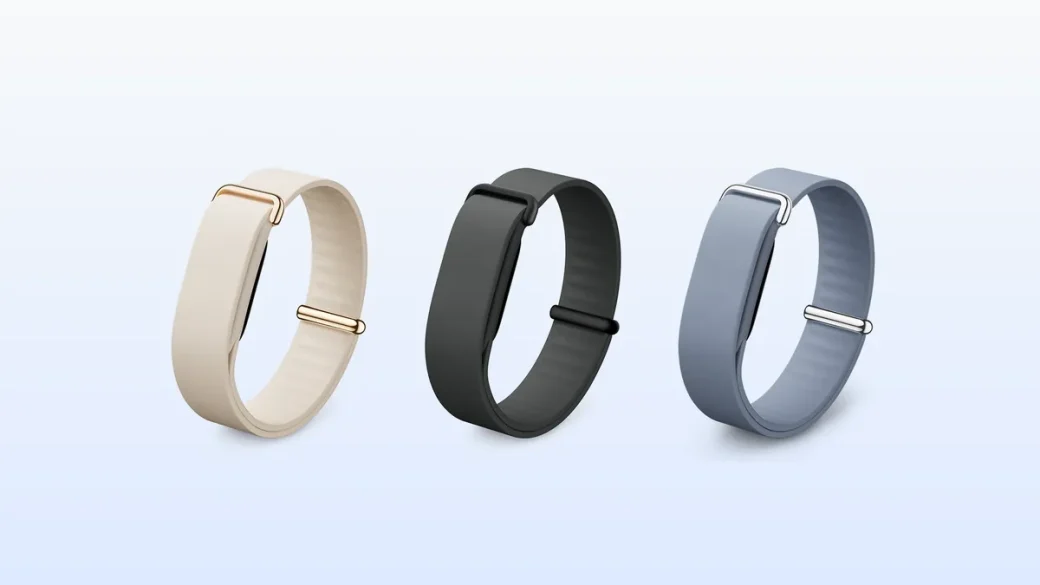
Google is preparing to launch its first screenless Fitbit wearable in India in October, marking a significant change in the company’s approach to fitness trackers. The device, reportedly called Fitbit Air, is expected to focus on health and fitness tracking rather than functioning as a conventional smartwatch with a display.
The launch would expand Google’s wearable portfolio in India at a time when consumers are increasingly interested in health monitoring, sleep tracking and activity-focused devices. By removing the screen, Fitbit could offer a simpler form factor designed to be worn continuously, while relying on a smartphone or other connected devices for detailed information.
Fitbit Air Could Launch in India in October
Google is reportedly preparing to introduce the Fitbit Air in India in October.
The device is expected to be Fitbit’s first major screenless wearable, representing a departure from traditional Fitbit trackers that use displays to show steps, notifications and other information.
Instead of providing information directly on the wrist, the screenless device would focus primarily on collecting health and fitness data.
| Fitbit Air | Expected Details |
|---|---|
| Brand | Fitbit |
| Parent company | |
| Expected India launch | October |
| Display | Screenless |
| Primary focus | Health and fitness tracking |
| User interface | Smartphone-based |
The approach could allow Google to compete in a growing category of lightweight health trackers while differentiating Fitbit from full-featured smartwatches.
Why Google Is Removing the Screen
For more context, see Apple Plans Screen-Free Wearable as Smartwatch Market Evolves.
The absence of a display could make the Fitbit Air smaller, lighter and less distracting than conventional smartwatches.
A traditional smartwatch is designed to perform multiple functions, including displaying notifications, apps, messages and other information.
A screenless tracker has a much narrower purpose.
It can continuously collect information about activity, sleep and other health-related metrics while allowing users to check detailed data through a connected smartphone.
This could appeal to consumers who want health tracking without the distractions associated with a smartwatch.
Screenless Wearables Are Gaining Attention
The concept is not entirely new.
Several wearable companies have experimented with screenless or minimal-display devices designed to operate primarily as health and fitness trackers.
These products are aimed at consumers who want continuous monitoring without spending much time looking at a screen.
The approach can also help extend battery life because the device does not need to power a bright display throughout the day.
For users who already carry a smartphone, removing the screen can make sense because detailed information can be displayed on the phone instead.
Fitbit Air Could Focus on Continuous Health Tracking
The device is expected to emphasize Fitbit’s core strengths in health and fitness monitoring.
Potential capabilities could include activity tracking, sleep monitoring, heart-rate measurements and other health-related metrics, although the exact feature set and specifications will depend on Google’s official announcement.
The absence of a display could encourage users to wear the device continuously.
For sleep tracking in particular, a lightweight device can be more comfortable than a larger smartwatch.
Smartphone Becomes the Main Interface
With no screen on the wearable, the Fitbit mobile application would become more important.
Users would likely rely on their smartphone to view detailed statistics, trends, historical data and personalized insights.
This could allow Google to make the wearable itself simpler while expanding the software experience around Fitbit.
The strategy also gives Google an opportunity to connect Fitbit’s health data with its broader ecosystem.
Google Is Rebuilding Fitbit Around Health
Google acquired Fitbit in 2021, bringing one of the world’s best-known fitness wearable brands into its hardware portfolio.
Since then, Google has increasingly integrated Fitbit’s health and fitness capabilities into its broader wearable strategy.
The company has also used Fitbit technology in Pixel Watch devices.
A screenless Fitbit therefore gives Google another way to use the brand without directly competing with its own Pixel Watch lineup.
Fitbit Air Could Complement Pixel Watch
The new device could occupy a different position from the Pixel Watch.
The Pixel Watch is a full smartwatch designed for communication, apps, notifications and health tracking.
Fitbit Air, by contrast, could focus almost entirely on health and fitness.
| Feature | Fitbit Air | Pixel Watch |
|---|---|---|
| Display | Expected to be screenless | Yes |
| Primary focus | Fitness and health | Smartwatch + health |
| Notifications | Limited or none | Yes |
| Form factor | Lightweight tracker | Smartwatch |
| Smartphone dependence | High | Lower |
This separation could allow Google to target two different groups of wearable buyers.
India Is an Important Wearables Market
India has become an increasingly important market for affordable fitness trackers and smartwatches.
Consumers have shown strong interest in devices that monitor steps, workouts, sleep and other health indicators.
The market is also highly competitive, with domestic and international brands offering products across a wide range of prices.
Google’s decision to launch Fitbit Air in India could therefore reflect the country’s growing importance to the global wearable industry.
Competition From Xiaomi, Samsung and Others
Fitbit Air would enter a crowded Indian market.
Companies such as Xiaomi, Samsung, Amazfit and numerous Indian brands already sell fitness trackers and smartwatches.
Many competing products offer heart-rate monitoring, sleep tracking, workout modes and increasingly sophisticated health features at relatively low prices.
Fitbit’s challenge will be to convince consumers that its software, sensors, health insights and ecosystem provide enough additional value to justify its price.
The Fitbit brand could help differentiate the product, particularly among consumers who already use Fitbit services.
The Screenless Design Could Improve Battery Life
One potential advantage of removing a display is improved battery efficiency.
Displays are among the components that consume significant amounts of power in wearable devices.
A screenless tracker can dedicate more of its battery capacity to sensors and wireless communication.
That could allow Google to offer longer periods between charges.
For users who want continuous sleep and activity tracking, longer battery life is particularly valuable because frequent charging creates gaps in health data.
Privacy Will Be an Important Consideration
Health and fitness trackers collect sensitive information.
Users may provide data about sleep patterns, heart rate, exercise, activity levels and other aspects of their daily routines.
A screenless Fitbit would therefore raise the same privacy questions associated with other connected health devices.
Consumers will want to understand how their data is stored, processed and shared.
Google’s handling of Fitbit health information will remain an important consideration as the company integrates Fitbit more deeply into its ecosystem.
AI Could Become Part of the Fitbit Experience
Artificial intelligence could also play an increasingly important role in Fitbit.
Instead of simply showing raw measurements, future Fitbit software can use AI to identify trends and provide personalized explanations.
For example, an AI system could potentially identify changes in sleep patterns or activity levels and explain how they compare with a user’s historical behaviour.
Google has significant AI capabilities that could eventually strengthen Fitbit’s software experience.
However, health-related AI recommendations will need to be carefully designed to avoid presenting general wellness insights as medical diagnoses.
Screenless Devices Could Create a New Wearable Category
If Fitbit Air gains traction, it could help establish a larger market for screenless health wearables.
The category sits between traditional fitness bands and smartwatches.
Consumers who do not want notifications or apps on their wrists could still receive continuous health monitoring.
This could appeal to people who already own a smartwatch but want a separate device for sleep tracking, exercise or discreet health monitoring.
What the Launch Means for Fitbit
The Fitbit Air could help Google revive the Fitbit brand as a distinct health-focused product line.
The Pixel Watch has increasingly become Google’s flagship wearable, but Fitbit still has strong recognition in fitness tracking.
A screenless product would allow Google to emphasize Fitbit’s original identity around health and wellness rather than competing directly with Apple Watch or Pixel Watch on smartwatch functionality.
This could give the brand a clearer position within Google’s hardware portfolio.
Looking Ahead
Google’s reported October launch of Fitbit Air in India would mark a notable shift in the wearable market, with the company moving Fitbit toward a screenless design focused on continuous health and fitness tracking. By removing the display, Google could create a smaller and potentially longer-lasting device aimed at consumers who want health insights without the distractions of a smartwatch.
The success of Fitbit Air will depend on its sensor capabilities, battery life, software experience, pricing and integration with Google’s wider ecosystem. India could provide an important testing ground because of its large and competitive wearable market. If consumers embrace the screenless approach, Fitbit Air could help establish a new category of simpler health-focused wearables while giving Google a differentiated alternative to full-featured smartwatches.
Frequently Asked Questions
When is the Fitbit Air launching in India?
October, according to current reports.
Why has Google removed the screen?
Dropping the display allows longer battery life and a lighter band focused on sensing rather than interaction.
What does it focus on?
Continuous health tracking rather than notifications and apps.
Get the day’s top stories in your inbox
One concise email. No spam, unsubscribe anytime.


