Key takeaways
- India’s jobless rate for people aged 15 and above fell to 5.1% in July.
- The rate was 5.6% in June, so the monthly drop was 0.5 percentage points.
- Rural areas had lower unemployment than cities, where finding work is often harder.
- A lower rate is good news, but it cannot tell us whether new jobs pay well.
India unemployment rate fell to 5.1% in July, down from 5.6% in June, official data shows. India unemployment rate is the share of people seeking work who could not find it. The drop points to more people finding jobs, but it does not show job quality.
Why did India unemployment rate fall in July?
The latest figures came from the Ministry of Statistics and Programme Implementation’s monthly jobs survey. The survey tracks people aged 15 and above across India. It found that the India unemployment rate dropped by 0.5 percentage points in one month.
That sounds small, but it matters in a country with a huge workforce. A percentage point means one out of every 100 people. So a fall from 5.6% to 5.1% means fewer job hunters were left without work.
July often brings more activity in farms, shops, building sites, and local services. Monsoon farm work can create seasonal jobs. Seasonal means work that rises or falls during certain parts of the year.
Jobless rate eased in JulyPeople aged 15 and above, official monthly estimateJune5.6%July5.1%Source: Ministry of Statistics and Programme Implementation
What does India unemployment rate actually measure?
The India unemployment rate counts people who want a job, can work, and are looking for work. It does not count everyone without a paid job. For example, a student not seeking work is outside this measure.
It also does not tell us how much each worker earns. Someone may work only a few hours or take low-paid work. They count as employed, even if they want more hours or better pay.
That is why readers should look beyond one headline number. The worker population ratio is another useful measure. It shows how many people in the population actually have work.
| Month | Unemployment rate | Change from June |
|---|---|---|
| June | 5.6% | Base month |
| July | 5.1% | Down 0.5 percentage points |
Which workers still face the toughest search?
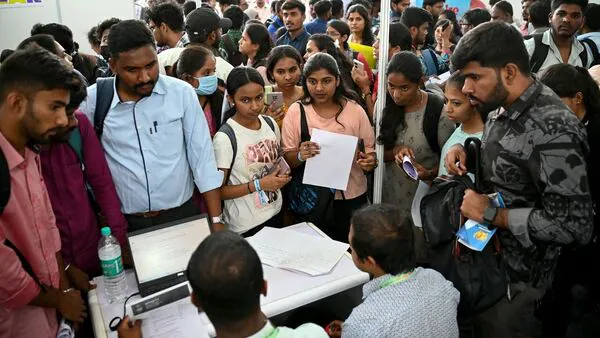
City job seekers usually face a higher jobless rate than rural workers. Cities draw many young people looking for office, factory, shop, and delivery work. Yet there may not be enough openings for all of them.
Women can face extra hurdles, including safety concerns, unpaid care work, and fewer nearby jobs. Young people also need time to move from school into their first job. A fall in the national figure does not erase those gaps.
New technology adds another twist. Firms need more people with specialised skills, while many job seekers need training first. Lapaas Voice reported that India faces an AI talent gap for specialist engineers.
How should families read the July jobs data?
For now, the India unemployment rate offers a welcome sign that more people found work in July. Still, one month cannot prove a long-term trend. Jobs data can move with farm seasons, school calendars, weather, and local hiring plans.
Families should watch several months of data before drawing big conclusions. They should also watch wages and the number of people looking for jobs. Higher wages mean workers can buy more with the money they earn.
Investment can shape the next stage of hiring too. New factories and young companies can create roles over time. India’s deeptech firms have raised $11.4 billion since 2015, as our report on deeptech startup funding explains.
Where do these figures come from?
The India unemployment rate comes from the Periodic Labour Force Survey, or PLFS. It is India’s main official survey for jobs and work. Survey teams ask households about work, job searches, and other basic details.
The ministry publishes the results so the public can track changes. Readers can check releases from the Ministry of Statistics and Programme Implementation. Official data is useful, but it is an estimate based on a large sample, not a headcount of every person.
July’s 5.1% jobless rate means fewer people were actively seeking work without finding it. It is a positive monthly signal, but wages, stable hours, and city jobs will show how strong the recovery really is.
FAQs
What was India’s unemployment rate in July?
The official rate was 5.1% for people aged 15 and above. It was 5.6% in June.
How is unemployment measured in India?
Survey teams ask people whether they wanted work, were available to work, and searched for it. People meeting those tests without a job are counted as unemployed.
Why can a lower unemployment rate still hide problems?
A lower rate does not measure pay, work hours, or job security. Some people may have work but still earn too little or want more hours.
Get the day’s top stories in your inbox
One concise email. No spam, unsubscribe anytime.


