
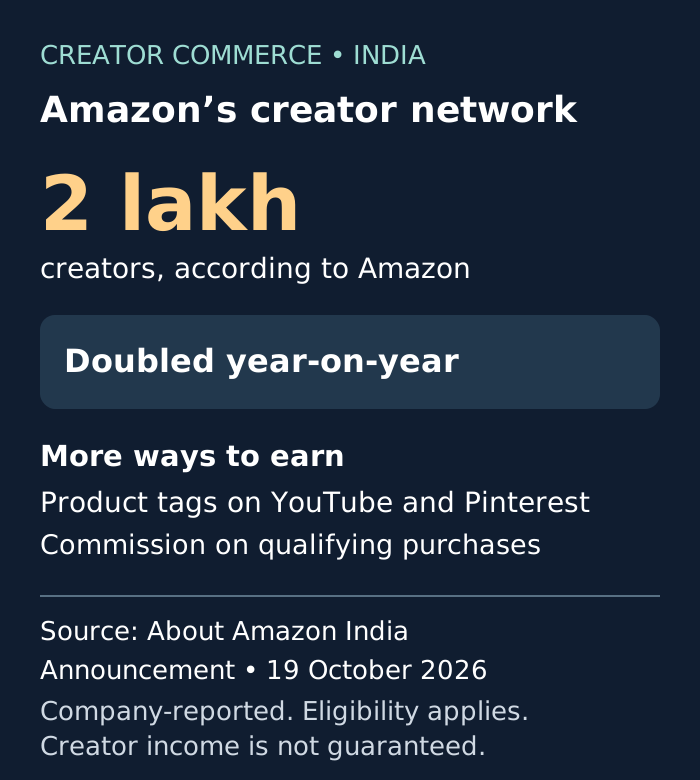
Amazon India’s creator-commerce business is expanding as more social media personalities turn product recommendations into a source of income. The company’s Amazon Influencer Program has grown to 2 lakh creators, doubling year-on-year, while creator-led purchases have reportedly increased 107%, according to a Storyboard18 report. The growth reflects the increasing role of online creators in helping shoppers discover products, compare options and make purchasing decisions.
Amazon is also expanding the ways creators can earn commissions by integrating product tagging with YouTube and Pinterest in India. Eligible creators can connect content to Amazon product listings, allowing audiences to move from watching a video or browsing a Pin to shopping on Amazon.in. The company says creators helped nearly 40 million customers shop on its Indian marketplace this year, highlighting the commercial potential of content-led shopping as the festive shopping season progresses.
Key Takeaways
- Creator network: Amazon’s Influencer Program has doubled to 2 lakh creators year-on-year.
- Purchases: Creator-led purchases have reportedly increased 107%.
- Customer reach: Creators helped nearly 40 million customers shop on Amazon.in this year, according to Amazon.
- New integrations: Eligible creators can tag Amazon products through YouTube content and Pinterest Pins.
- Non-metro participation: Around 75% of creators and nearly 70% of shoppers purchasing through Amazon’s creator programmes are from non-metro India.
- Creator earnings: Amazon reports that earnings per creator have increased 60% year-on-year.
- Business model: Creators can earn commissions on qualifying purchases, with rates and eligibility depending on the programme’s rules.
Amazon’s Influencer Program Reaches 2 Lakh Creators
The expansion of Amazon’s Influencer Program reflects a broader shift in online shopping. Consumers increasingly encounter products through videos, product demonstrations, reviews, curated lists and recommendations from creators they follow.
Amazon’s programme allows eligible social media creators to build personalised storefronts on Amazon.in. These storefronts collect product recommendations in one place, enabling followers to browse items selected by a creator and purchase qualifying products.
The model gives creators a way to monetise their audiences without having to manufacture products or operate their own e-commerce stores. Instead, they can focus on creating content, explaining product features and directing interested viewers to Amazon.
For Amazon, the programme creates additional routes for product discovery. Traditional online shopping often begins with a search query or a visit to a marketplace category. Creator-led commerce adds another route, where a recommendation or demonstration introduces a product before a shopper begins searching for it.
The reported doubling of the programme to 200,000 creators suggests that this approach is becoming a more established part of Amazon India’s retail strategy.
However, the number of registered creators does not necessarily indicate how many are earning meaningful income. Earnings can differ considerably based on audience size, engagement, product selection, posting frequency and the conversion rate of recommendations into purchases.
Creator-Led Purchases Jump 107%
The reported 107% increase in creator-led purchases is an important indicator of how content can influence shopping behaviour.
A creator-led purchase generally occurs when a shopper discovers or buys a product through a creator’s recommendation, storefront, affiliate link or shoppable content. The model connects product discovery with a measurable transaction, allowing platforms and creators to evaluate whether their content generates commercial activity.
The increase suggests that creator-driven shopping has gained momentum on Amazon.in. Yet the headline figure should be interpreted carefully: the comparison period and the precise definition of creator-led purchases are important for understanding the scale of the increase. A 107% rise means the measured figure more than doubled, but it does not automatically establish the proportion of Amazon’s total sales generated through creators.
Amazon’s own disclosures provide additional context. The company says creators helped close to 40 million customers shop on Amazon.in this year. It also reports that earnings per creator have increased by 60% year-on-year.
| Indicator | Reported figure |
|---|---|
| Amazon Influencer Program creators | 2 lakh |
| Year-on-year creator network growth | 2x |
| Increase in creator-led purchases | 107% |
| Customers helped to shop this year | Nearly 40 million |
| Year-on-year growth in earnings per creator | 60% |
| Creators from non-metro India | Around 75% |
| Creator-program shoppers from non-metro India | Nearly 70% |
Figures are based on Amazon’s published information and the reported creator-commerce growth figures. The purchase-growth comparison period should be checked against the original report before interpreting it as a share of total marketplace sales.
The combination of rising creator participation, purchase activity and reported earnings growth indicates that Amazon is attempting to make creator commerce a more substantial part of its retail ecosystem.
YouTube and Pinterest Expand Earning Opportunities
One of the most important developments is Amazon’s expansion of product-tagging opportunities to YouTube and Pinterest in India.
On YouTube, eligible creators can tag Amazon products in Shorts, long-form videos and livestreams through the YouTube Shopping affiliate programme. Viewers can select a tagged product, explore it on Amazon.in and complete a purchase. Creators can then earn commissions on qualifying transactions under the applicable programme rules.
Pinterest provides another route for discovery, particularly for users looking for inspiration related to fashion, home décor, beauty, cooking and lifestyle products. Eligible creators can connect their Amazon Storefront to their Pinterest account and tag Amazon products in Pins.
These integrations matter because creators no longer need to rely exclusively on links in video descriptions or social media biographies to direct their audiences to products. Product tagging can make the path from inspiration to purchase more direct.
For Amazon, the partnerships also extend its shopping ecosystem into platforms where users already spend time discovering ideas and recommendations.
The approach is especially relevant during large sales events, when consumers are actively searching for electronics, home products, clothing, beauty items and gifts. Creators can demonstrate how products work or show how items fit into everyday life, potentially helping shoppers make more informed choices.
Nevertheless, product tagging does not guarantee sales. The result still depends on whether viewers trust the recommendation, find the product relevant and consider its price competitive.
How Creators Can Earn Money Through Amazon
Amazon’s creator ecosystem offers several ways for eligible participants to monetise content. The Influencer Program is one part of a broader collection of tools that connect creators with products and shoppers.
Personalised storefronts and affiliate links
Approved creators can build a personalised Amazon storefront containing product recommendations, curated collections and content. They can share the storefront with followers or use qualifying affiliate links to direct traffic to products.
When a shopper makes an eligible purchase through a qualifying link or storefront, the creator can receive a commission. Rates differ by product category and programme rules, and not every transaction necessarily qualifies.
The storefront also allows creators to organise recommendations around particular interests. A technology creator, for example, might curate accessories and devices, while a home-focused creator might recommend kitchen equipment or home organisation products.
Shoppable photos and videos
Creators can publish eligible photos and videos that showcase products. Depending on programme eligibility and placement, this content may appear in Amazon shopping experiences, helping shoppers discover recommendations while browsing the marketplace.
This format can extend a creator’s reach beyond their existing social media audience. However, visibility depends on platform placement, content performance and Amazon’s rules.
Amazon Live and brand campaigns
Amazon Live allows eligible creators to host livestream shopping sessions, demonstrate products and respond to audience questions. The format can be useful for products that benefit from demonstrations or comparisons.
Amazon also offers Creator Connections, which connects eligible creators with participating brands for campaign opportunities. Depending on the campaign, creators may receive additional commissions or other compensation under the applicable terms.
Together, these tools give creators several potential income streams rather than requiring them to rely on a single social media platform or content format.
Non-Metro India Is Becoming a Major Growth Engine
Amazon says approximately 75% of its creators and nearly 70% of shoppers buying through its creator programmes come from non-metro cities.
This is an important development because India’s online retail market is expanding beyond the largest metropolitan areas. Consumers in smaller cities increasingly use e-commerce to access products that may be unavailable locally or difficult to compare in physical stores.
Regional creators can help bridge the gap between online catalogues and local shopping preferences. They may explain product features in familiar languages, demonstrate how items work in everyday settings and recommend products relevant to local audiences.
Amazon has cited cities such as Guntur, Dehradun, Bhubaneswar and Patiala as examples of places where creator-led shopping is reaching customers. Its creator base also includes participants from cities such as Meerut, Jammu, Nashik and Kanchipuram.
The opportunity is not limited to creators with large national audiences. A smaller creator with a highly engaged local following may be able to influence purchases within a specific product category or community.
However, non-metro participation does not mean every creator will succeed commercially. Creators still need to build trust, produce useful content and understand the products they recommend.
For Amazon, the expansion creates an opportunity to connect a broader range of creators and consumers across India’s diverse regional markets.
Why Creator Commerce Matters to Amazon’s Business
Amazon’s creator strategy combines product discovery, advertising, affiliate marketing and marketplace transactions.
Traditional online retail relies heavily on search, recommendations, sponsored listings and product pages. Creator commerce adds an additional layer in which people discover products through personalities, demonstrations and curated content.
This can benefit Amazon in several ways. Creators can introduce products to new audiences, help explain features that are difficult to communicate through a product listing alone and encourage shoppers to explore categories they might not otherwise consider.
The model can also provide creators with a performance-linked revenue opportunity. Instead of relying only on advertising revenue or sponsorship deals, they can earn commissions tied to qualifying shopping activity.
For brands selling through Amazon, creator content offers another way to present products and reach potential customers. A useful demonstration or well-targeted recommendation can help shoppers understand how an item works before making a purchase.
The challenge is maintaining credibility. If creators recommend products primarily for commissions without clearly communicating their experience or relevant limitations, audiences may lose trust. Transparent affiliate disclosures and honest product descriptions are therefore important to the long-term sustainability of the model.
What the Growth Means for India’s Creator Economy
The expansion of Amazon’s Influencer Program reflects the growing commercial importance of India’s creator economy. Content creation is no longer limited to entertainment, advertising or audience building; it can also connect directly to measurable retail activity.
For aspiring creators, affiliate commerce provides a possible entry point because it does not require them to manufacture inventory, manage shipping or build a complete online store. They can focus on a specific niche, create useful content and learn which recommendations resonate with their audience.
However, affiliate marketing is not guaranteed income. Creators may spend substantial time producing videos, testing products and building an audience before generating meaningful commissions. Earnings can fluctuate with consumer demand, platform algorithms, commission rates and the availability of products.
Amazon’s expansion of YouTube and Pinterest integrations could make product recommendations easier to monetise, but creators will still need a clear content strategy. Useful reviews, practical demonstrations and honest comparisons are more likely to sustain audience trust than repetitive promotional posts.
For retailers and brands, the development also signals that product discovery is increasingly distributed across marketplaces and social platforms. Businesses may need to consider creator partnerships alongside conventional advertising and search marketing.
The Bigger Picture
Amazon’s Influencer Program reaching 2 lakh creators, alongside a reported 107% increase in creator-led purchases, highlights how social content is becoming more closely connected to online shopping. New integrations with YouTube and Pinterest broaden the routes through which creators can recommend products and earn commissions, while the reported participation of non-metro creators and shoppers shows that the opportunity extends beyond India’s largest cities.
The long-term success of creator commerce will depend on more than network size. Creators must maintain audience trust, shoppers need reliable product information and brands must assess whether creator-led transactions deliver sustainable value. Amazon’s growing ecosystem gives participants more tools, but the commercial results will still vary by creator, category and audience.
Looking Ahead
Amazon is likely to continue expanding the tools that connect creators, brands and shoppers across its marketplace and external platforms. The new YouTube and Pinterest integrations provide additional ways for eligible creators to tag products, while Creator Central, Creator University and campaign programmes offer support for content creation and performance tracking. The next indicators to watch will include creator earnings, customer reach and whether the reported growth in purchases translates into sustained activity.
For creators considering the programme, the opportunity is to build a focused, trustworthy content business rather than expect quick income from affiliate links. Understanding the audience, choosing relevant products and producing useful recommendations will remain essential. For Amazon, creator-led commerce offers another way to help customers discover products while connecting shopping activity to the content they already consume.
Frequently Asked Questions
1. How many creators are part of Amazon India’s Influencer Program?
Amazon says the programme has grown to 2 lakh creators, doubling year-on-year.
2. How much have creator-led purchases increased?
The Storyboard18 report states that creator-led purchases have increased 107%. The comparison period and exact measurement definition should be checked in the original reporting before drawing conclusions about the programme’s share of total Amazon sales.
3. How do Amazon influencers earn money?
Eligible creators can earn commissions on qualifying purchases made through approved storefronts, affiliate links and shoppable content. Rates and qualifying conditions vary by category and programme rules.
4. Can Indian creators earn commissions through YouTube and Pinterest?
Eligible creators can tag Amazon products in YouTube Shorts, long-form videos and livestreams, and connect their Amazon Storefront to Pinterest to tag products in Pins. Access depends on eligibility and applicable platform rules.
5. Do creators need millions of followers to participate?
Amazon reviews applicants using factors such as follower count, engagement and content quality. The programme does not publish a universal follower threshold that guarantees acceptance, and meeting one metric alone does not ensure approval.
6. Is the Amazon Influencer Program a guaranteed source of income?
No. Earnings depend on audience engagement, qualifying purchases, commission rates and content performance. Creators may earn little or nothing, particularly while building an audience.
Amazon says its Influencer Program has doubled year-on-year to 2 lakh creators and expanded product tagging to eligible YouTube and Pinterest creators. These are company-reported figures; earnings depend on eligibility and qualifying purchases. Source: Source.
Get the day’s top stories in your inbox
One concise email. No spam, unsubscribe anytime.


