
Apple has strengthened its App Store policies to explicitly target applications that use artificial intelligence to create intimate images of real people without their consent. Announced on October 16, 2026, the changes require developers to proactively prevent and remove non-consensual intimate imagery, including AI-generated sexual deepfakes. Apps that fail to implement appropriate safeguards or address violations after being notified could face removal from the App Store.
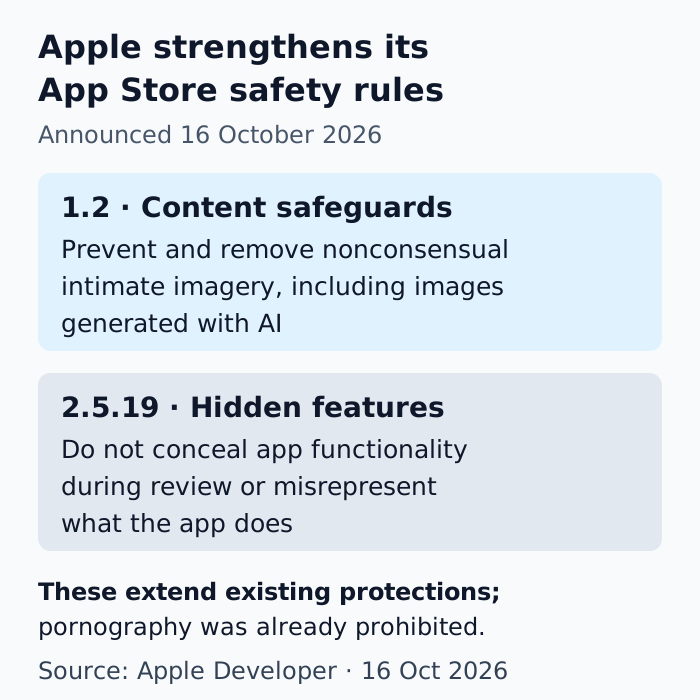
The update also addresses developers who conceal prohibited features during Apple’s app review process and introduce them after approval. Under the clarified rules, this “bait-and-switch” behaviour can lead to an app’s removal and termination from the Apple Developer Program. The changes arrive amid growing concern about AI-powered nudification tools, which can manipulate photographs to produce sexualised images of real people without their permission.
Key Takeaways
- New safeguards: Apple now explicitly requires developers to prevent and remove AI-generated non-consensual intimate imagery.
- App removal risk: Developers that fail to implement safeguards or resolve reported violations can face enforcement action.
- Hidden features prohibited: Apps that conceal harmful capabilities during review and activate them after approval risk removal.
- Developer consequences: Violations of the clarified hidden-feature rule can result in removal from the Apple Developer Program.
- Wider safety measures: Apple has clarified that apps facilitating human trafficking or child exploitation will be removed and blocked from alternative distribution.
- Industry context: The policy update follows mounting criticism over the misuse of generative AI to create non-consensual sexualised images.
- Important distinction: The changes strengthen existing restrictions; they do not represent the first time Apple has prohibited pornography or nudification apps.
What Has Apple Changed in Its App Store Rules?
Apple’s October 16 announcement focuses on strengthening existing safeguards and clarifying how the company will enforce its App Review Guidelines.
The most significant update concerns Guideline 1.2, which covers apps that allow users to create, upload, share or otherwise contribute content. The revised language explicitly includes non-consensual intimate imagery generated using AI tools.
Previously, Apple’s guidelines already restricted pornography and required apps hosting user-generated content to moderate objectionable material. The updated wording makes the responsibility to prevent and remove AI-generated non-consensual intimate imagery more explicit.
The changes also clarify Guideline 2.5.19, which addresses hidden, dormant or undocumented app features. Apple says developers cannot misrepresent an app’s purpose during review and then reveal harmful capabilities, such as nudification, after approval.
| Guideline area | What the updated rules address | Potential consequence |
|---|---|---|
| Guideline 1.2 | Non-consensual intimate imagery, including AI-generated content | Enforcement action, including possible App Store removal |
| Guideline 2.5.19 | Hidden or undocumented features and deceptive review practices | App removal and possible developer-program termination |
| Section 5 | Apps facilitating human trafficking or child exploitation | Removal and blocking from alternative distribution |
These provisions target different problems. The content-moderation requirement focuses on preventing harmful imagery from appearing on a platform, while the hidden-feature rule addresses attempts to evade Apple’s review process.
Why AI Nudification Apps Are Under Scrutiny
AI nudification tools use image-generation or image-editing technology to create the appearance that a person is nude or wearing less clothing than in the original photograph. The output may be entirely synthetic, but it can still depict an identifiable real person in a sexualised situation without their consent.
Such tools create serious privacy and safety concerns. Images can be generated or circulated without the subject’s knowledge, potentially exposing people to harassment, humiliation, blackmail or reputational harm.
The technology also makes it easier to manipulate an existing photograph without the subject participating in a photoshoot or providing an original intimate image. As generative models have become more accessible, concerns have grown about the scale at which non-consensual imagery can be produced and distributed.
The distinction between synthetic imagery and a genuine photograph does not remove the harm. A fabricated image can still be used to intimidate someone, damage their reputation or falsely suggest that they participated in an intimate situation.
Apple’s updated rules respond to this risk by placing clearer obligations on developers that offer content-generation and user-content features. Rather than relying exclusively on users to report harmful material after it appears, the company says developers must proactively prevent and remove the prohibited content.
Apple Is Also Targeting Apps That Hide Their Real Purpose
A second part of the update concerns developers that attempt to get an app approved by presenting a harmless set of features, then activate prohibited capabilities after the review process is complete.
This approach is commonly known as a bait-and-switch tactic. For example, an application could initially appear to be a conventional photo editor but later introduce a hidden feature that generates non-consensual intimate images.
Apple says apps containing hidden, dormant or undocumented features are prohibited. Its clarified Guideline 2.5.19 specifically addresses developers that misrepresent their apps during review and reveal harmful functionality only after approval.
The issue matters because an app’s behaviour can change after its initial submission. A review process that examines only the version presented to Apple may not detect a capability that is introduced later through an update or remotely activated functionality.
Apple’s rule makes clear that concealing such functionality is not an acceptable way to bypass review. Developers risk having the app removed from the App Store and losing access to the Apple Developer Program.
The policy could also encourage developers to maintain clearer documentation of their features and ensure that the app’s actual behaviour matches the description and functionality submitted for review.
What Happens if Developers Fail to Comply?
Apple’s updated policy places responsibility on developers to establish appropriate safeguards and respond to violations.
For apps that host user-generated content, this can involve a combination of automated detection, reporting tools, moderation procedures and processes for removing prohibited material. The specific measures needed will depend on the app’s functionality, its user base and the risks associated with the content it enables.
Developers must also respond when Apple identifies violations. The company says failure to implement adequate safeguards or remedy identified problems after notification can lead to action under its Developer Code of Conduct.
The consequences can extend beyond the removal of individual content. An app may be removed from the store, and a developer that violates the clarified hidden-feature rules could also be terminated from Apple’s developer programme.
This creates a commercial risk for businesses built around AI image editing or content creation. Developers must consider Apple’s content rules when designing products, not simply after a feature has been built and released.
The policy does not mean every AI image-generation app is prohibited. Applications that comply with Apple’s rules and do not facilitate prohibited content can continue to operate, subject to the company’s review and enforcement decisions.
How the Rules Relate to Grok and Other AI Platforms
The changes arrive after public criticism of AI tools being used to generate sexualised images of real people without their consent. Among the prominent controversies has been the misuse of xAI’s Grok chatbot on the X platform.
Apple had previously warned xAI that Grok risked removal from the App Store if it continued to permit nude deepfakes. xAI subsequently introduced safeguards, and an updated version of the app was approved by Apple, according to reporting by The Verge.
The latest rules are relevant to a wider range of services than any single chatbot. Image-generation tools, photo-editing applications and platforms that allow users to publish or share generated content may all need to examine whether their features create risks under the updated guidelines.
Apple has not said that the latest announcement is directed exclusively at Grok. The published rules apply to developers generally, including apps that create, host or distribute user-generated content.
The wider lesson is that AI companies may face scrutiny not only over the capabilities of their models but also over how those capabilities are exposed to users, moderated and controlled after deployment.
Apple Expands Its Enforcement Against Exploitation
The October update also clarifies Apple’s approach to apps that facilitate human trafficking or child exploitation.
Under the revised Section 5 of its App Review Guidelines, Apple says apps found facilitating these activities will be removed from the App Store and blocked from alternative distribution.
The clarification extends the stated enforcement approach beyond Apple’s primary store. It signals that the company intends to apply its restrictions even where apps are distributed through alternative channels covered by the policy.
This part of the update is separate from the provisions dealing with AI-generated intimate imagery, but both changes reflect a broader emphasis on preventing harmful services from reaching users.
Apple also highlighted its existing enforcement efforts. In its October 16 announcement, the company said it had prevented more than 150,000 apps with safety issues from reaching customers in the previous year and terminated more than 193,000 developer accounts for fraud and abuse.
These figures cover broader safety and abuse issues, rather than only nudification applications. They should not be interpreted as counts of AI deepfake apps removed under the new policy.
What the Changes Mean for AI App Developers
The revised rules could increase the compliance burden for developers working on generative AI products.
Companies may need to review image-generation features, moderation systems, reporting mechanisms and methods for handling repeated violations. They may also need to examine how remotely configured features and software updates could change an app’s behaviour after approval.
For developers of photo editors and creative applications, this creates a need to distinguish legitimate image manipulation from features that enable the creation of non-consensual intimate imagery.
A product’s intended use is not the only consideration. Developers must also consider foreseeable misuse and whether their safeguards are effective enough to prevent prohibited activity.
Smaller developers could face particular challenges because moderation systems and ongoing review require resources. However, the rules also create a clearer standard for what Apple expects from apps that allow users to create or distribute content.
For users, stronger moderation requirements may reduce exposure to harmful imagery and make reporting mechanisms more important. But app-store rules cannot prevent all abuse: people can also share synthetic images through websites, messaging services and other distribution channels outside Apple’s control.
The Bigger Picture
Apple’s updated App Store guidelines reflect a growing effort to address the risks created by widely accessible generative AI. The company’s approach combines clearer content-moderation obligations with stricter enforcement against developers that hide prohibited features during app review. By explicitly naming AI-generated non-consensual intimate imagery, Apple makes it harder for developers to argue that synthetic images fall outside existing safeguards.
The policy’s effectiveness will depend on implementation and enforcement. Developers must identify harmful content, respond to reports and prevent prohibited functionality from being concealed during review. Apple can remove non-compliant apps from its distribution ecosystem, but broader efforts involving technology providers, regulators and affected individuals will remain important because harmful synthetic images can circulate beyond a single app store.
Looking Ahead
Developers will need to assess whether their current applications meet the clarified requirements, particularly if they include image generation, user-uploaded photographs or sharing features. Apple may reject or remove apps that fail to meet its standards, while developers that conceal harmful features face the additional risk of losing their developer accounts. The timing and scope of enforcement will become clearer as the company applies the updated guidelines to individual cases.
For the wider AI industry, the announcement reinforces that building a capable model is only part of launching a responsible product. Companies must also consider consent, privacy, abuse prevention and the controls surrounding their tools. As image-generation technology advances, platform policies will continue to influence which applications can reach mainstream users and what safeguards developers are expected to provide.
Frequently Asked Questions
1. What has Apple changed in its App Store rules?
Apple has explicitly required developers to proactively prevent and remove non-consensual intimate imagery, including images generated using AI. It has also clarified its rules against hidden app features and deceptive review practices.
2. Are AI nudification apps banned from Apple’s App Store?
Apple’s rules prohibit apps that generate nudity or sexually explicit imagery, including nudification apps that create intimate images of real people without consent. The updated policy makes these restrictions and related moderation responsibilities more explicit.
3. Can Apple remove apps that add prohibited features after approval?
Yes. Apple’s clarified Guideline 2.5.19 addresses hidden or undocumented features and deceptive review practices. Violating developers risk App Store removal and termination from the Apple Developer Program.
4. Is the policy specifically aimed at Grok?
Apple has not said that the new rules target Grok exclusively. The changes apply to developers generally, although the policy update follows controversy surrounding the misuse of Grok and other AI tools to generate sexualised images.
5. Does the update ban every AI image-generation app?
No. The changes target prohibited content, inadequate safeguards and deceptive app-review practices. AI image-generation apps that comply with Apple’s guidelines can continue to operate, subject to App Store review.
6. Will Apple’s rules stop all AI-generated deepfakes?
No. App Store enforcement can limit access to non-compliant apps distributed through Apple’s ecosystem, but it cannot eliminate every source of harmful synthetic imagery on the internet.
Source note, 17 October 2026: Apple’s official announcement on intimate-image safeguards and hidden app features.
Get the day’s top stories in your inbox
One concise email. No spam, unsubscribe anytime.


